noun
glaucoma
glaw-KOH-muh/ɡlaʊˈkəʊmə/
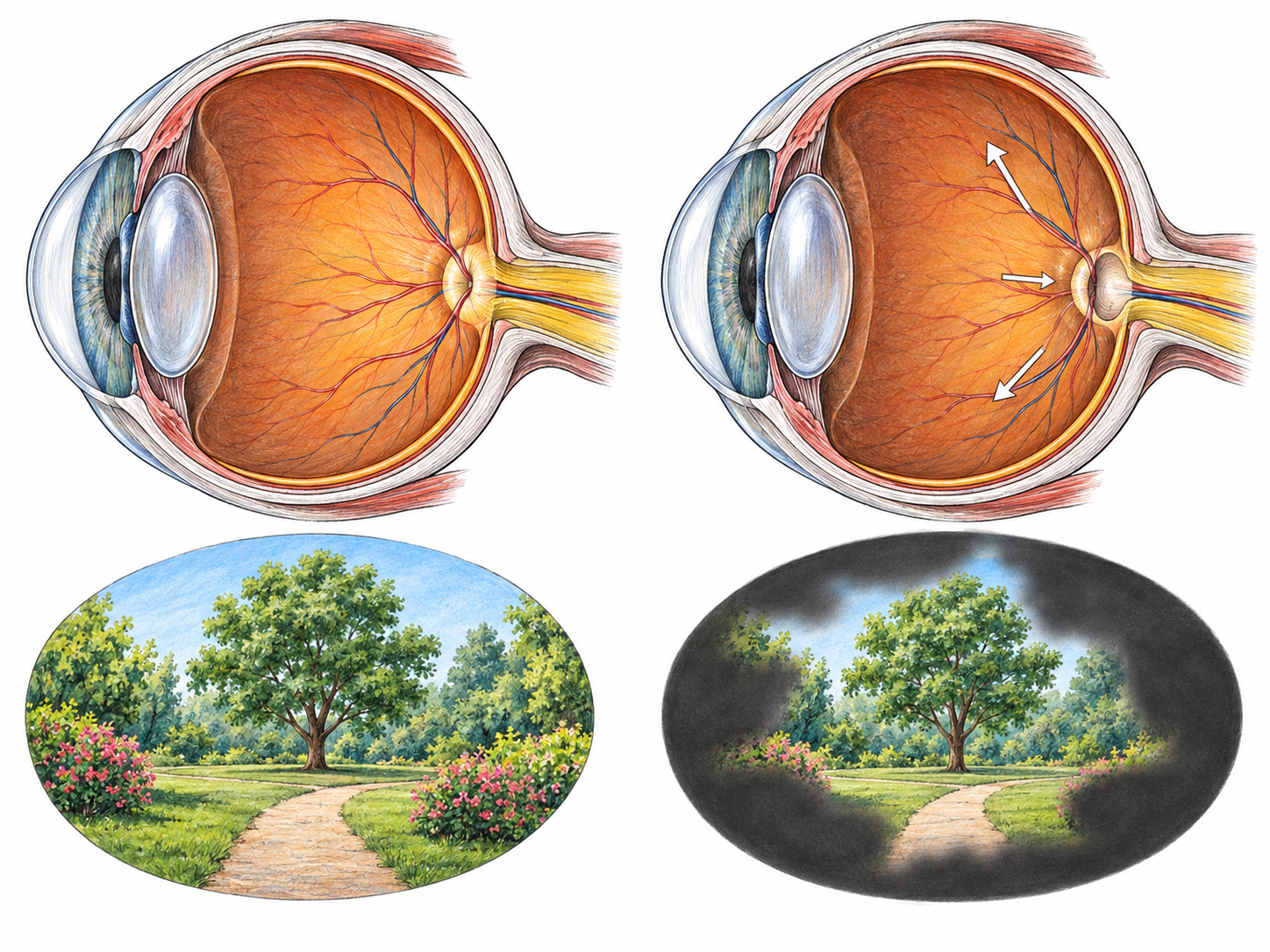
An eye disease that damages the optic nerve and can cause vision loss.
The comparison shows optic nerve damage and peripheral vision loss associated with glaucoma.
Etymology
Greek glaukoma named a cataract or clouding of the lens. The English term was first used before cataracts and glaucoma were distinguished, so its older meaning was broader than the modern diagnosis.
In context
Glaucoma is most common in African Americans over the age of 40; people over 60, and in people with a family history of glaucoma.
More examples
- Her doctor prescribes eye drops to help control glaucoma.
- Glaucoma often has no noticeable symptoms in its early stages.
- A family history of glaucoma increases your risk of developing it.
Forms
glaucoma