noun
glycogen
GLY-kuh-jun/ɡlˈaɪkʌdʒɪn/
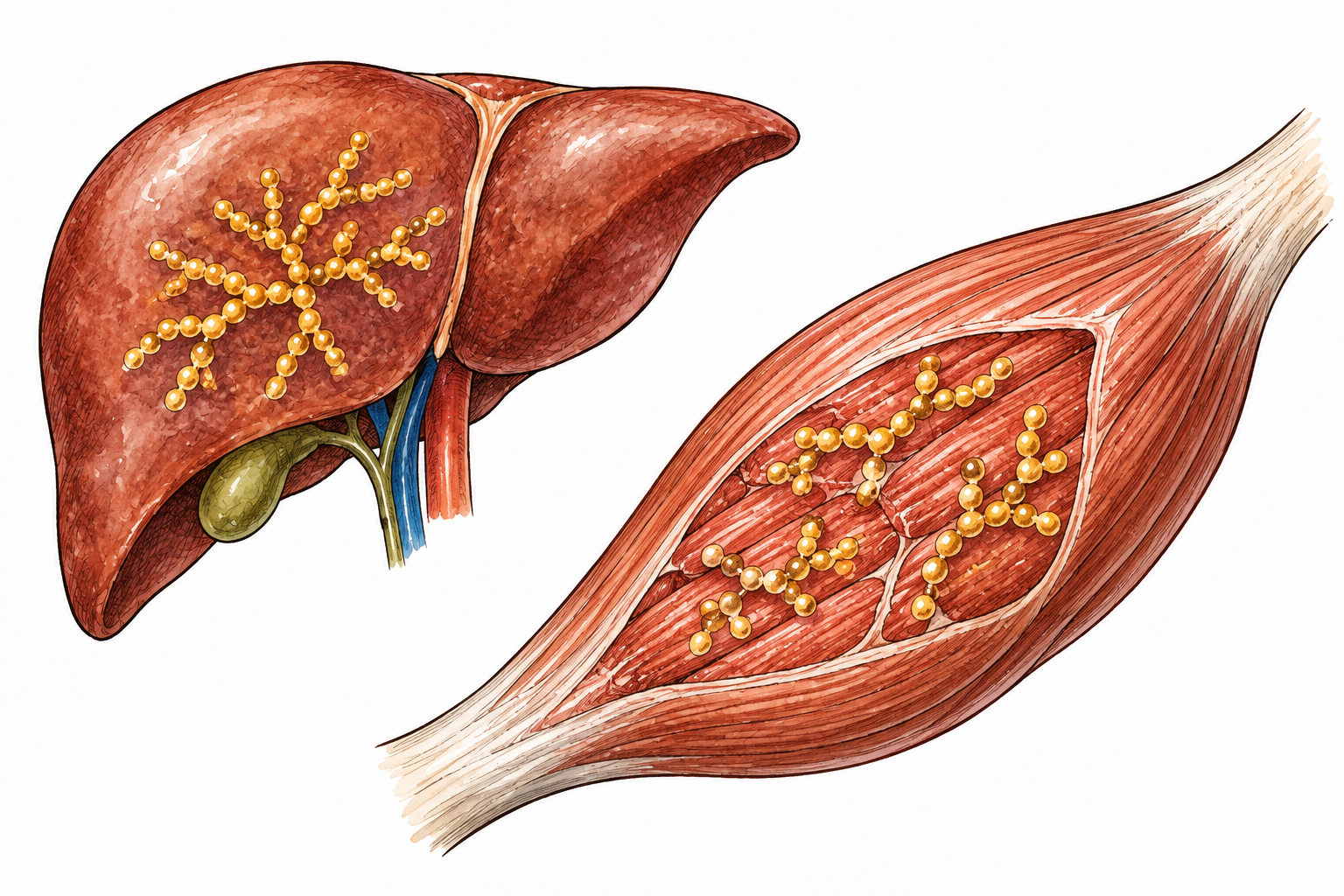
A carbohydrate stored in animals, chiefly in the liver and muscles.
Your liver stores glycogen to help maintain steady blood sugar.
Etymology
The “sweet” element refers to sugars, making the compound “sugar-producer.” The name describes this stored energy reserve by the sugar it can supply.
In context
your body can also store carbohydrate as sugar glycogen so you can store about 125 grams of glycogen in your liver which gives you about 500 calories worth of energy
More examples
- Muscles use stored glycogen for energy during exercise.
- The body converts some extra glucose into glycogen.
- A long run can greatly reduce your glycogen reserves.
Forms
glycogenolysis noun — The breakdown of glycogen into usable sugars.