noun
gravity
GRAV-uh-tee/ˈɡrævəti/
The force that attracts masses toward one another.
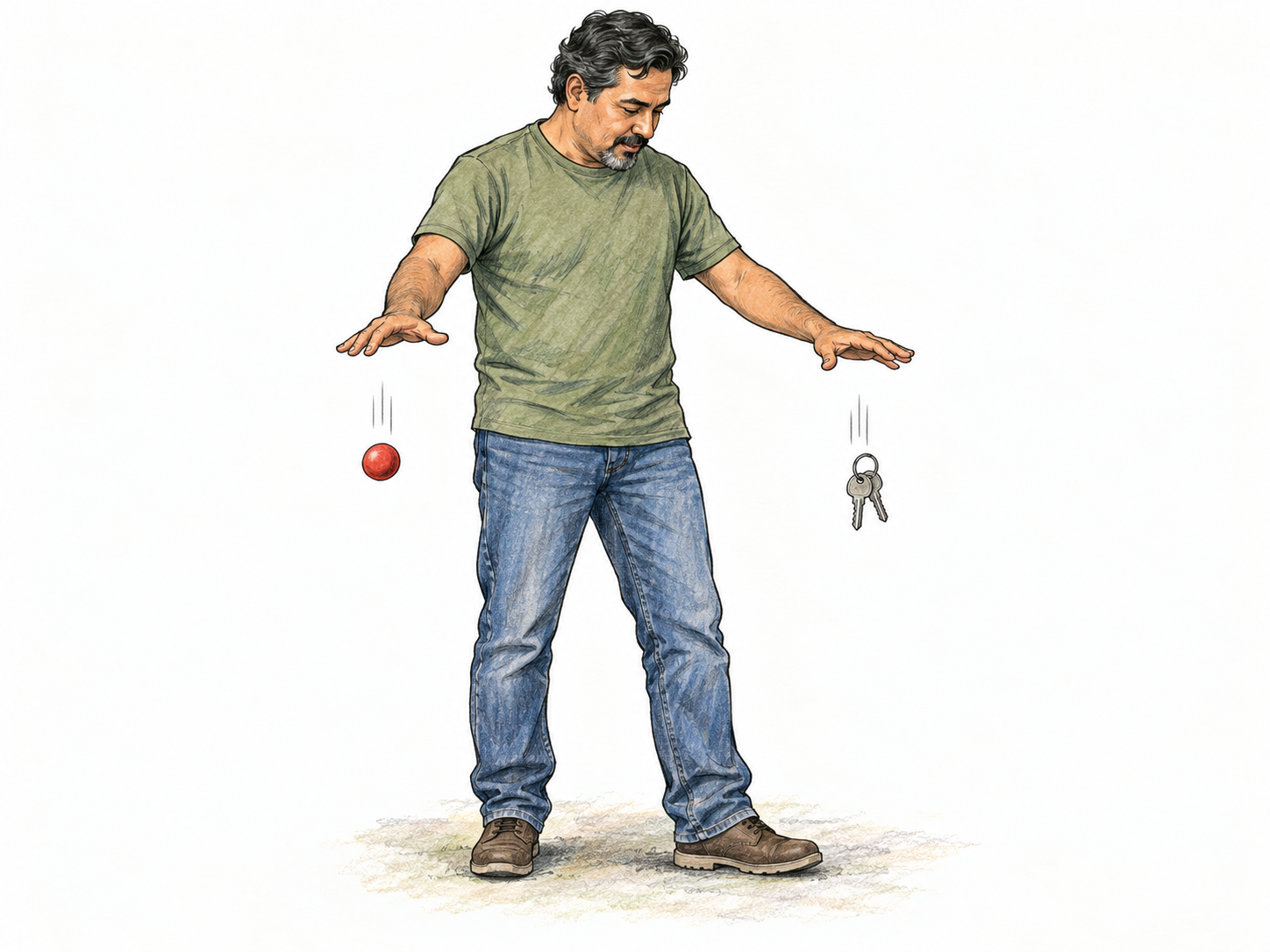
Gravity pulls both the released ball and keys toward the ground.
Etymology
Latin gravitas meant weight or heaviness, but also underlies gravity in the sense of seriousness. The physical sense connects heaviness with the downward acceleration of bodies under Earth's attraction.
In context
Another mind-bending point is gravity. Gravity holds everything in place, pulling equally on you, the ground and the oceans.
More examples
- The moon's weaker gravity lets astronauts jump higher.
- Gravity pulls rain toward the ground.
- Engineers account for gravity when designing bridges.
Forms
gravitational adjective — Relating to the attraction between masses.
Similar words
- gravitation
- Names the same attraction, especially in formal scientific contexts.
- attraction
- Describes a pulling force, not necessarily one between masses.