adjective
grisly
GRIZ-lee/ˈɡrɪzli/
Causing horror or disgust.
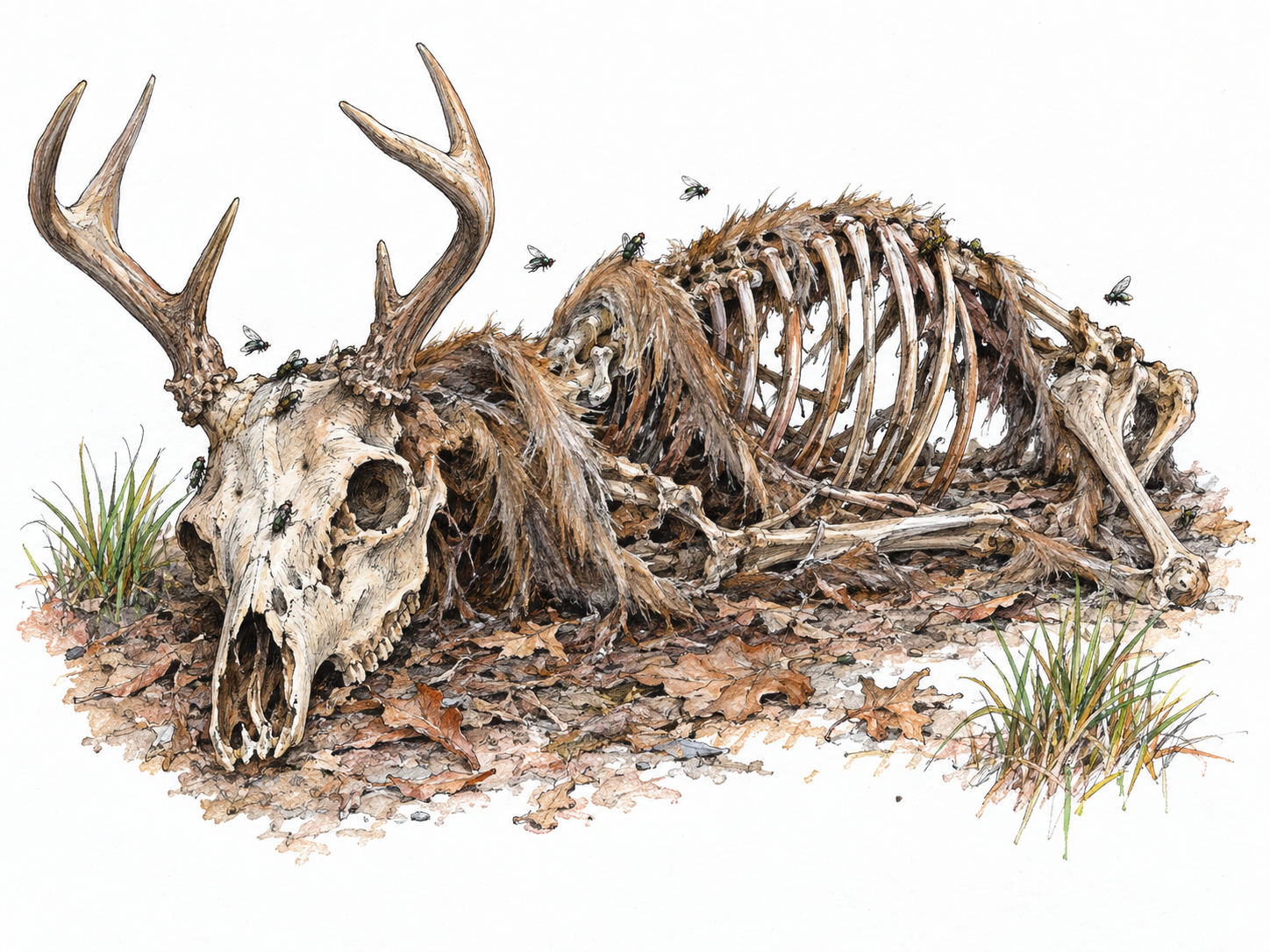
The decomposing carcass makes a grisly sight beside the woodland path.
Etymology
Grisly connects horror with the bodily reaction of shuddering: it describes something dreadful enough to provoke that response. Its association with violence or death preserves this central idea.
In context
Remember that for viewers at the time all of the grisly details were well known. Here we have the concealed bloody axe
More examples
- Workers made a grisly discovery when they uncovered human remains.
- The newspaper spared readers the grisly details of the accident.
- His latest novel is even grislier than the last.
Forms
grisly · grislier · grisliest
grisliness noun — The quality of causing horror or disgust.
Similar words
- gruesome
- Often emphasizes disturbing physical details, especially injuries or death.
- macabre
- Emphasizes death and its eerie or unsettling aspects.
- horrifying
- Broader term for causing intense fear, shock, or distress.