noun
heretic
HAIR-uh-tik/ˈherətɪk/
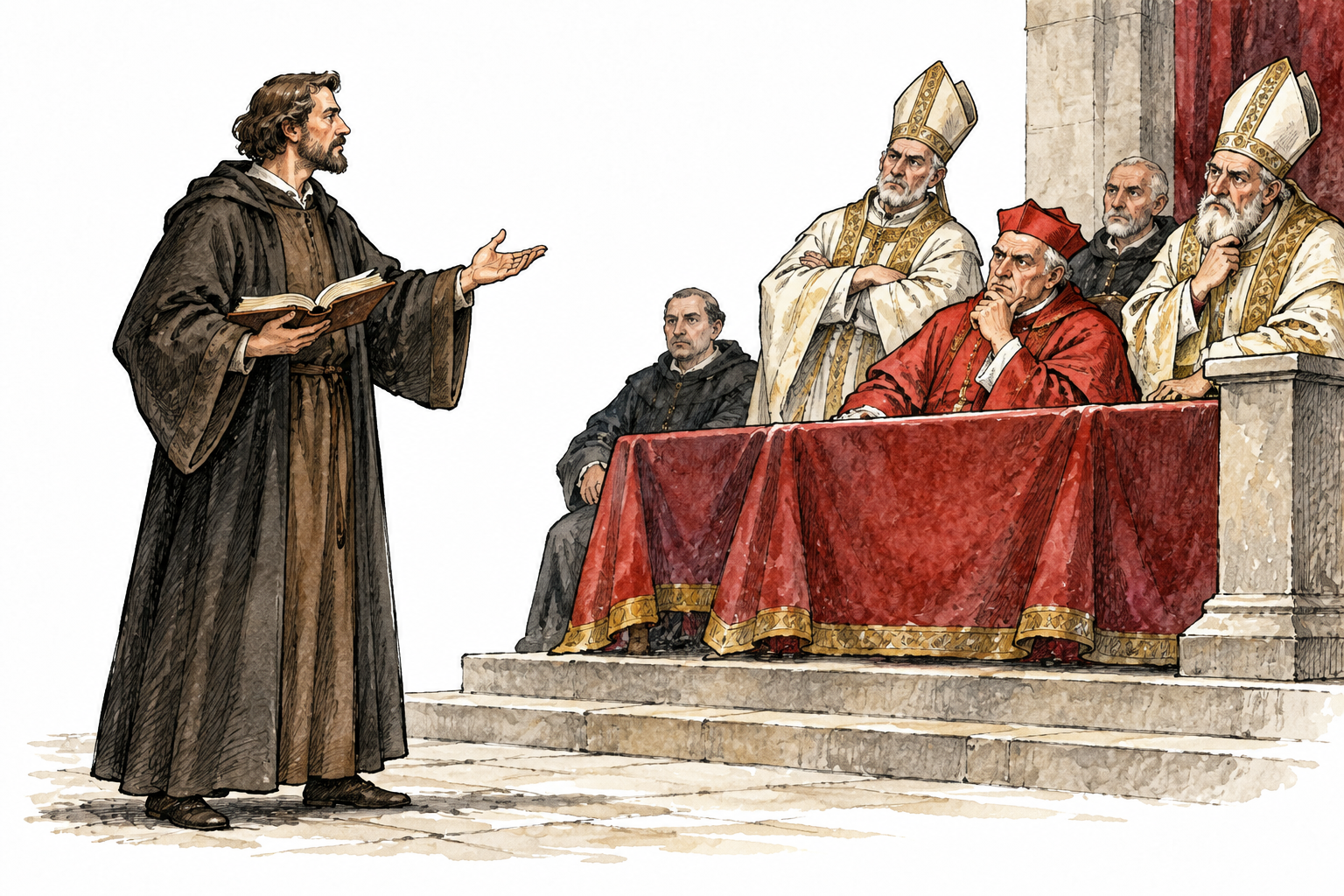
A person whose beliefs contradict an accepted doctrine.
The church considers him a heretic because he rejects its teachings.
Etymology
The choosing root produced an adjective meaning “able to choose,” while related “choice” language came to mean a school of thought or sect. Religious usage narrowed this to unorthodox doctrine, making a heretic someone who holds such views.
In context
a heretic was basically just anyone whose religious beliefs went against the official teachings of the church in Rome.
More examples
- Among traditional economists, she is a heretic for questioning free markets.
- The council accuses the scholar of being a heretic.
- The movement treats those who challenge its central beliefs as heretics.
Forms
Similar words
- dissenter
- Disagrees with prevailing views, not necessarily an established doctrine.
- nonconformist
- Rejects customary behavior or attitudes, not necessarily doctrinal beliefs.
- apostate
- Abandons a former faith rather than merely contradicting doctrine.