noun
history
HIS-tree/ˈhɪstri/
The sequence of events and experiences belonging to the past.
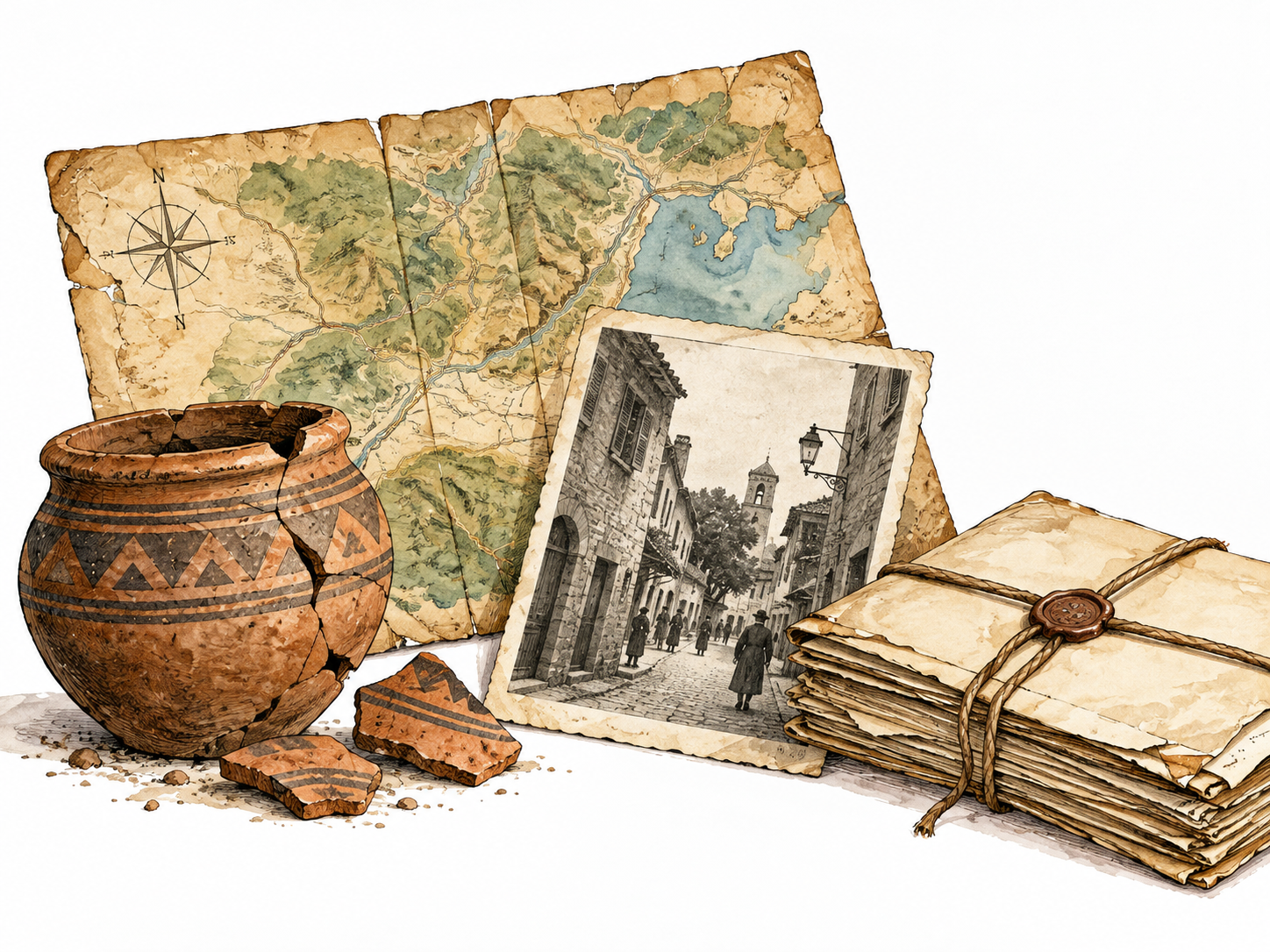
The old map, pottery, photograph, and archival papers preserve traces of history.
Etymology
Greek historia meant knowledge gained by inquiry and an account of those inquiries. The emphasis shifted to accounts of past events, giving the modern sense of their record or study.
In context
it's possible in America to study history in a very very self-satisfied moralizing way and it goes like this perhaps you learned American history like this as well back in the 1700s America had a problem
More examples
- Their families have very different histories.
- The discovery changes our understanding of human history.
- The company has a long history of treating workers fairly.
Forms
history · histories
historical adjective — Relating to past events or their study.
historian noun — Someone who studies and writes about history.
Similar words
- past
- Refers broadly to earlier times, without suggesting a connected sequence.
- background
- Emphasizes earlier experiences or circumstances that explain a present situation.