adjective
imperial
im-PEER-ee-uhl/ɪmˈpɪriəl/
Relating to or suggesting the authority or grandeur of an empire or emperor.
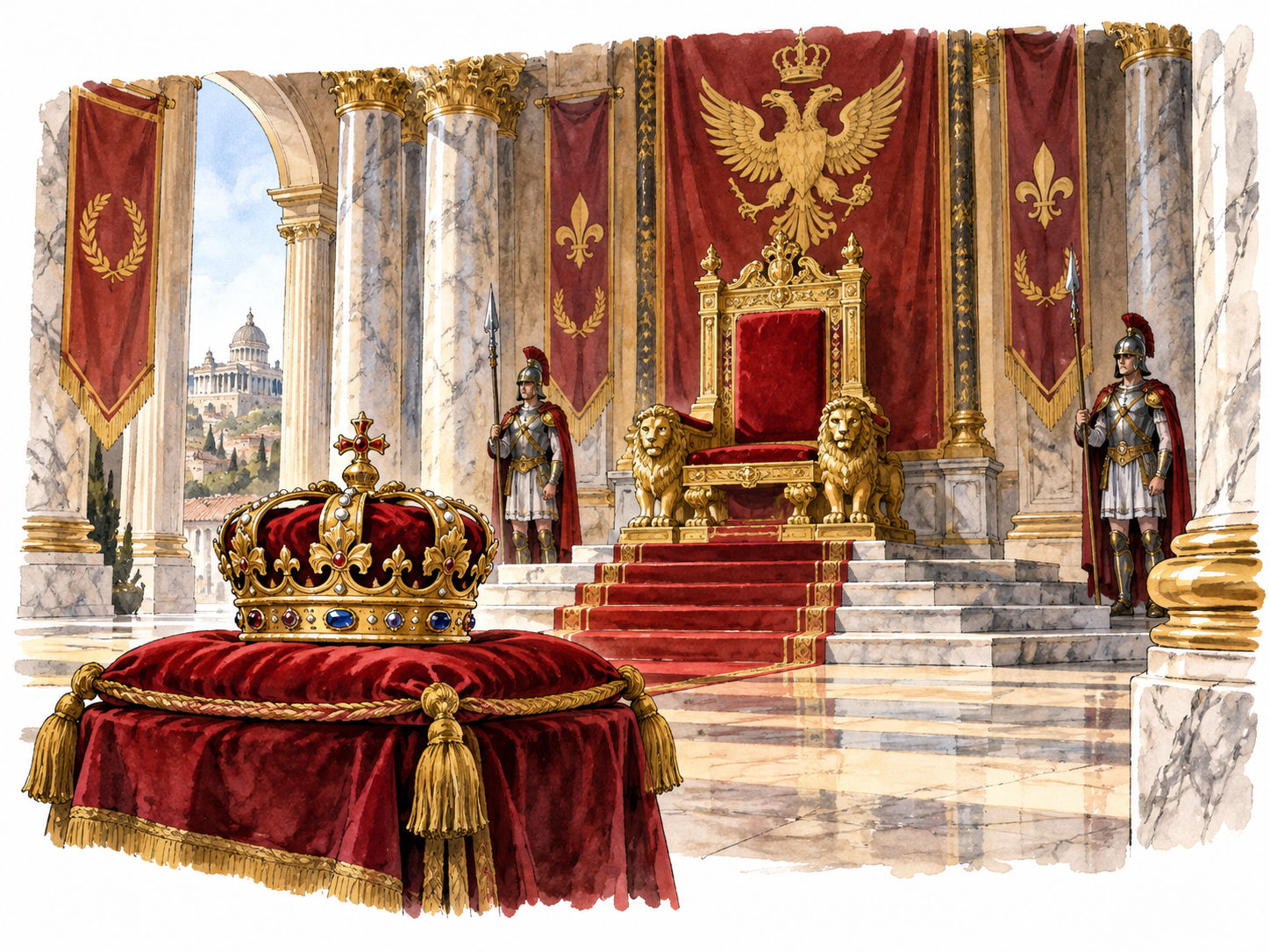
The throne and grand columns give the hall imperial splendor.
Etymology
Imperium covered both supreme governing power and the realm under that power. Imperial therefore relates to an empire or to the emperor who exercises its authority.
In context
The 38-year-old monarch stripped off his imperial purple mantle, his gold eagle embossed boots, and his imperial insignia, reducing himself to a common Roman soldier.
More examples
- The museum displayed imperial portraits.
- He studied imperial administration.
- The palace preserved its imperial furnishings.
Forms
imperial
imperialism noun — extending a country’s power abroad