noun
impotence
IM-puh-tuns/ˈɪmpətəns/
Lack of the power needed to perform effectively.
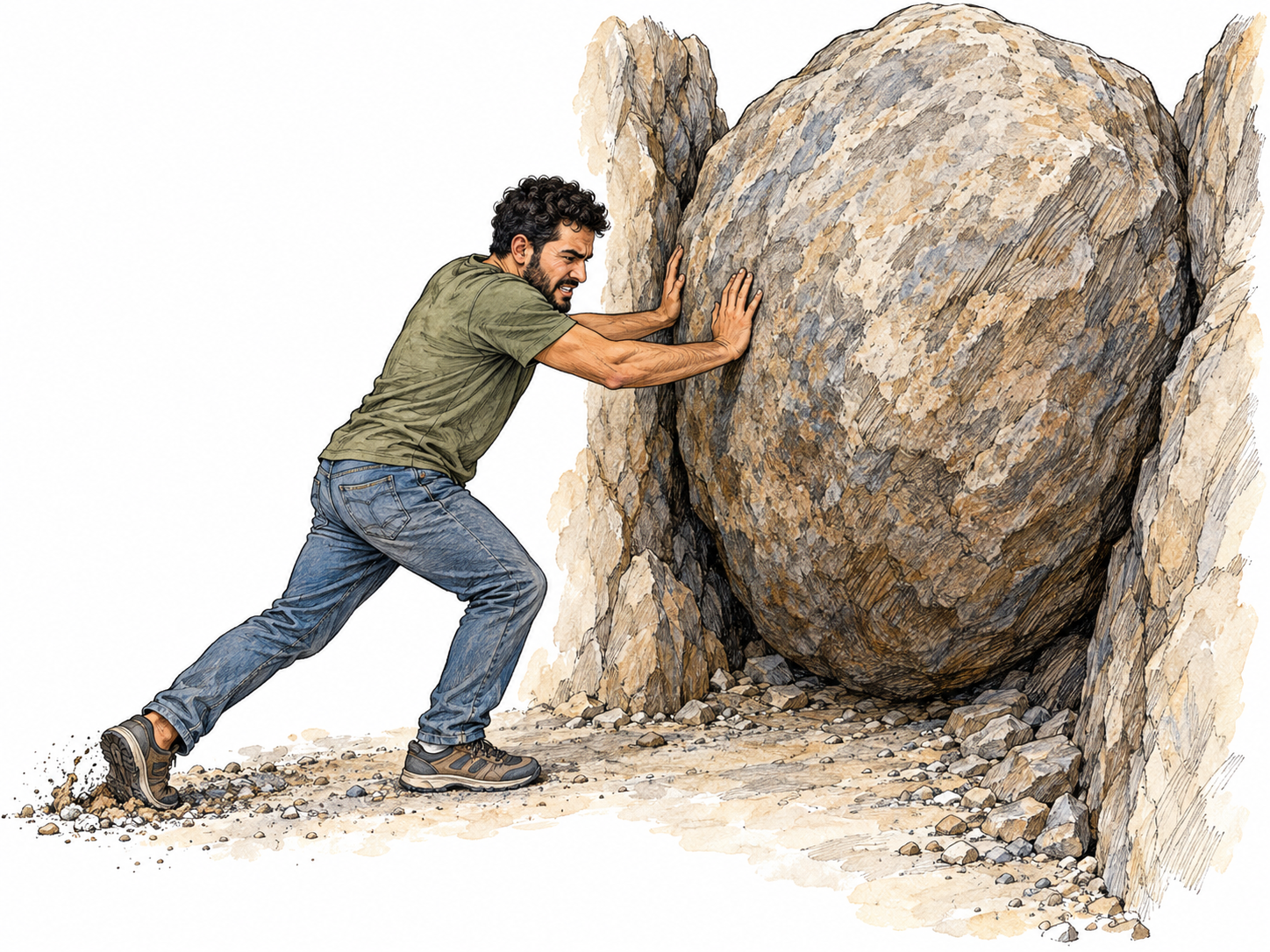
The man's impotence against the huge boulder leaves the passage blocked.
Etymology
The Latin noun named a lack of power or control. English first used it for physical weakness, then also for the specific lack of male sexual potency.
In context
he realized these were only weak alibis for his own impotence, and that he was held helpless by his fear, his inner rottness, his lacking of stature as a man.
More examples
- She feels a painful sense of impotence as her complaints go unanswered.
- The failed rescue effort exposes the government's impotence during the crisis.
- Without funding, the committee faces another year of impotence.
Forms
impotent adjective — Lacking the power to act effectively.
Similar words
- powerlessness
- Emphasizes having no control or influence over a situation.
- inability
- Names a specific lack of capacity, without necessarily suggesting powerlessness.
- helplessness
- Emphasizes being unable to cope or act without assistance.