adjective
inane
ih-NAYN/ɪˈneɪn/
Silly or lacking sense and substance.
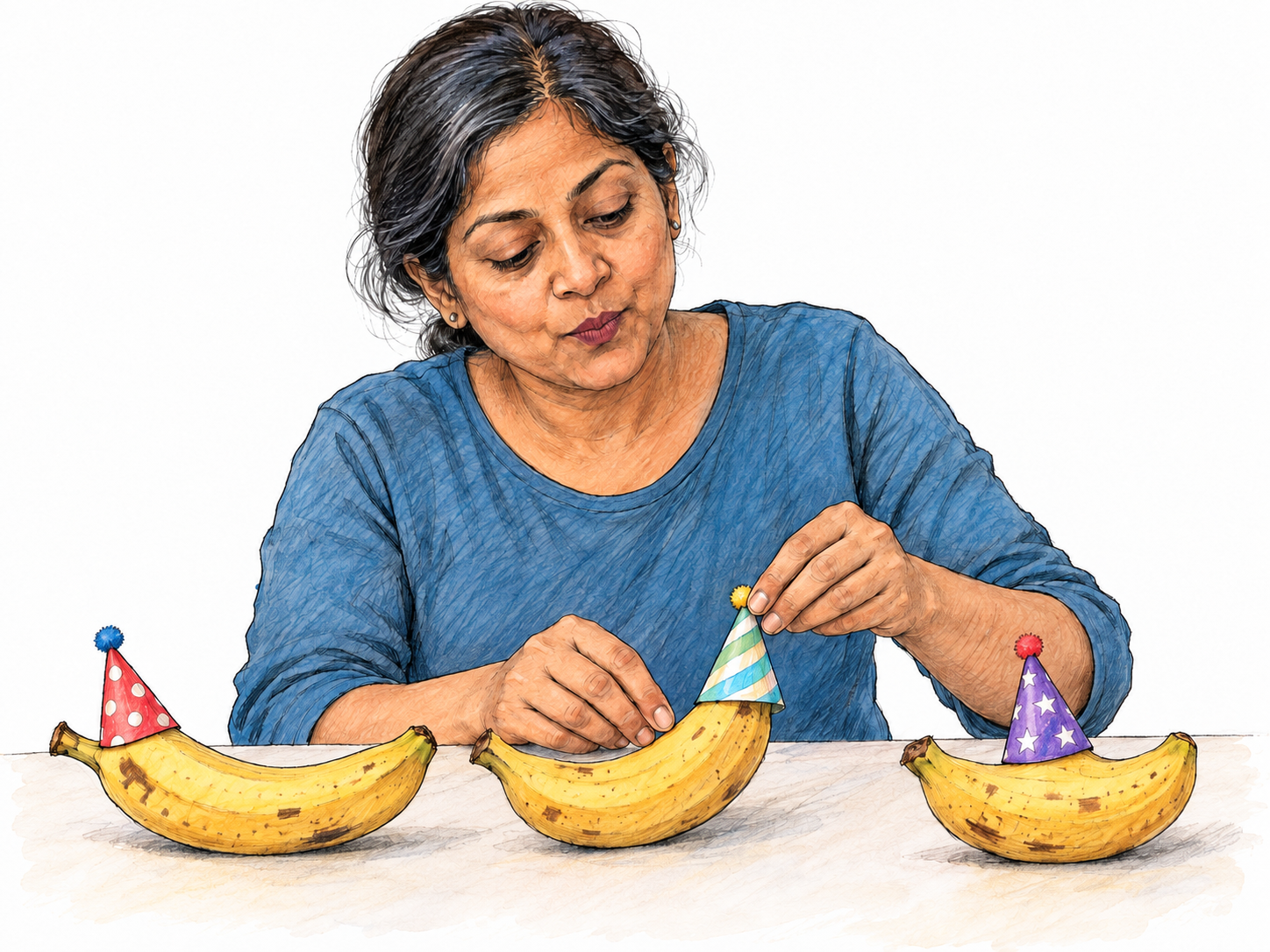
The woman treats the inane task of decorating bananas with solemn seriousness.
Etymology
Latin inanis meant “empty” or “worthless,” with an uncertain deeper origin. Whether borrowed directly or formed from inanity, inane came to describe an emptiness of sense rather than space.
In context
we end up drifting off to the most inane websites you know like any monkey you can put up a website
More examples
- We laugh at the movie's inane dialogue.
- She ignores the inane chatter and finishes her report.
- Arguing about whose turn it is to argue seems inane.
Forms
inane · inaner · inanest
inanity noun — Silliness or lack of meaningful substance.
inanely adverb — In a silly or senseless way.