noun
inertia
ih-NUR-shuh/ɪˈnɜːrʃə/
Resistance to a change in an existing state of motion or rest.
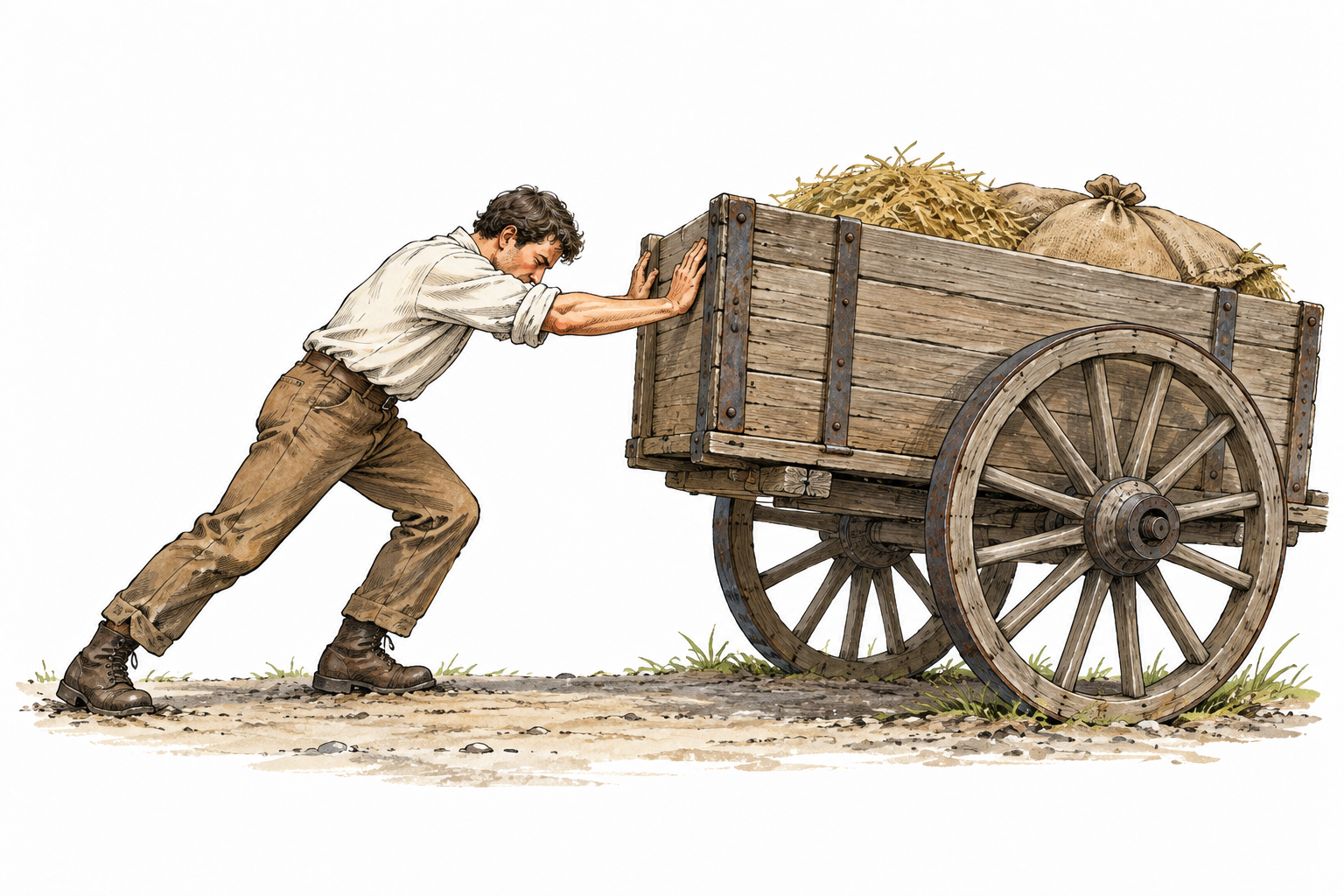
The heavy cart's inertia resists the person's initial effort to move it.
Etymology
From “without skill,” the Latin noun came to mean inactivity or idleness. Physics gave that idea a special meaning: matter retains its existing state, whether resting or moving, unless something changes it.
In context
think absolutely if you think about it as in the simplest way of of resistance to uh to change and resistance to stimuli yeah every system if you have no inertia you're not going to live very long
More examples
- The heavier cart has more inertia than the lighter one.
- Inertia keeps an object at rest unless a force moves it.
- The committee's inertia makes even small changes difficult.
Forms
inertia
inertial adjective — Relating to resistance to changes in motion.
Similar words
- resistance
- Resistance broadly opposes change; inertia specifically concerns rest or motion.