verb
inhabit
in-HAB-it/ɪnˈhæbɪt/
To live in or occupy a place.
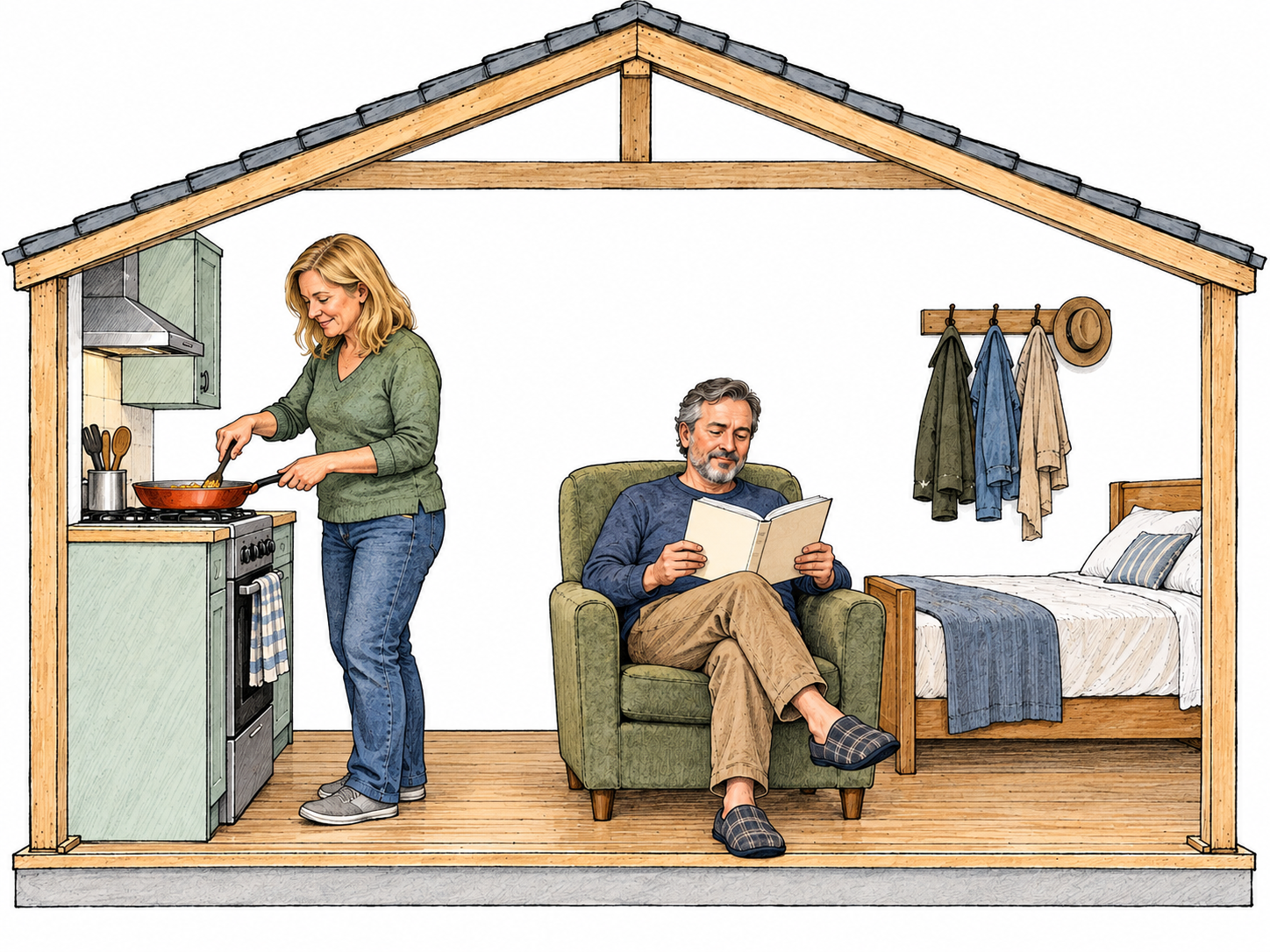
The two residents inhabit the small home, cooking and reading inside.
Etymology
Latin habitare, “to dwell,” was itself formed from habere, “to have or hold.” Combined with in-, it gives the meaning “dwell in,” preserved in the English sense of occupying a place as a home.
In context
He reaches out to touch the screen, his hand trembling. He is a ghost trying to inhabit his own living body.
More examples
- Only a few families inhabit this remote valley.
- The island was inhabited long before Europeans arrived.
- A small owl inhabits the hollow tree behind our house.
Forms
inhabit · inhabits · inhabited · inhabiting
inhabitant noun — A person or animal living in a place.
uninhabited adjective — Having no people living there.