noun
injury
IN-juh-ree/ˈɪndʒəri/
Damage that impairs a person's physical condition.
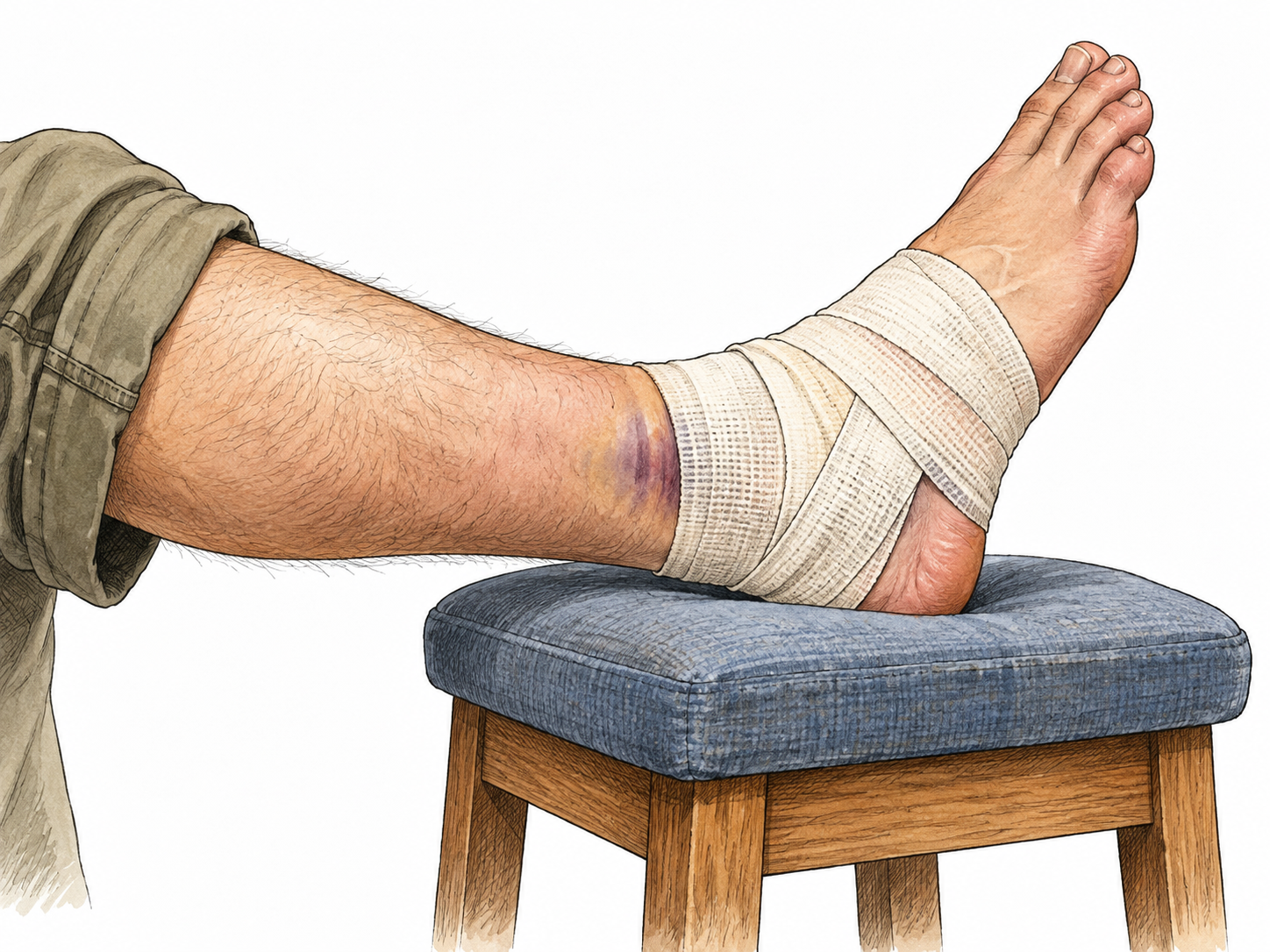
The bandaged ankle shows swelling and bruising from an injury.
Etymology
“Not” combined with “right or law” expressed a wrong or injustice. The Latin noun also covered assault and damage, linking that idea of wrongdoing to the selected sense of physical harm.
In context
But just the blast injury itself, there's something called a BOP, a blast overpressure wave. Just that wave is of air is enough to cause damage to solid and hollow organs in the body.
More examples
- Wearing a helmet reduces the risk of head injuries.
- He is recovering from a serious back injury.
- Everyone escapes the crash without injury.
Forms
injury · injuries
injure verb — To cause physical harm to someone.