adjective
insoluble
in-SAHL-yuh-bul/ɪnˈsɑːljəbl/
Unable to dissolve in a liquid.
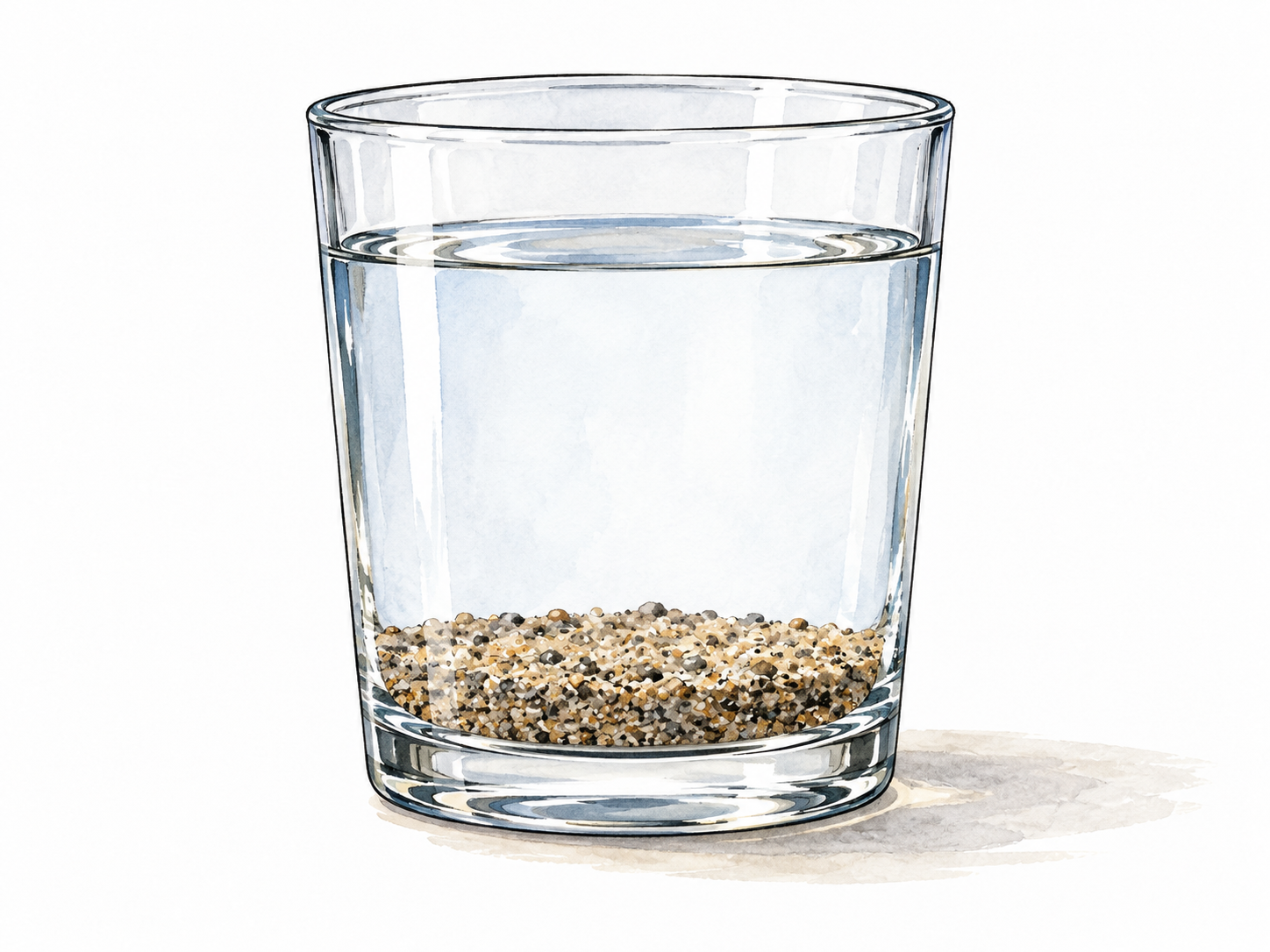
The sand is insoluble in water and settles at the bottom.
Etymology
The pieces mean “not capable of being loosened.” Loosening supplies the connection between the two modern senses: a substance cannot be dissolved, or a problem cannot be figuratively untangled through a solution.
In context
materials like salt and sugar are called soluble as they dissolve completely in water whereas some substances which do not dissolve in water like sand are called insoluble materials
More examples
- This pigment is insoluble in water, so we mix it with oil.
- Wheat bran contains insoluble fiber, which does not dissolve in water.
- The powder is soluble in water but insoluble in alcohol.
Forms
insoluble
insolubility noun — The inability to dissolve in a liquid.
Similar words
- undissolvable
- Means unable to dissolve, but is less common.