noun
intestine
in-TES-tin/ɪnˈtestɪn/
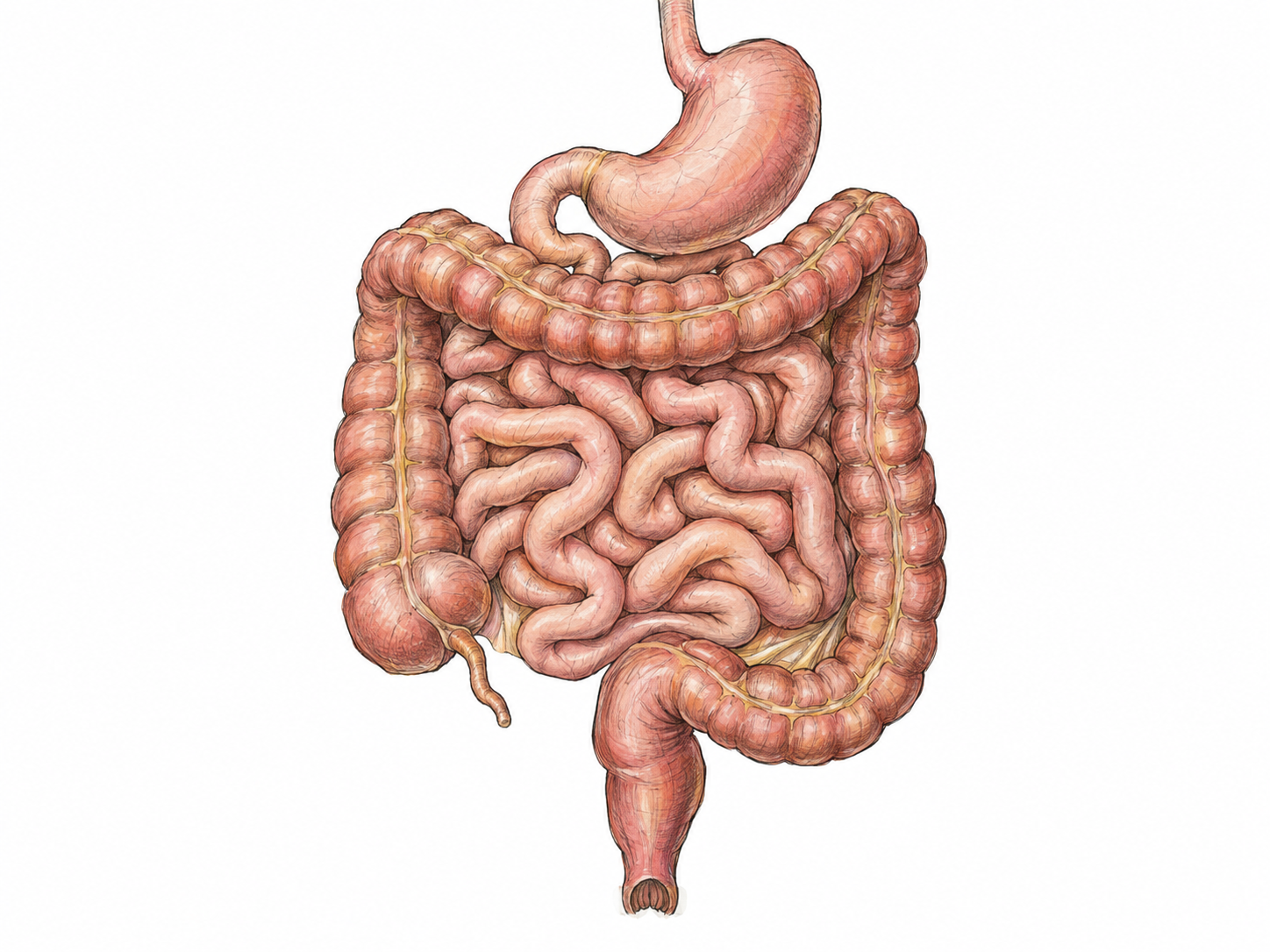
The digestive tube between the stomach and the anus.
The small intestine absorbs nutrients from the food we eat.
Etymology
Latin intestinum, “gut,” comes from an adjective meaning “inward” or “internal.” The digestive tube was thus named as an internal part of the body.
In context
the small intestines um so this is the body's major digestive organ the small intestine so it extends all the way from the pyloric sphincter
More examples
- The large intestine absorbs water from undigested food.
- Muscles move food through the intestines.
- The surgeon removed a damaged section of the intestine.
Forms
intestine · intestines
intestinal adjective — Relating to or affecting the intestines.