noun
intonation
in-tuh-NAY-shun/ˌɪntəˈneɪʃn/
The manner in which musical or spoken pitches are produced.
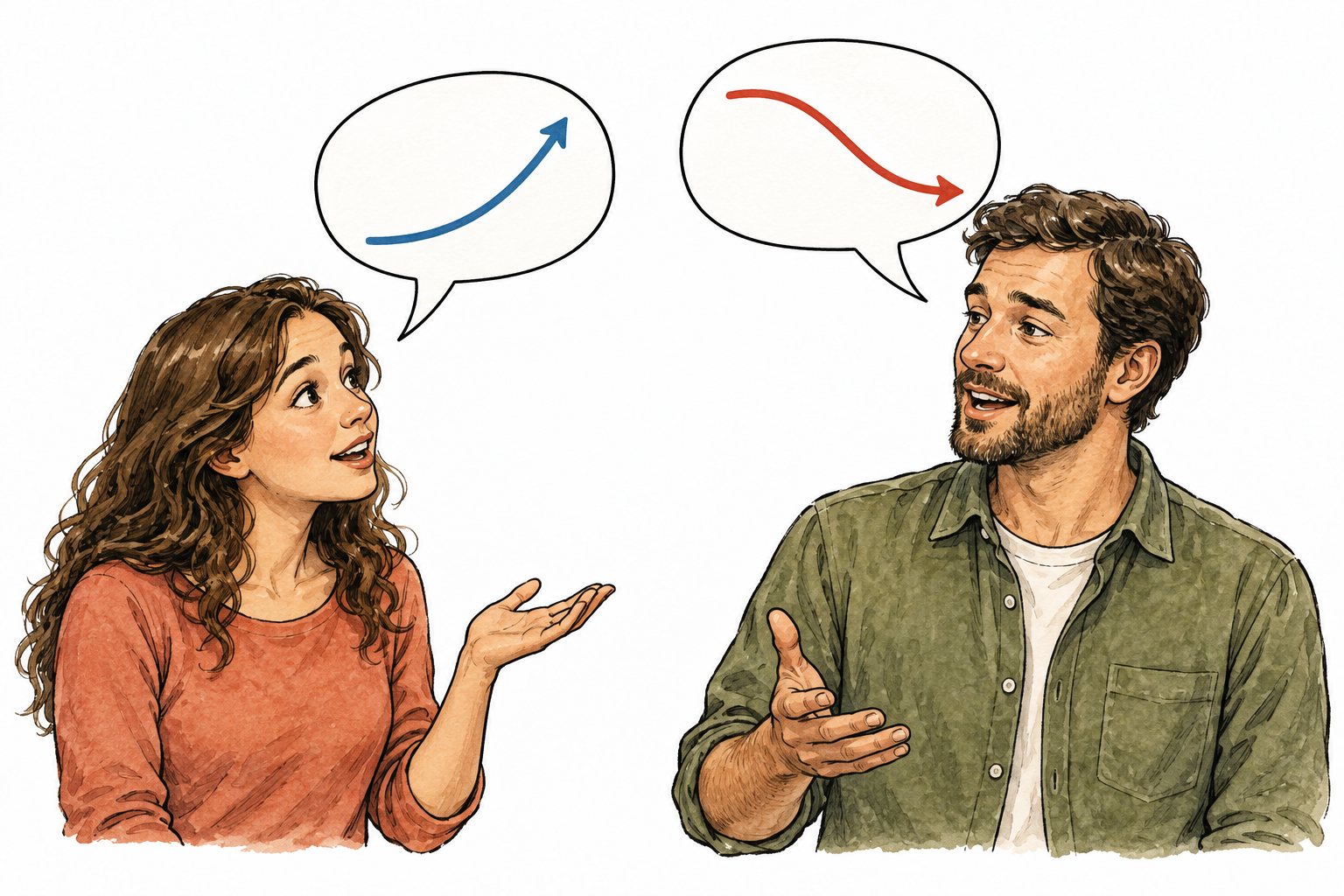
Her rising intonation makes the statement sound like a question.
Etymology
The 'in' and 'tone' pieces underlie the idea of singing according to tone. Intonation moved from a musical opening phrase and the act of intoning to the changing pitch of ordinary speech.
In context
Rising intonation often indicates questions or uncertainty. Falling intonation shows statements or certainty.
More examples
- The violinist adjusts her finger position to improve her intonation.
- The choir practices slow scales to develop accurate intonation.
- His flat intonation makes even good news sound dull.
Forms
intonation · intonations
intone verb — To speak or sing in sustained tones.
Similar words
- inflection
- Emphasizes a particular vocal change rather than overall pitch patterns.
- pitch
- Names how high or low a sound is, not its accuracy.