DictionaryinverseOpposite or reverse
adjective / noun / verb

inverse

in-VURS/ˌɪnˈvɜːrs/

A reversed counterpart that opposes an original.

One arrangement of objects is the inverse of the other.
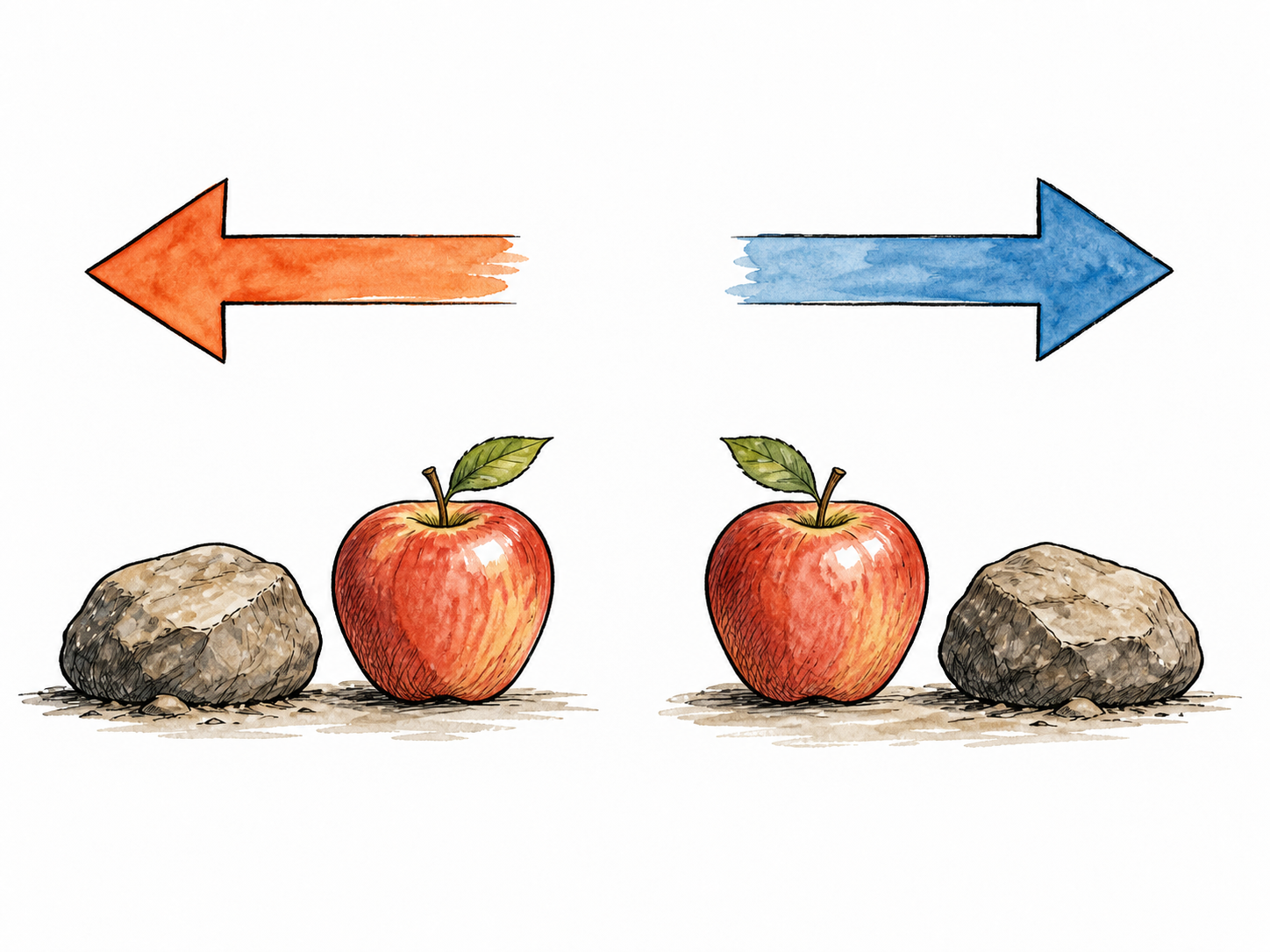
Two arrows point in opposite directions beside reversed object ordering.
Etymology

In- and vertere combine in a verb meaning “turn upside down” or “reverse.” Its participle supplies the image of something turned the other way, underlying the sense of opposite order, position, or effect.

In context

Farhat Lectures. The # 1 CPA & Accounting Courses0:36
… a negative relationship inverse relationship between price and quantity
BAR Economics Law of Supply

More examples

  • List the numbers in inverse order.
  • Subtraction is the inverse of addition.
  • Speed and travel time have an inverse relationship.

Forms

inverse · inverses · inversed · inversing

invert verb — To reverse something's position, order, or effect.

inversion noun — A reversal of position, order, or effect.

Similar words

opposite
Contrasts with something without necessarily reversing its order or effect.
reverse
Emphasizes the opposite order, direction, or side of something.
reciprocal
Specifically one divided by a given nonzero number.