adjective
irate
eye-RAYT/aɪˈreɪt/
Very angry.
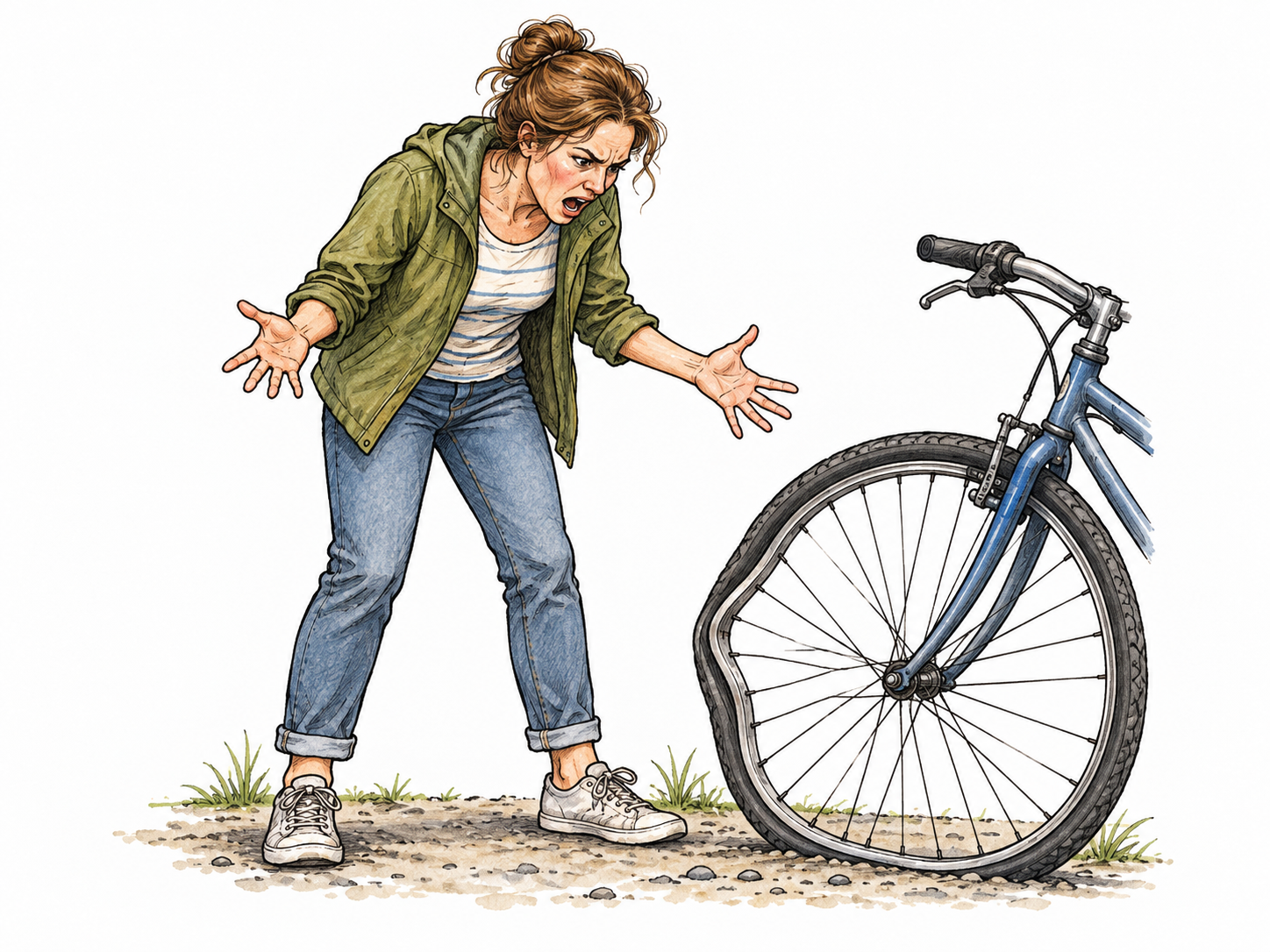
The irate woman protests beside her freshly dented bicycle wheel.
Etymology
Latin iratus described someone who had grown angry: it is the participle of irasci, “grow angry,” from ira, “anger.” Irate preserves this force in describing someone very angry or enraged.
In context
that his privileges are taken away in the hope that he would realise that he can't go around making innuendos and sexual comments to female staff. Anyways, he became very irate over it,
More examples
- Neighbors are irate about the constant construction noise.
- She sends an irate email after discovering another billing error.
- The long delay leaves several passengers irate.
Forms
irate
irately adverb — In a very angry manner.