noun
isotope
EYE-suh-tohp/ˈaɪsəˌtoʊp/
An atomic form of an element that differs from other forms in its number of neutrons.
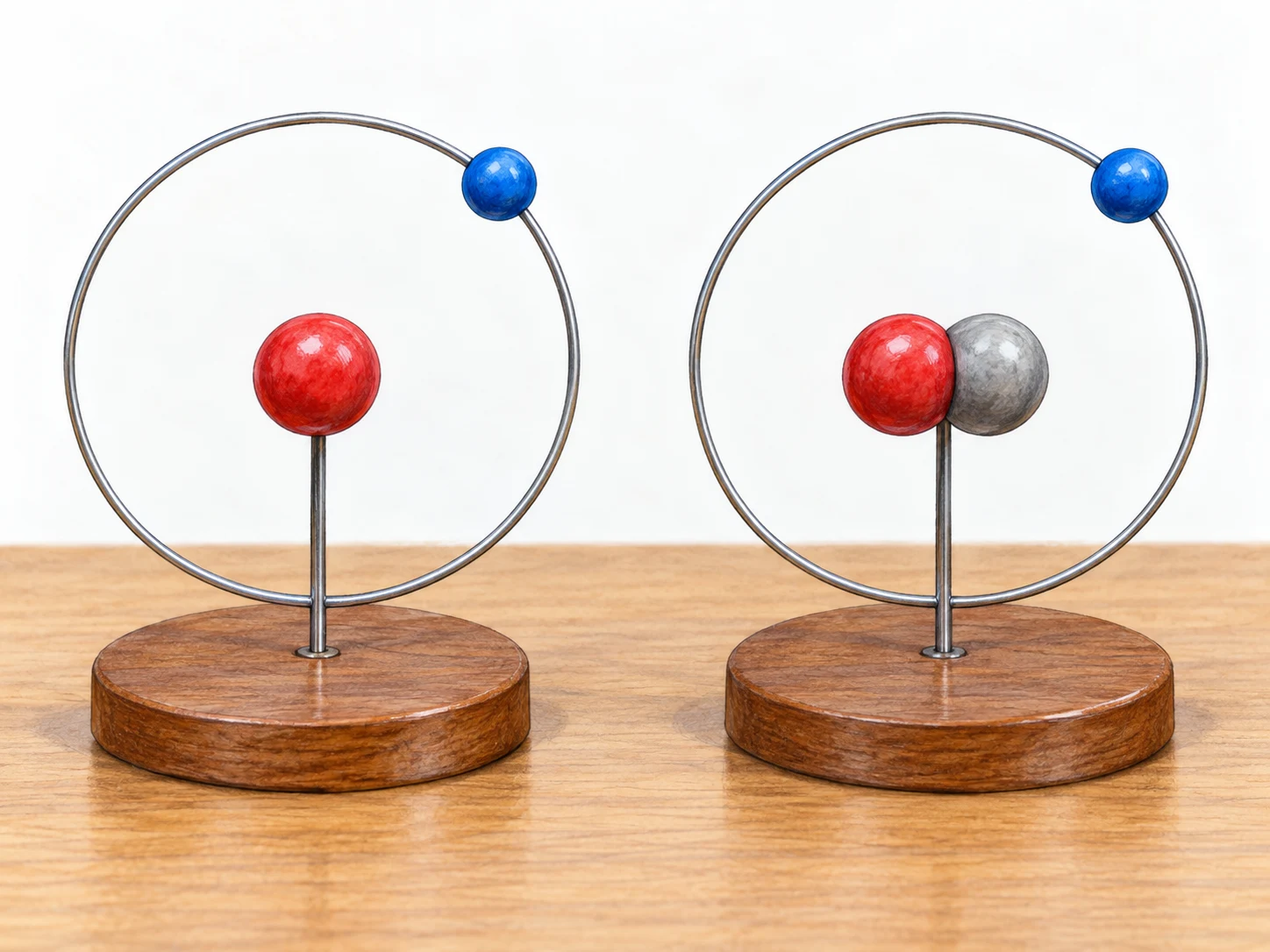
The second model represents a hydrogen isotope with an additional neutron.
Etymology
“Same place” refers to the periodic table: isotopes occupy the same position because they are forms of one element, despite their different atomic weights.
In context
well it contains iodine 131 and what i will tell you is that this isotope of iodine is unstable
More examples
- Isotopes of the same element have equal numbers of protons.
- This isotope of hydrogen has one proton and one neutron.
- Scientists measure oxygen isotopes in ice to study past climates.
Forms
isotope · isotopes
isotopic adjective — Relating to atomic forms of an element.
Similar words
- nuclide
- Identifies an atomic species by its proton and neutron counts.