noun
kabuki
kuh-BOO-kee/kəˈbuːki/
A Japanese theatrical tradition using elaborate stylized performance.
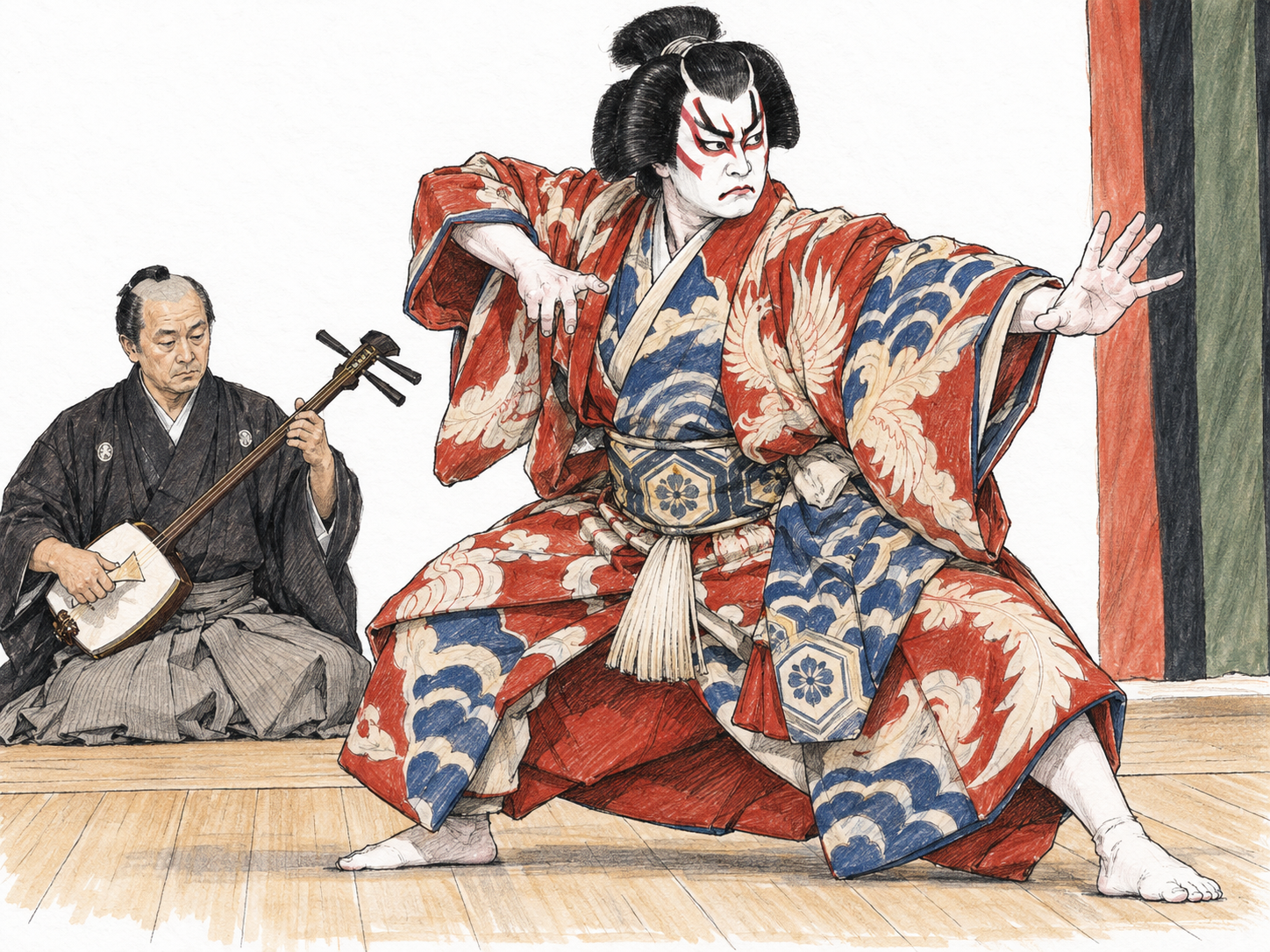
The kabuki actor holds a dramatic pose in an elaborate robe.
Etymology
On an alternative etymology, these pieces mean “art of song and dance.” This reading connects the theater’s name with its combination of music and stylized movement.
In context
a kabuki developed in Kyoto in the early 17th century and it incorporates dance dramatic gestures and music kabuki involves complex plot lines with dramas centering around court family and military intrigues
More examples
- Kabuki combines stylized acting with music and dance.
- We watch a kabuki performance at a theater in Tokyo.
- The bold makeup helps audiences recognize different characters in kabuki.
Forms
kabuki