noun
labyrinth
LAB-uh-rinth/ˈlæbərɪnθ/
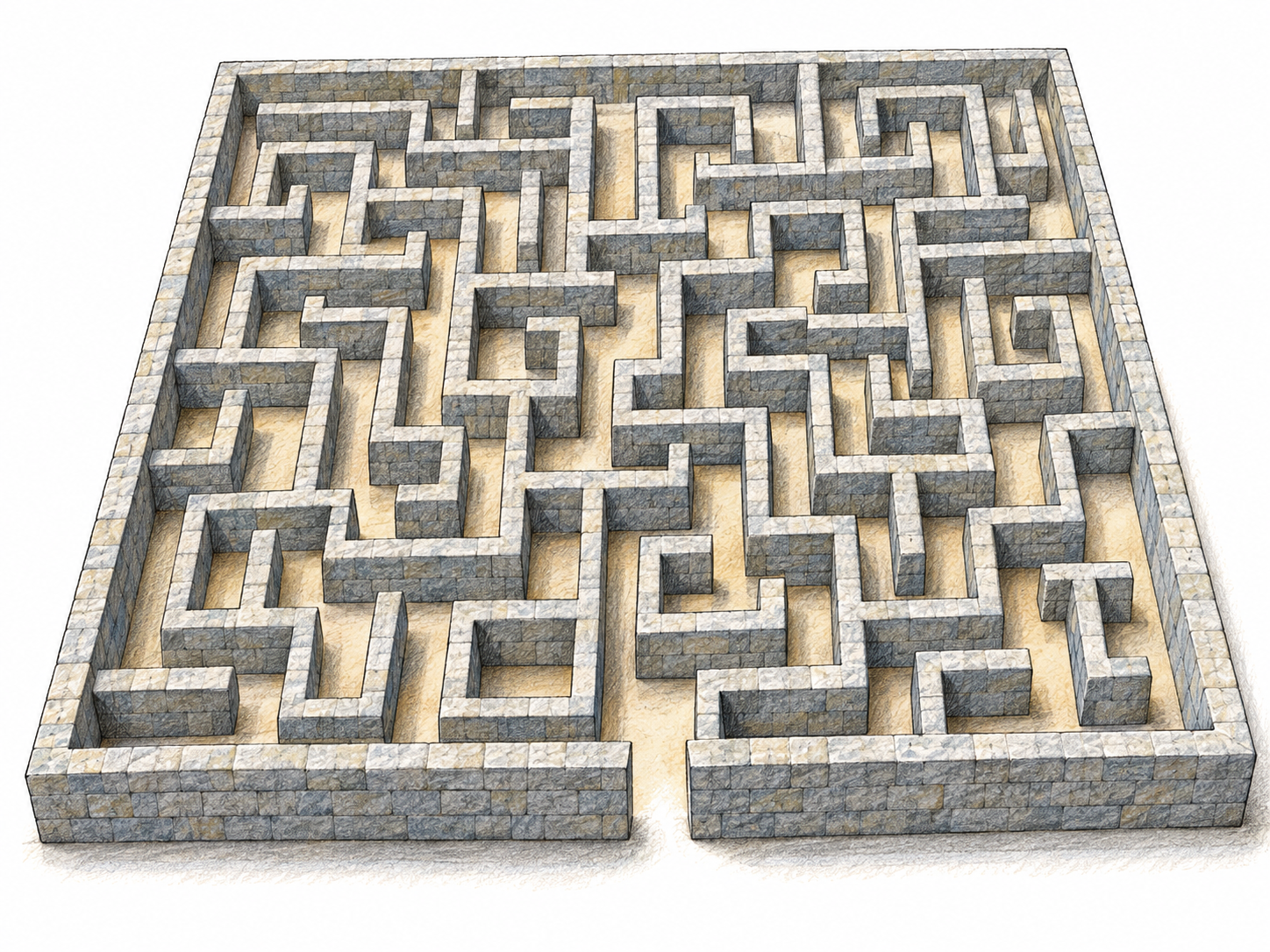
An intricate network of winding passages.
The stone labyrinth contains winding passages, branching junctions, and dead ends.
Etymology
Greek labyrinthos denoted a maze or a building full of intricate passages, the image retained in today's confusing network. Its deeper origin is unknown.
In context
genius inventor Daedalus, carved out the labyrinth beneath the island of Crete. Archeological attempts to find the fabled maze have come up empty handed.
More examples
- The tunnels form a labyrinth beneath the old fortress.
- Visitors follow winding paths through the garden's hedge labyrinth.
- Applicants face a labyrinth of rules and paperwork.
Forms
labyrinth · labyrinths
labyrinthine adjective — Having many winding passages or confusing details.
Similar words
- maze
- The everyday equivalent, often suggesting a puzzle to navigate.
- warren
- Emphasizes densely packed, interconnected rooms or narrow passages.