noun
liberty
LIB-er-tee/ˈlɪbərti/
Freedom from restrictions on one's actions.
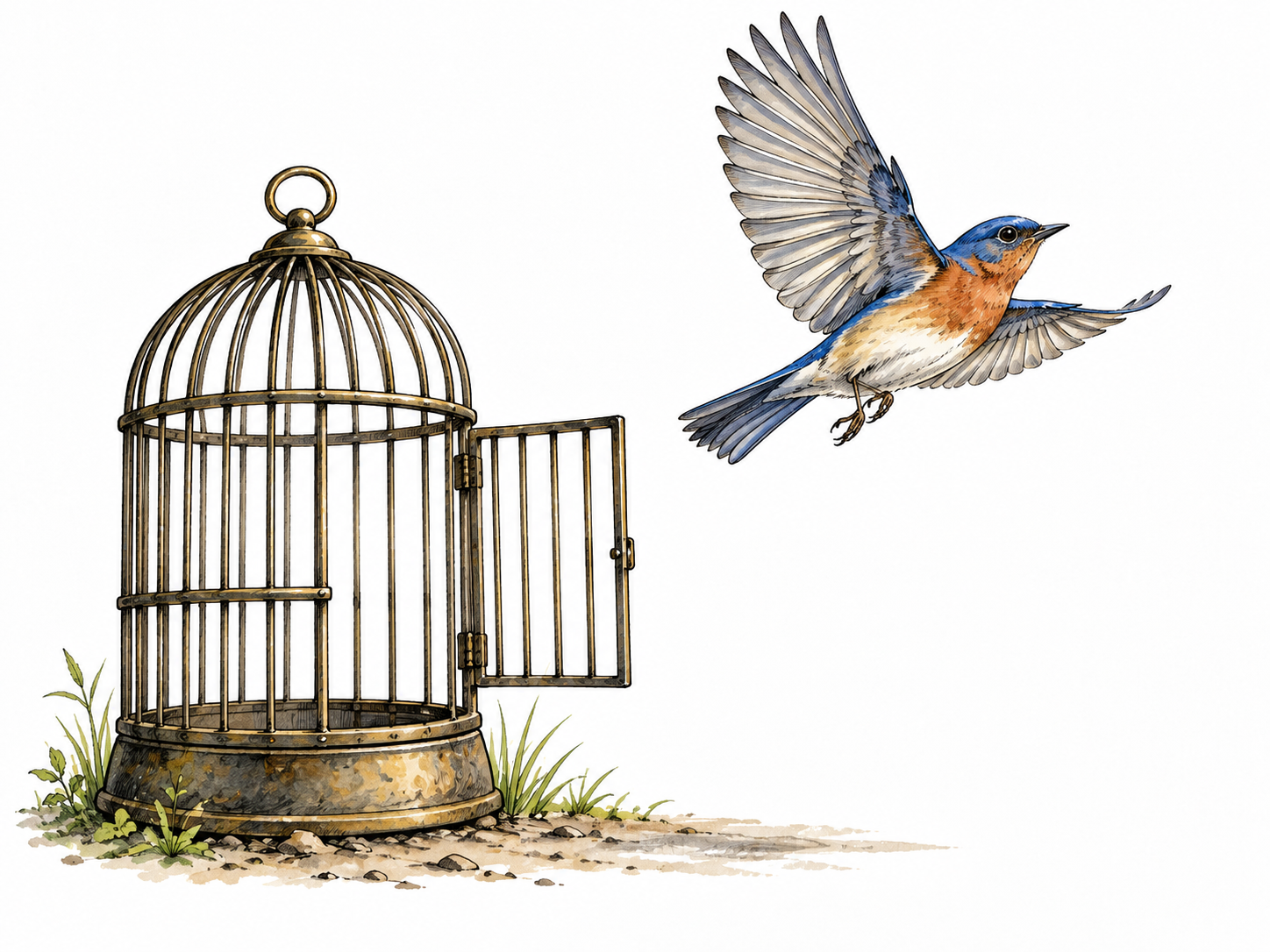
The bird enjoys liberty as it flies out of the open cage.
Etymology
The pieces express the condition of being free. Latin libertas covered both a free person's civil status and absence of restraint, directly connecting it with freedom from control or confinement.
In context
Negative liberty describes the individual freedom from something: from external constraint, and from outside interference. It’s the absence of obstacles within a society.
More examples
- You are at liberty to leave whenever you wish.
- I'm not at liberty to discuss the agreement.
- The director takes liberties with the facts to make the story exciting.
Forms
liberty · liberties
liberate verb — To set someone or something free.