noun
logarithm
LAW-guh-rih-thuhm/ˈlɔːɡərɪðəm/
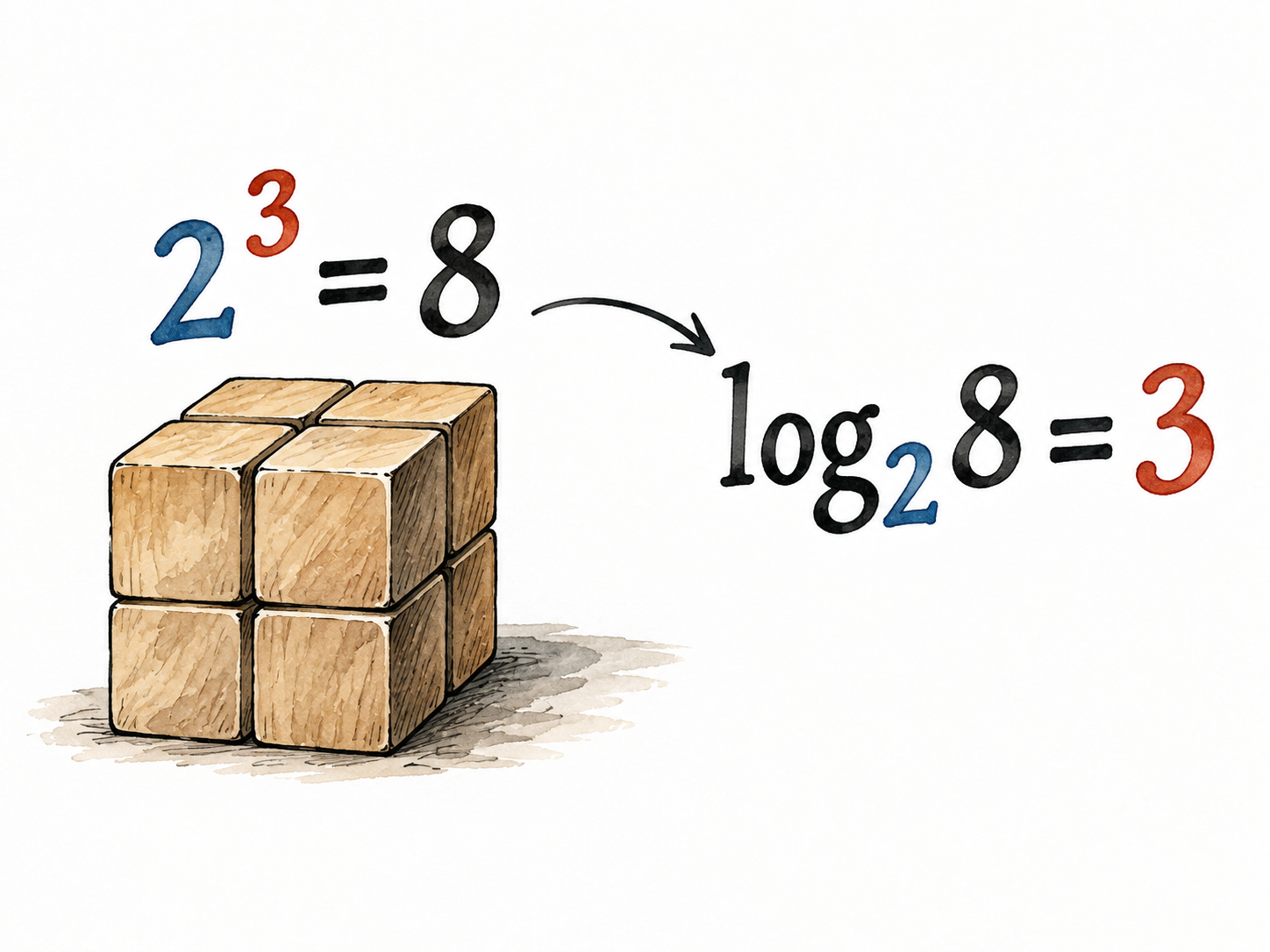
The exponent to which a base must be raised to produce a given number.
The logarithm of eight to base two is three.
Etymology
The name literally means “ratio-number” and was coined for a tool that shortened calculation. In this sense, the number tells you what exponent a chosen base needs to produce a given value.
In context
support of hypothesis and alternative equals one a zero match statistic implies zero information the standard additive measure of information in science is the logarithm of the likelihood ratio
More examples
- We use logarithms to turn multiplication into addition.
- Her calculator finds the natural logarithm of any positive number.
- The base-10 logarithm of 0.1 is −1.
Forms
logarithm · logarithms
logarithmic adjective — Relating to or expressed using logarithms.
Similar words
- exponent
- Names a power directly, without expressing an inverse operation.