noun
loss
LAWSS/lɔːs/
The deprivation of something previously possessed.
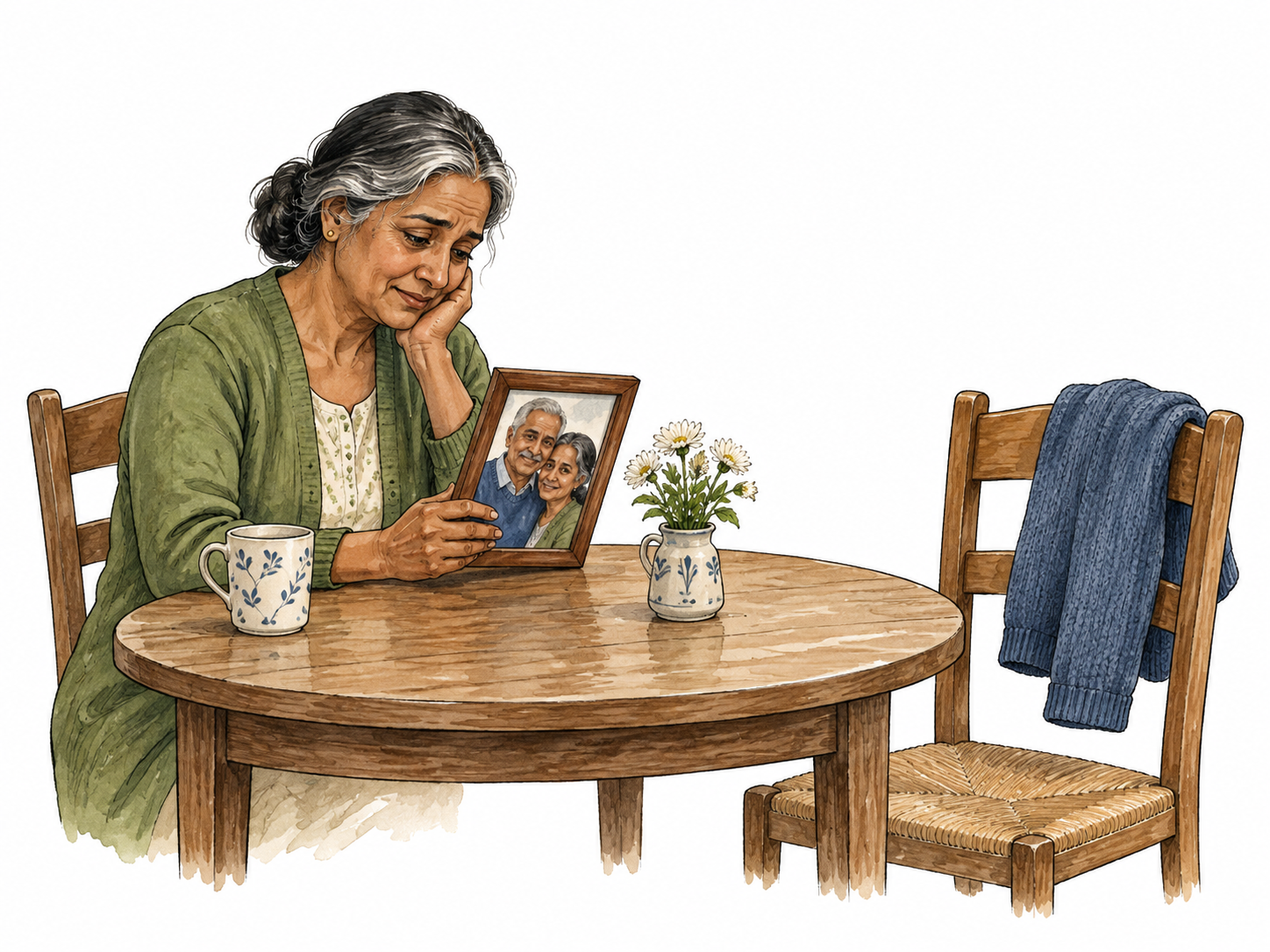
The woman holds their photograph beside an empty chair, reflecting on her loss.
Etymology
Loss probably developed from lost, the past participle of lose, rather than directly continuing the older noun meaning 'ruin.' It names the resulting state of no longer having something.
In context
we have a consistent coolant loss. The customer would would put coolant into the reservoir, but no drips on the ground
More examples
- The loss of my keys keeps me from driving home.
- The company reports heavy losses after paying unexpected repair bills.
- We offer our sympathy for the loss of your mother.
Forms
loss · losses
lose verb — To stop having or possessing something.
Similar words
- deprivation
- Emphasizes lacking something necessary, whether previously possessed or not.
- reduction
- Means a decrease in amount rather than complete absence.
- bereavement
- Refers specifically to the loss of someone through death.