noun
lubricant
LOO-brih-kuhnt/ˈluːbrɪkənt/
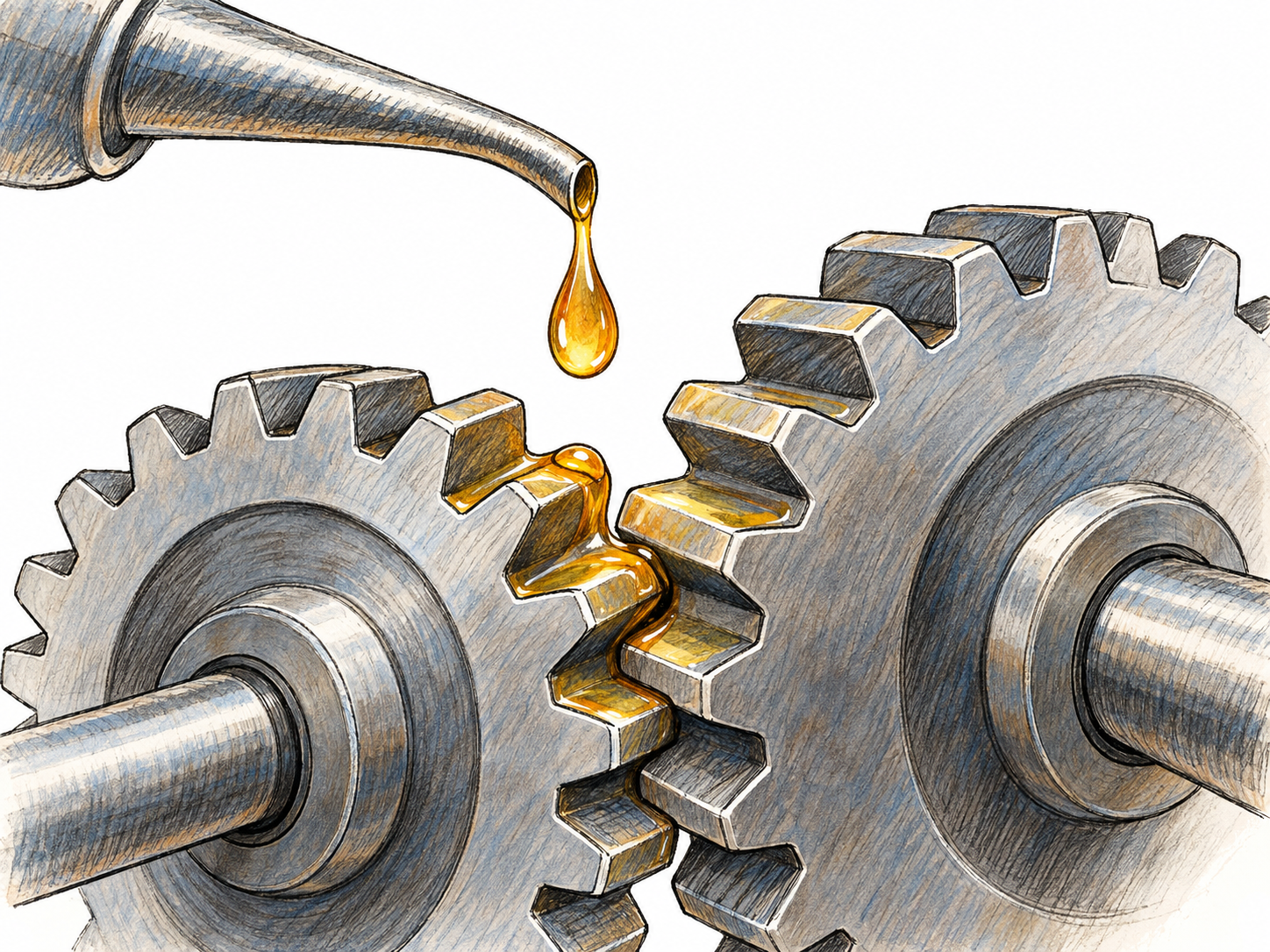
A substance that reduces friction between surfaces.
The oil forms a thin lubricant between the contacting gear teeth.
Etymology
The 'slippery' root underlies a participle meaning 'making slippery or smooth.' The noun probably developed from the adjective 'reducing friction,' naming a substance by what it does.
In context
lubricant to where the nipple and the rim meet this helps reduce friction and will make tensioning and future adjustments easier
More examples
- Apply lubricant to the hinge to stop the squeaking.
- This machine requires a lubricant that withstands high temperatures.
- Some lubricants can damage rubber seals.
Forms
lubricant · lubricants
lubricate verb — Reduce friction by applying a substance.
lubrication noun — The application of a substance to reduce friction.