noun
meiosis
my-OH-sis/maɪˈəʊsɪs/
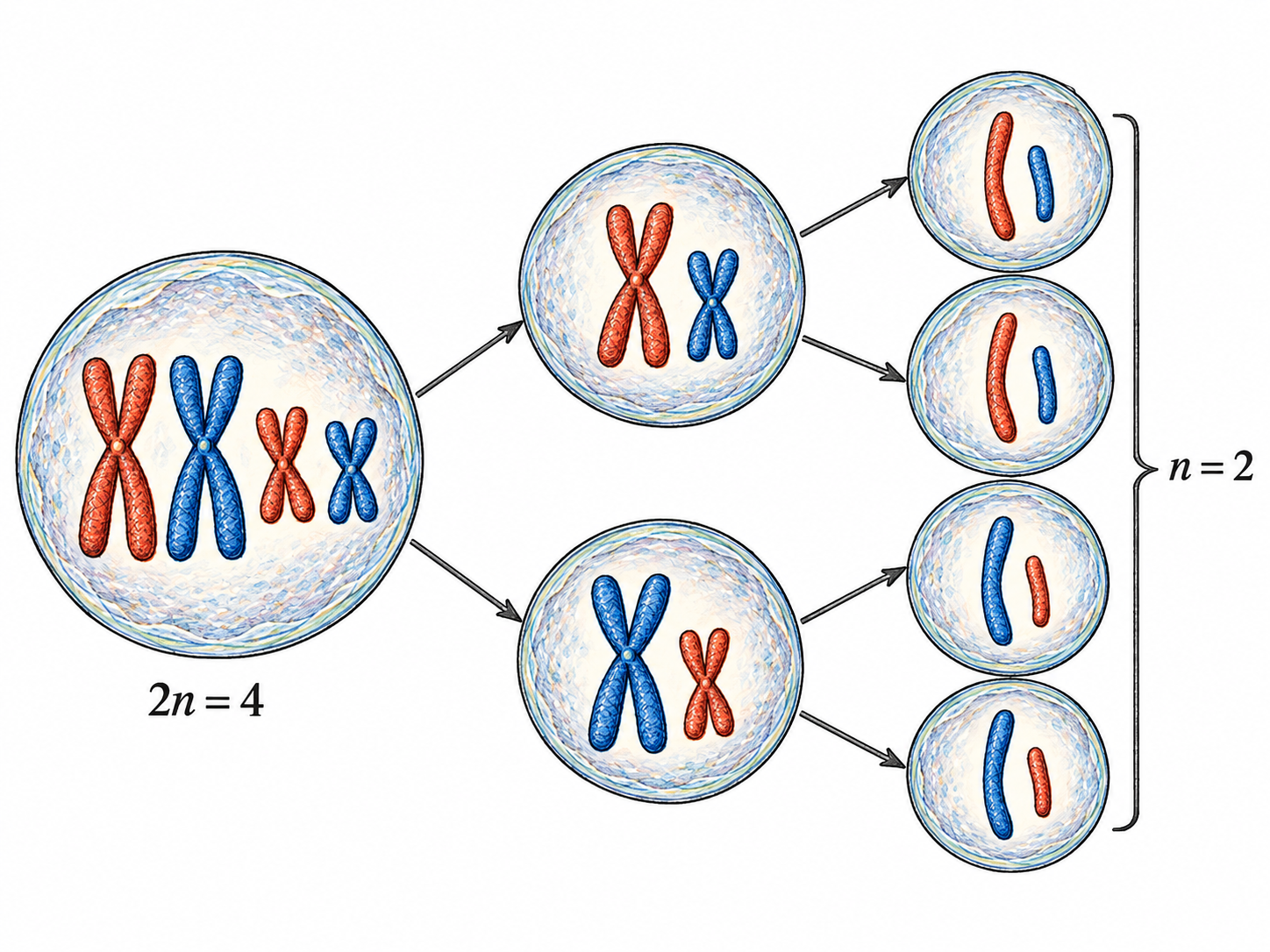
Cell division that produces cells with half the original chromosome number.
Meiosis produces reproductive cells with half the usual number of chromosomes.
Etymology
Greek meiōsis meant “a lessening.” In this biological use, the lessening is the reduction to half the usual number of chromosomes in the reproductive cells produced.
In context
in meiosis, you can start with a cell that has 46 chromosomes and by the end of meiosis, you end with four cells that each have 23 chromosomes
More examples
- Chromosomes exchange genetic material during meiosis.
- In humans, meiosis helps produce eggs and sperm.
- Plant cells undergo meiosis to form spores.
Forms
meiosis · meioses
meiotic adjective — Relating to cell division that halves chromosome number.
Similar words
- cell division
- A broader term that does not necessarily involve chromosome reduction.
- reduction division
- Emphasizes chromosome halving, often specifically during the first meiotic division.