noun
metabolism
muh-TAB-uh-liz-um/məˈtæbəlɪzəm/
The chemical processes by which a living thing uses energy and materials.
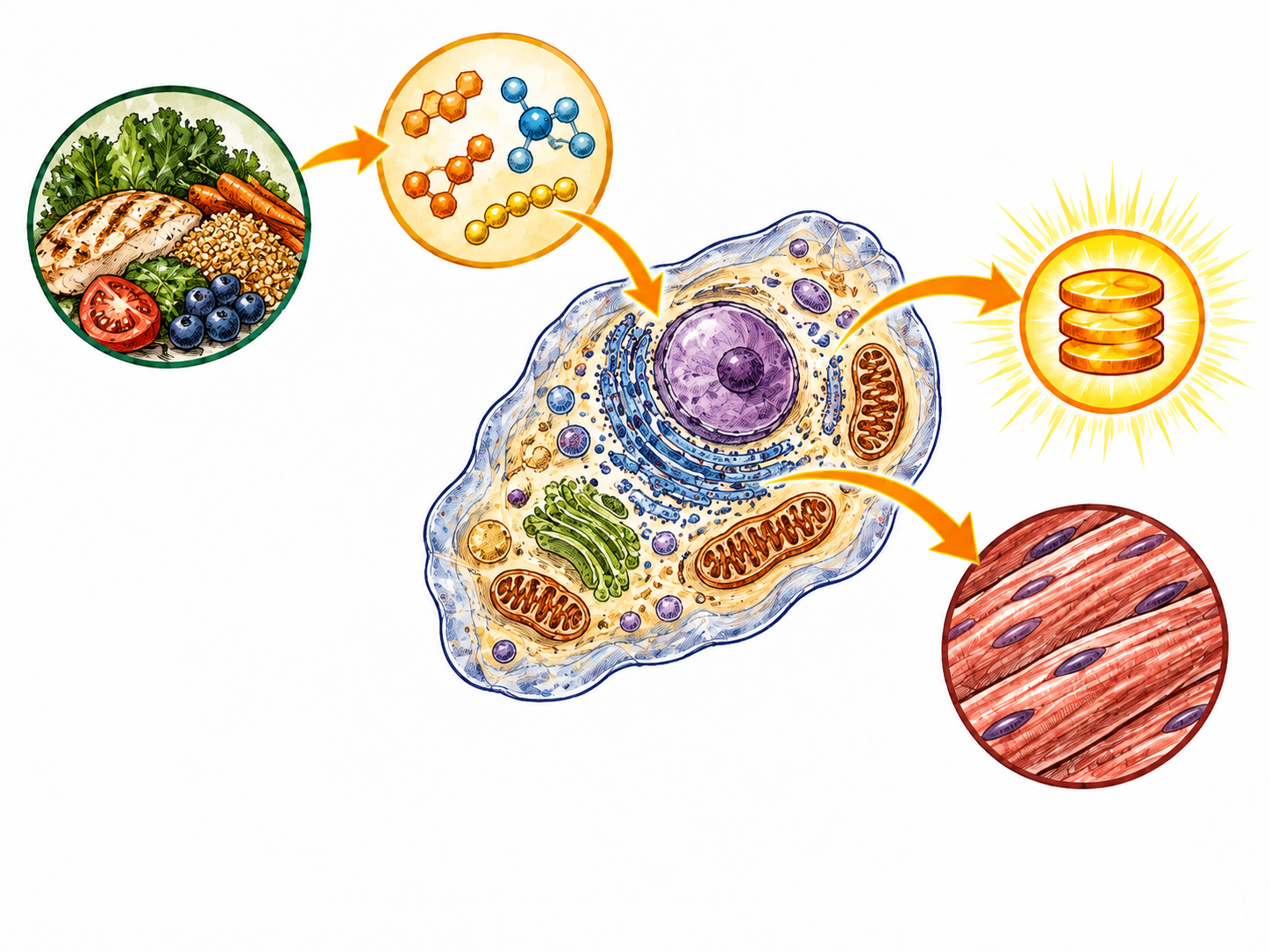
Your metabolism converts nutrients from food into energy and building materials.
Etymology
The elements for “change” and “throw” combine in a Greek verb meaning “to change.” Metabolism applies that idea to the body’s continual chemical transformation of food and other substances.
In context
by doing a refeed or giving yourself a caloric surplus it then spikes that metabolism back up and tells your body to get used to having more food
More examples
- Regular exercise can affect your metabolism.
- Researchers study how temperature affects metabolism in plants.
- These animals have slower metabolisms during winter.
Forms
metabolism · metabolisms
metabolic adjective — Relating to chemical processes within living things.
metabolize verb — To process substances chemically within living things.
Similar words
- catabolism
- Specifically breaks molecules down, rather than covering all metabolic processes.
- anabolism
- Specifically builds molecules, rather than covering all metabolic processes.