adjective
miserable
MIZ-ruh-bul/ˈmɪzrəbl/
Marked by severe distress or discomfort.
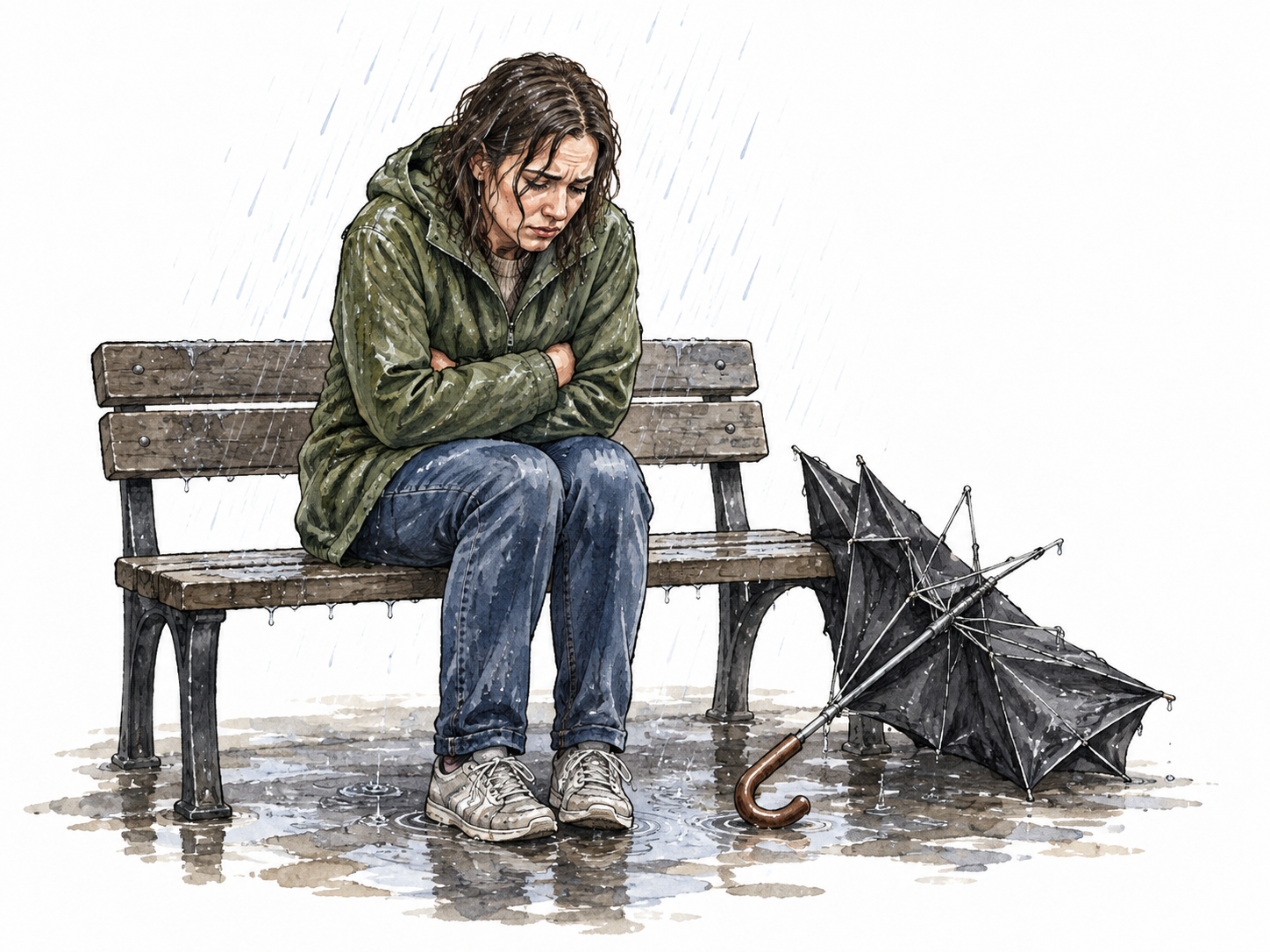
The soaked person looks miserable on the bench beside a broken umbrella.
Etymology
The underlying image is of someone or something pitiable—wretched enough to deserve pity. English uses the word both for people feeling intense unhappiness and for conditions that cause suffering or discomfort.
In context
Scrooge, you're miserable because of you. Alan: Yeah. Jono: And, you know, these chains that you're building for yourself, this whole life that you have, this whole unhappy life
More examples
- She feels miserable after arguing with her best friend.
- Cold rain makes the walk home miserable.
- They pay a miserable wage for such demanding work.
Forms
miserable · more miserable · most miserable
misery noun — A state of severe unhappiness or suffering.
miserably adverb — In a deeply unhappy or uncomfortable way.
Similar words
- wretched
- Often emphasizes suffering linked to hardship or terrible living conditions.
- unhappy
- Describes sadness without necessarily implying severe distress or physical discomfort.
- uncomfortable
- Emphasizes physical or social unease, often less severe than misery.