noun
numerator
NOO-muh-ray-ter/ˈnuːməreɪtər/
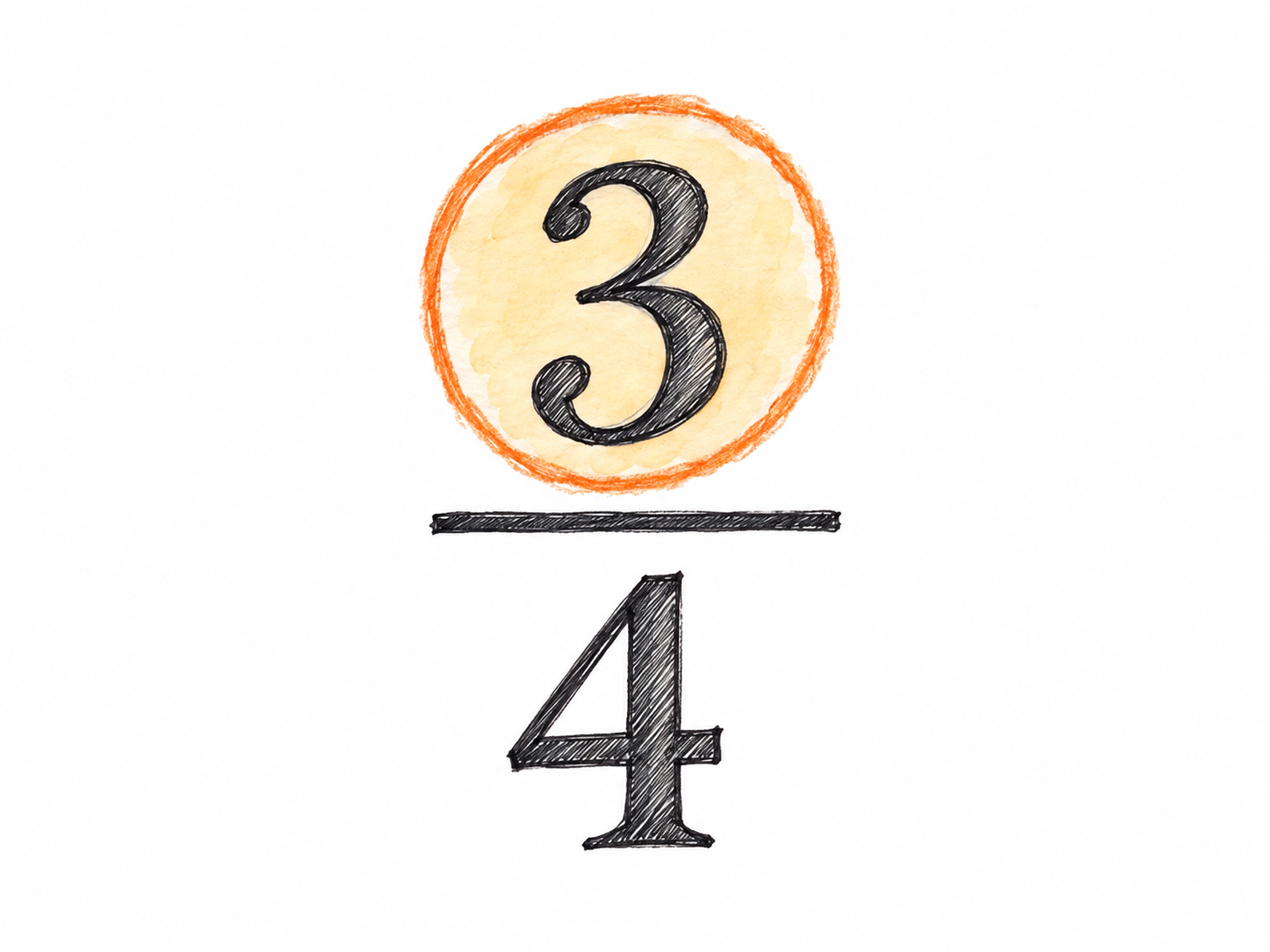
The top number in a fraction.
In the fraction three-fourths, the numerator is three.
Etymology
A numerator is literally a “counter” or “numberer.” In a fraction, the upper number does the counting: it states how many of the fractional parts are being taken.
In context
Remember, we're asking for the fraction of the pets that are cats. How many cats are there? Yeah, three! So, what's the numerator?
More examples
- To add fractions with the same denominator, add their numerators.
- Multiplying the numerator and denominator by two leaves the fraction unchanged.
- A fraction equals zero when its numerator is zero.
Forms
numerator · numerators