verb
obliterate
uh-BLIT-uh-rayt/əˈblɪtəreɪt/
To destroy or erase something completely.
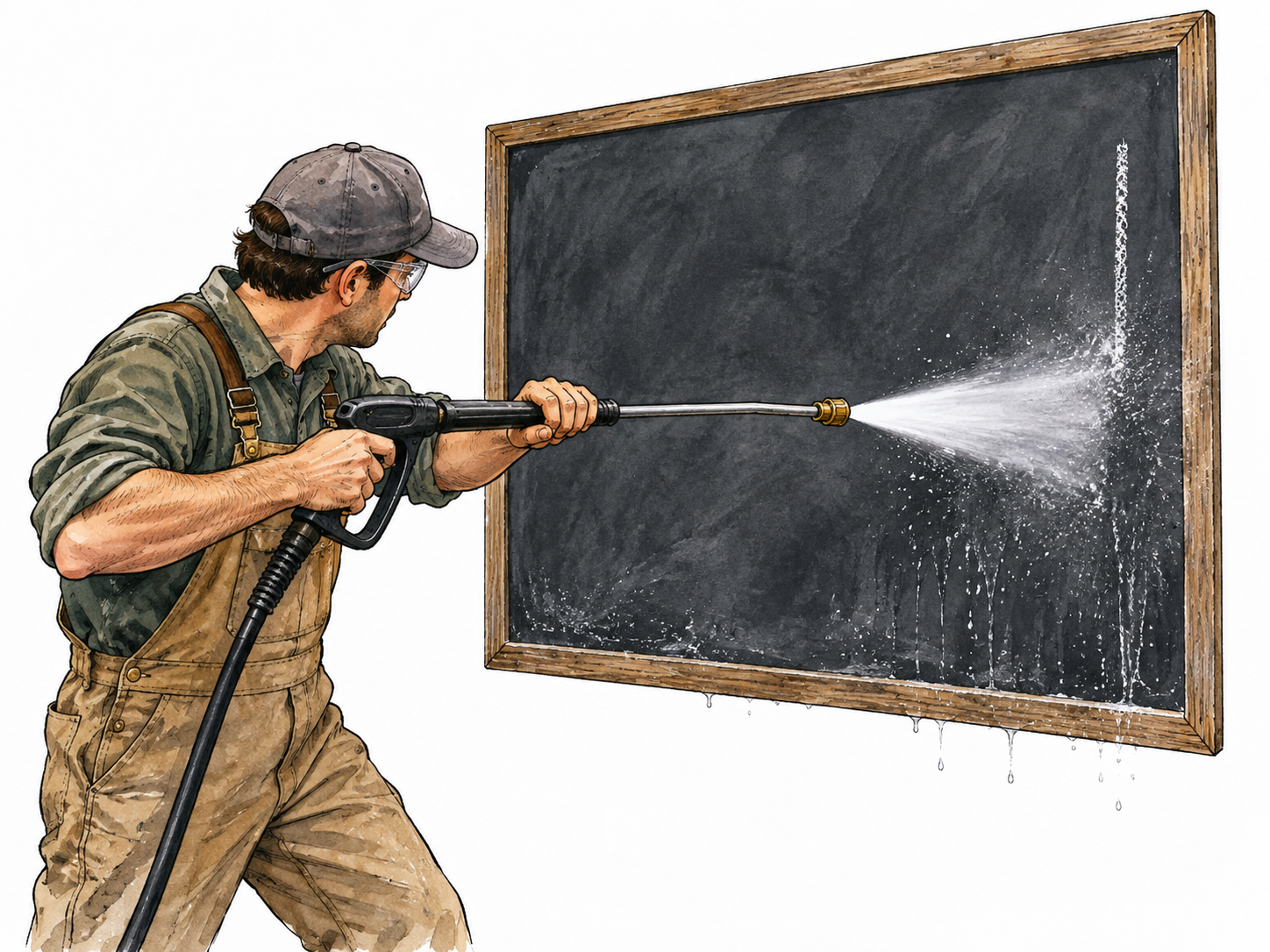
The pressure washer begins to obliterate the remaining chalk mark.
Etymology
The original image is writing across letters to strike them out. Erasing writing broadened to wiping out a remembrance or removing every trace of something.
In context
in order to obliterate the evidence of the crimes that had been committed there they wanted to wipe out the past
More examples
- He scrubbed the mark until it was almost obliterated.
- The flood obliterated the path across the field.
- A thick black line obliterated the name on the page.
Forms
obliterate · obliterates · obliterated · obliterating
obliteration noun — complete destruction or erasure
Similar words
- erase
- Erase removes marks or information; obliterate stresses complete destruction of traces.
- annihilate
- Annihilate destroys utterly; obliterate also applies to making something completely unreadable or unrecognizable.