noun
paganism
PAY-gun-iz-um/ˈpeɪɡənɪzəm/
Religious beliefs or practices outside major monotheistic traditions, especially those honoring nature or multiple gods.
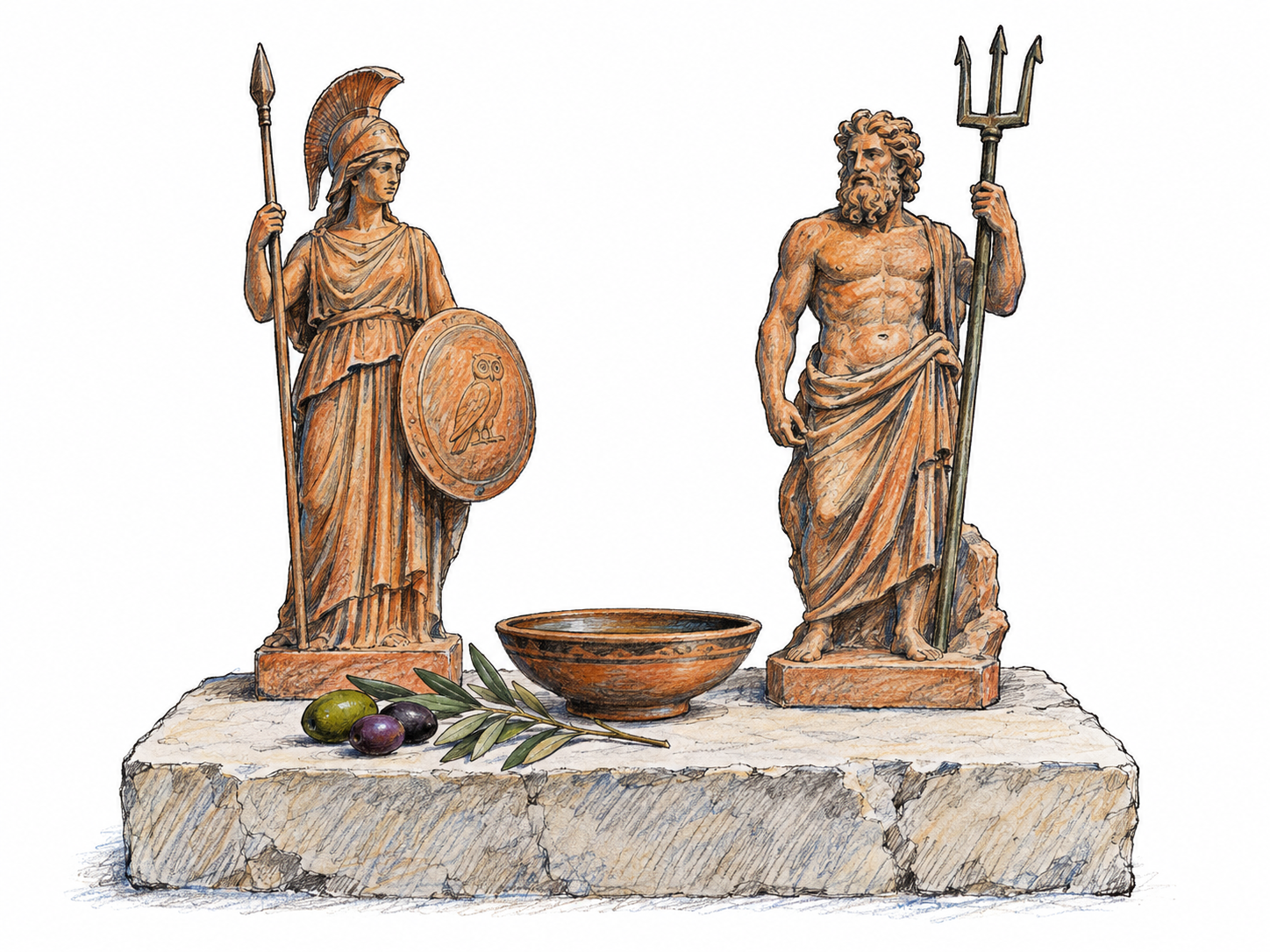
The household shrine's offerings to Athena and Poseidon illustrate ancient Greek paganism.
Etymology
The suffix turns pagan into a name for religious beliefs and practices. The base's religious meaning probably developed from paganus as ‘civilian,’ contrasting outsiders with Christians imagined as soldiers of Christ.
In context
The Pope orders his missionaries to use a ritualistic tool, water basins, that is heavily associated with pagan temple purification to cleanse a building of its paganism.
More examples
- The course explores paganism in ancient Greece and Rome.
- Some forms of paganism honor many gods and goddesses.
- For him, paganism includes rituals that mark the summer solstice.
Forms
paganism
pagan noun — A person who practices a pagan religion.
Similar words
- polytheism
- Specifically means belief in multiple gods, not necessarily nature worship.
- animism
- Emphasizes spirits in nature rather than worship of multiple gods.