verb / noun / interjection
pardon
PAR-dn/ˈpɑːrdn/
To forgive someone for an offense or fault.
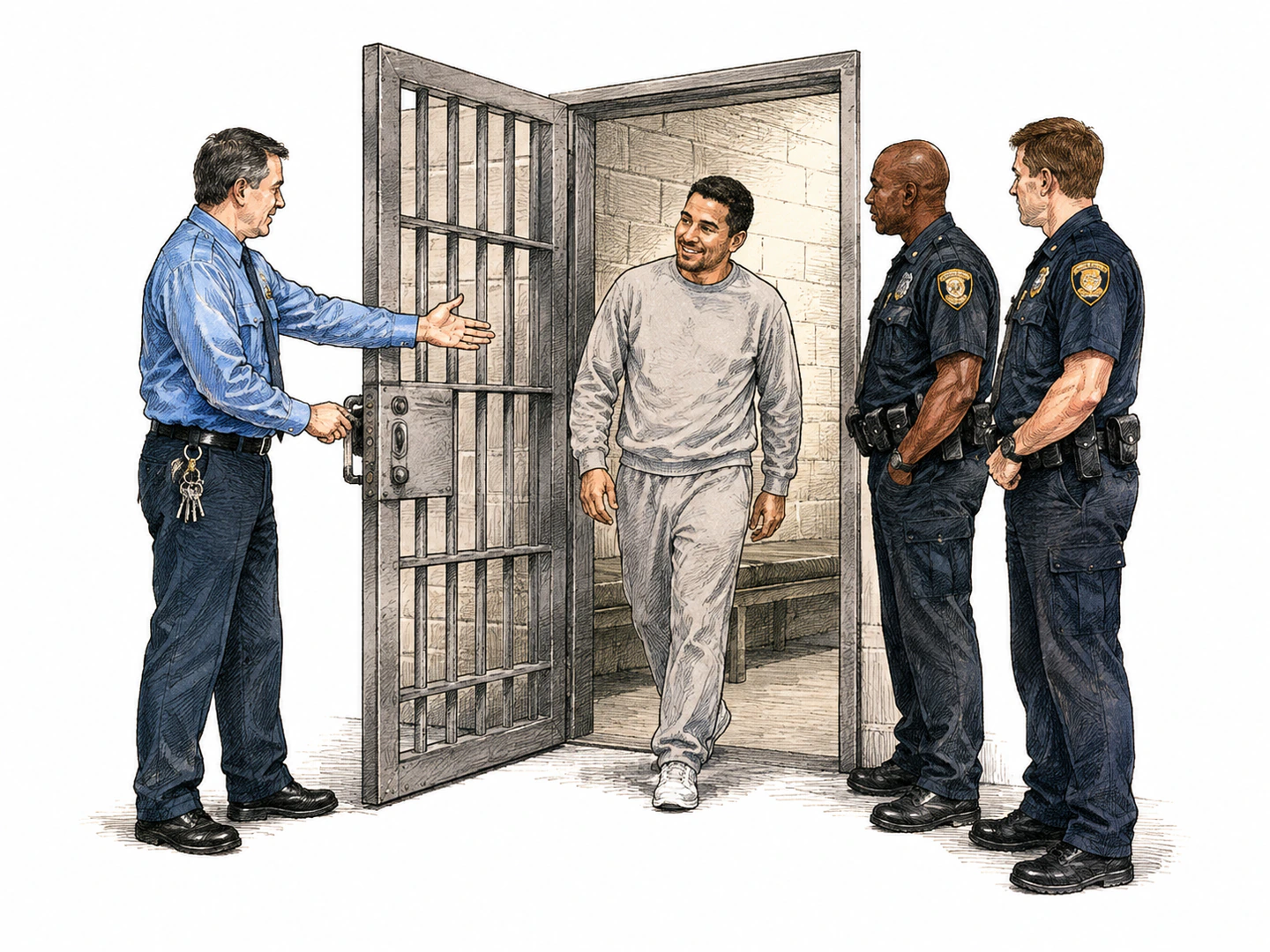
A pardon allows the relieved prisoner to leave the unlocked cell.
Etymology
The pieces express giving wholeheartedly. That sense developed into remitting an offense or obligation, connecting forgiveness with release from the punishment otherwise owed.
In context
when United States presidents pardon people charged with crimes.
Oh, pardon me but can I just butt in here?
More examples
- The governor grants him a pardon for the crime.
- Pardon me for interrupting your conversation.
- Pardon? I didn't catch your name.
Forms
pardon · pardons · pardoned · pardoning
pardonable adjective — Able to be forgiven or excused.