adjective / noun
passive
PASS-iv/ˈpæsɪv/
Receiving or allowing action rather than actively performing it.
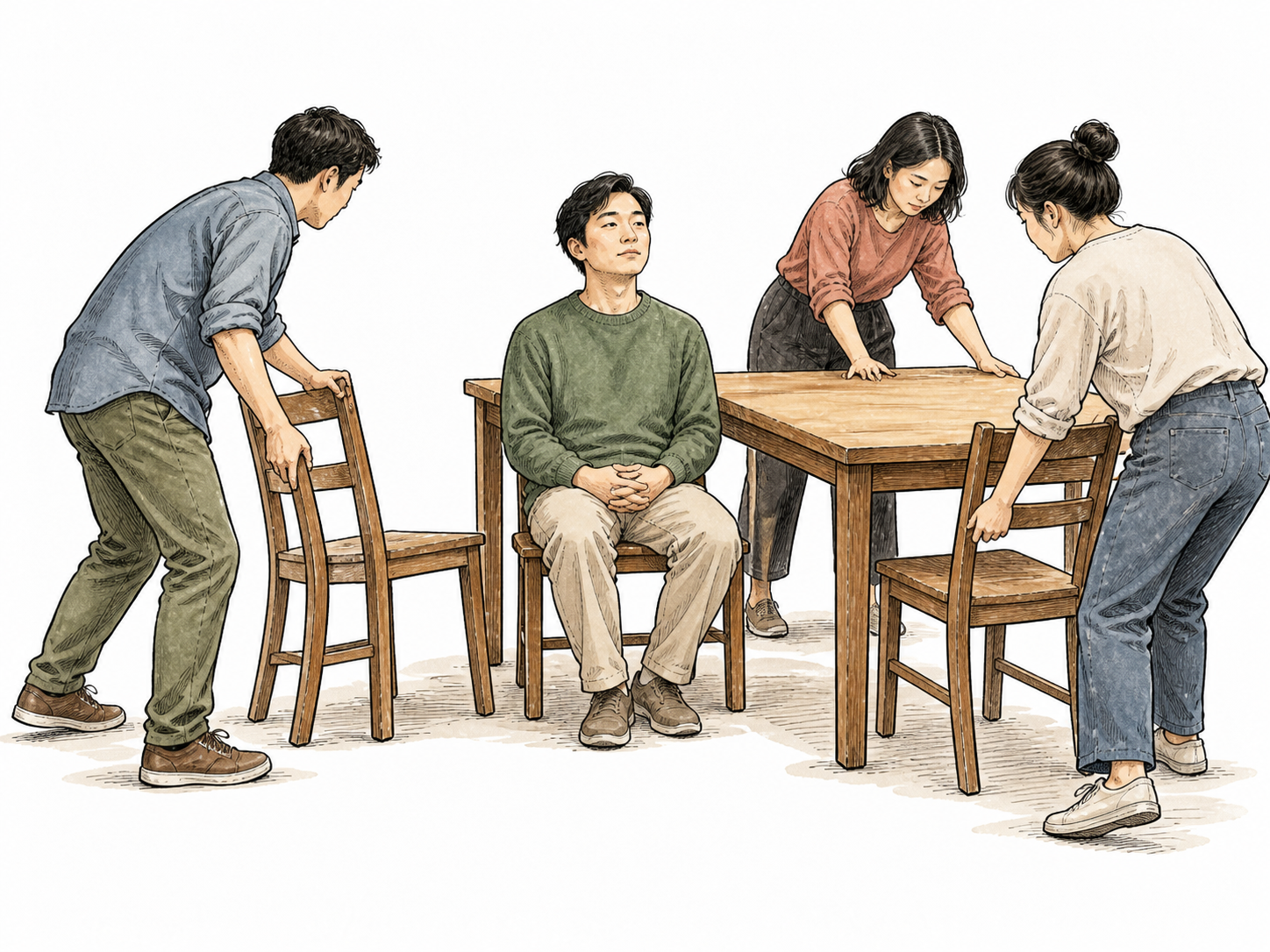
The adult remains passive while others rearrange the shared table.
Etymology
The underlying idea is undergoing something rather than initiating it. From being capable of being acted upon, passive came to describe enduring or accepting what happens without resistance.
In context
the old way to think about the brain was that the brain was sort of a passive computational engine right the new way of thinking about what the brain does is that it's an active inference generator
More examples
- She takes a passive role in planning the trip.
- The protesters offer passive resistance by refusing to move.
- In the passive, the subject receives the action.
Forms
passive · passives
passivity noun — A lack of active participation or resistance.
passively adverb — Without actively taking part or resisting.
Similar words
- inactive
- Describes a lack of activity, not necessarily receiving action.
- unresisting
- Emphasizes not opposing an action rather than not participating.