adjective
pathogenic
path-uh-JEN-ik/ˌpæθəˈdʒenɪk/
Capable of causing disease
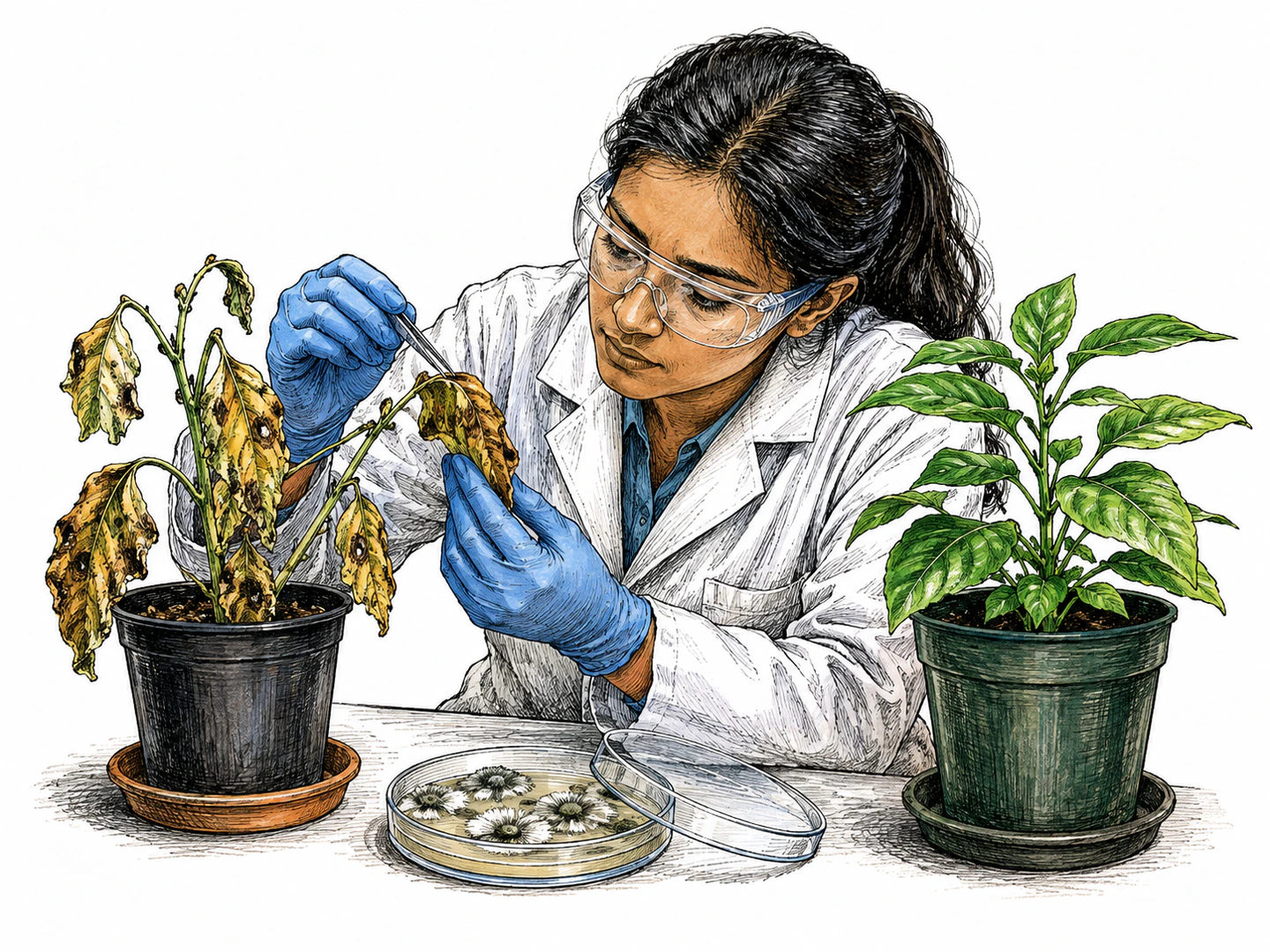
The scientist investigates the pathogenic organism responsible for the plant's disease.
Etymology
The pieces mean 'disease-producing,' making the connection causal: something pathogenic has the capacity to bring about disease.
In context
This lack of pathogenic bacteria not only makes it safer to eat…
which, in theory, could correct up to almost half of pathogenic point mutations…
More examples
- The lab tests the water for pathogenic microorganisms.
- Some strains of this bacterium are pathogenic, while others are harmless.
- Farmers watch for pathogenic fungi that damage their crops.
Forms
pathogen noun — An organism or agent that causes disease.
pathogenicity noun — The ability to cause disease.
Similar words
- infectious
- Emphasizes the ability to infect, rather than cause disease.
- virulent
- Emphasizes the severity of disease caused, not merely the capability.