noun
physics
FIZ-iks/ˈfɪzɪks/
The science of matter, energy, and their interactions.
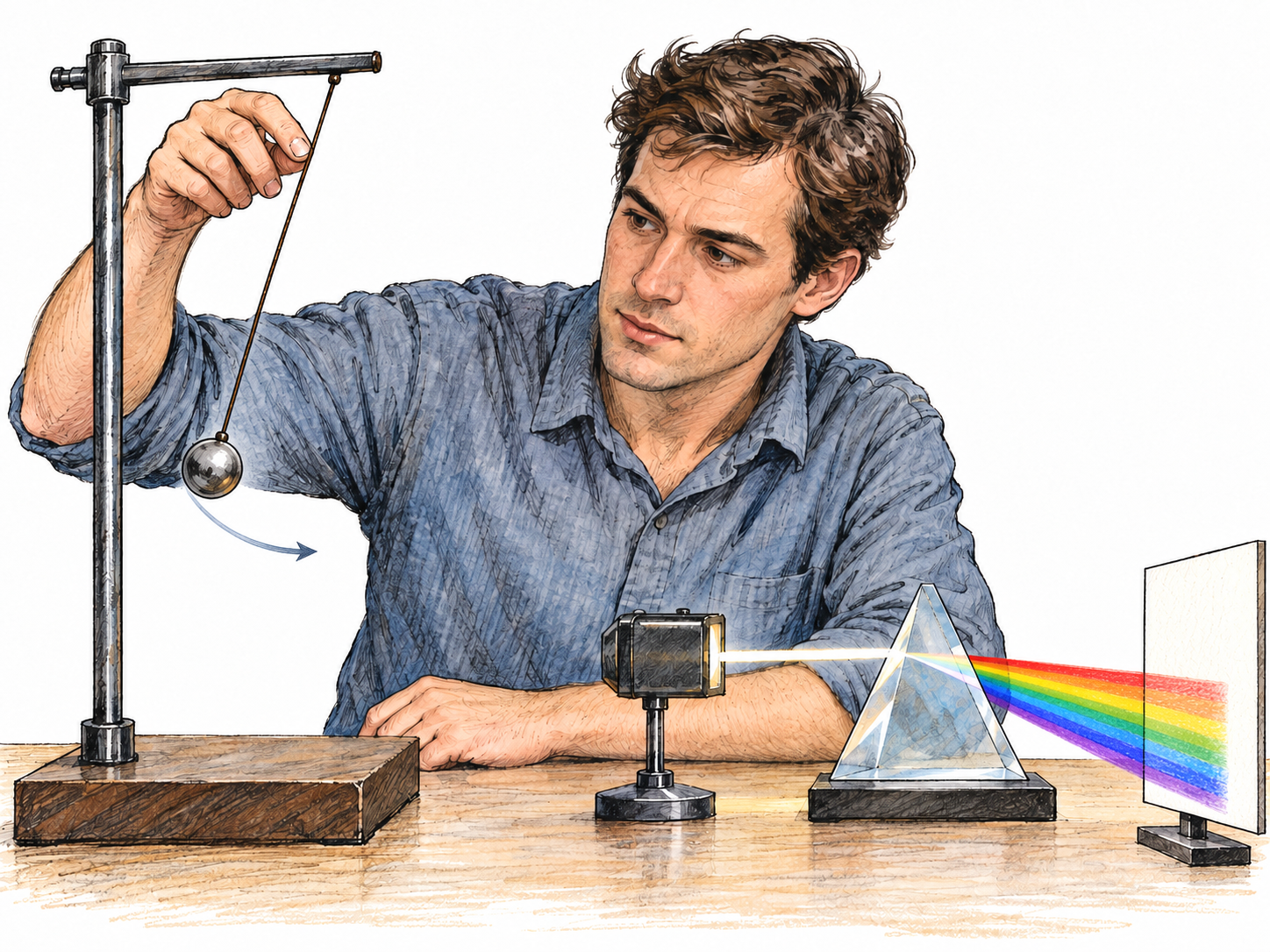
Physics helps us understand how light travels and objects move.
Etymology
The pieces evoke “natural things,” the subject of the broader study of nature. Physics later narrowed to the science of matter and energy rather than natural science generally.
In context
this is also physics this is a concept called inertia right which means that you know an object in motion tends to stay in motion an object at rest tends to stay at rest
More examples
- She studies physics to learn how the universe works.
- The physics of sound explains why guitar strings vibrate.
- Our physics class measures how quickly a ball accelerates.
Forms
physicist noun — A scientist who studies matter and energy.