adjective
plaintive
PLAYN-tiv/ˈpleɪntɪv/
Expressing sadness in sound or tone.
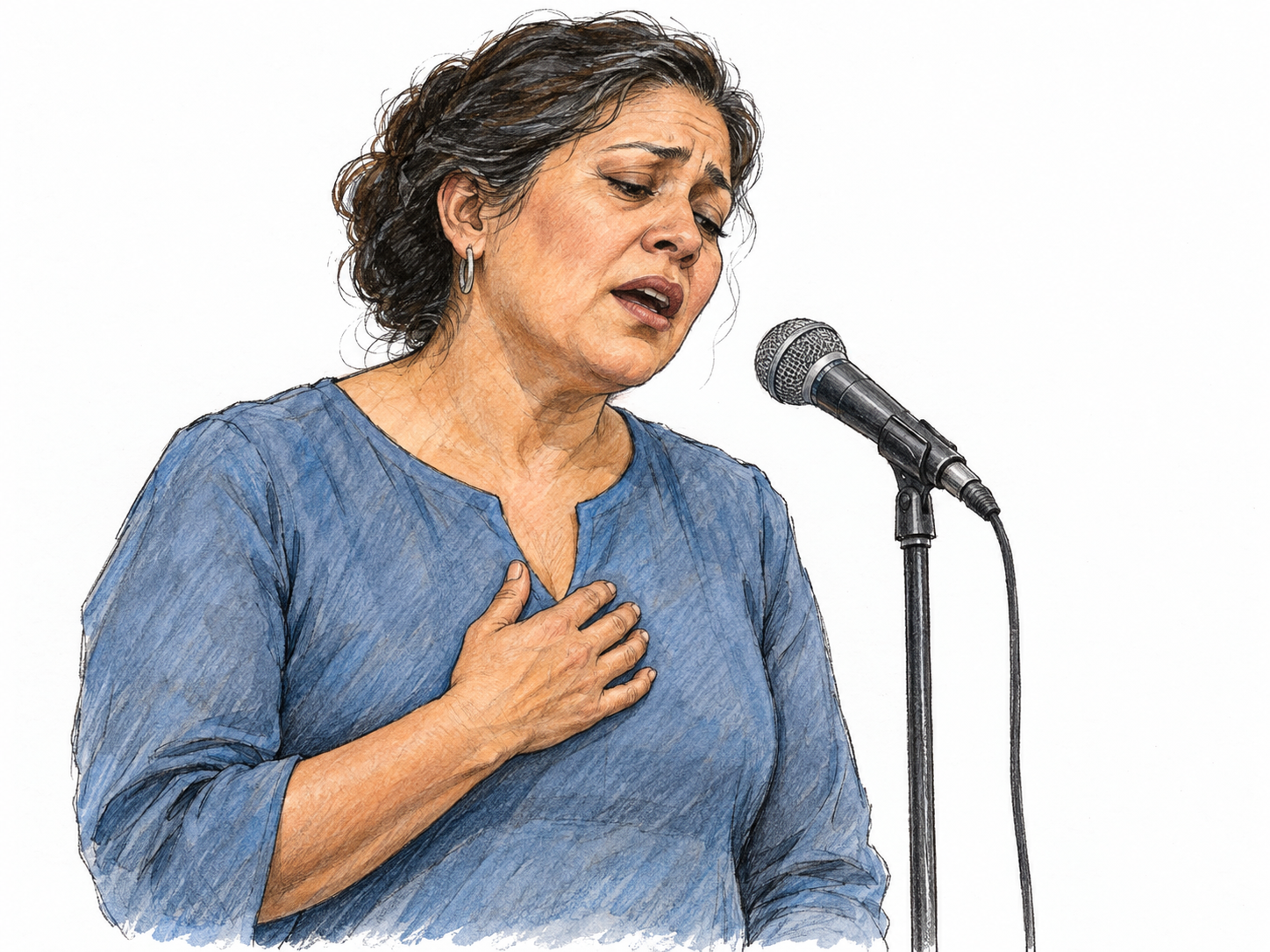
The woman's plaintive singing expresses sadness through the mournful solo.
Etymology
The root connects lamenting with striking, probably through beating one's breast in grief. Plaintive shifted from describing someone lamenting to describing a sound that expresses sorrow.
In context
two days afterwards the king, in a plaintive, feeble voice, cried out from within the tomb- They gnaw me now, they gnaw me now
More examples
- A kitten lets out a plaintive meow at the door.
- His voice takes on a plaintive tone when he mentions home.
- Her plaintive question, "Do you have to leave?" makes me pause.
Forms
plaintive · more plaintive · most plaintive
plaintively adverb — In a sad or mournful tone.
plaintiveness noun — Sadness expressed through sound or tone.
Similar words
- mournful
- Suggests deep sorrow or grief rather than gentle sadness.
- wistful
- Suggests sadness mixed with longing for something absent.