noun / adjective
pluperfect
ploo-PUR-fikt/ˌpluːˈpɜːrfɪkt/
A verb tense expressing an action completed before another past time.
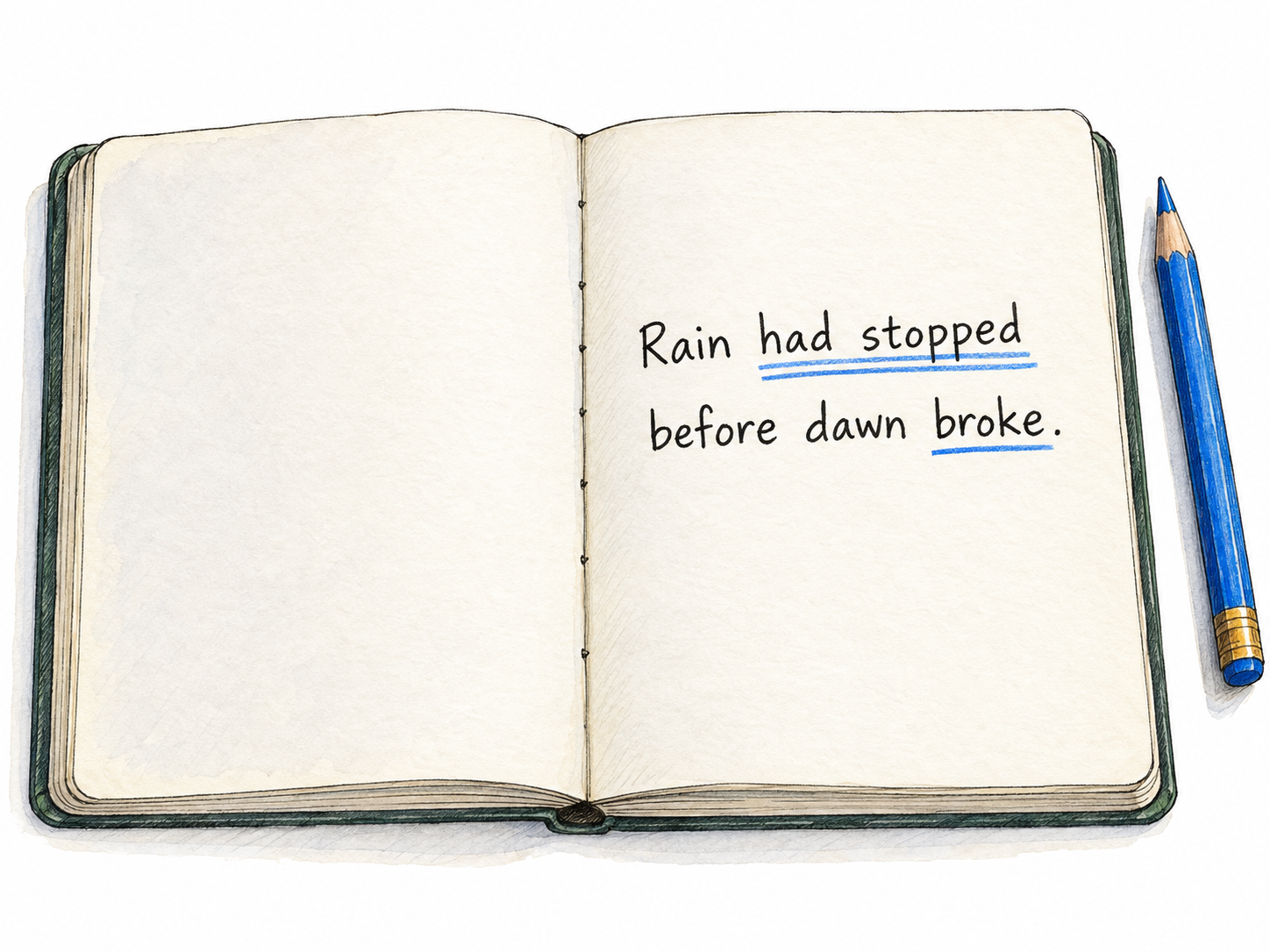
The pluperfect places a completed action before another past event.
Etymology
“More” joins the idea of “completely done” to mean “more than perfect.” Here perfect means completed, so the pluperfect places an action's completion before another past action.
In context
the future perfect tense is similar to the pluperfect because there are two points in time being referred to that are relative to one another
More examples
- In “She had left before I arrived,” “had left” is pluperfect.
- Use the pluperfect to explain what had already happened.
- The pluperfect form of “go” is “had gone.”
Forms
pluperfect · pluperfects
Similar words
- past perfect
- The usual modern English name for the same tense.