noun
poetry
POH-uh-tree/ˈpəʊətri/
Writing or expression shaped for its imaginative, rhythmic, or emotional effect.
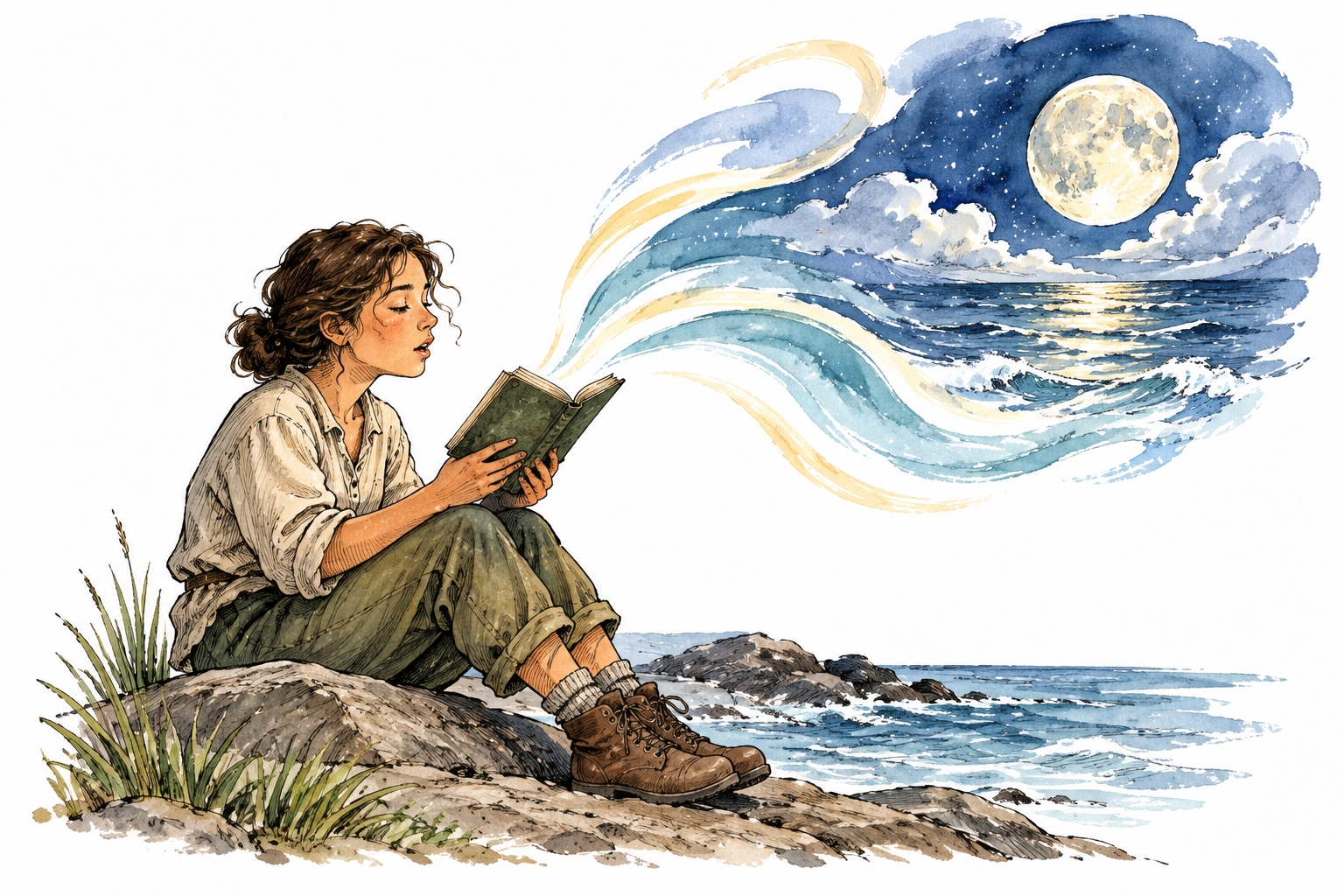
The reader recites poetry that evokes images of the moon and sea.
Etymology
Old French poetrie named verse composition and also poems, fables, or tales. Its ancestry links the poet with a “maker,” highlighting poetic composition as an act of imaginative creation.
In context
Poetry is similar; it's like music without a melody. The rhythmic structure gives your memory something to hang onto, which can be quite helpful.
More examples
- He writes poetry without rhyme or a regular beat.
- The poetry of her speech makes familiar ideas feel new.
- There is poetry in the way she moves across the stage.
Forms
poet noun — A person who writes or composes poetry.
poetic adjective — Having the expressive qualities of poetry.
Similar words
- verse
- Usually emphasizes writing in lines with rhythm or meter.
- lyricism
- Emphasizes musical expression and feeling, including in prose.