adjective
polar
POH-lur/ˈpəʊlər/
Relating to either of two opposite poles.
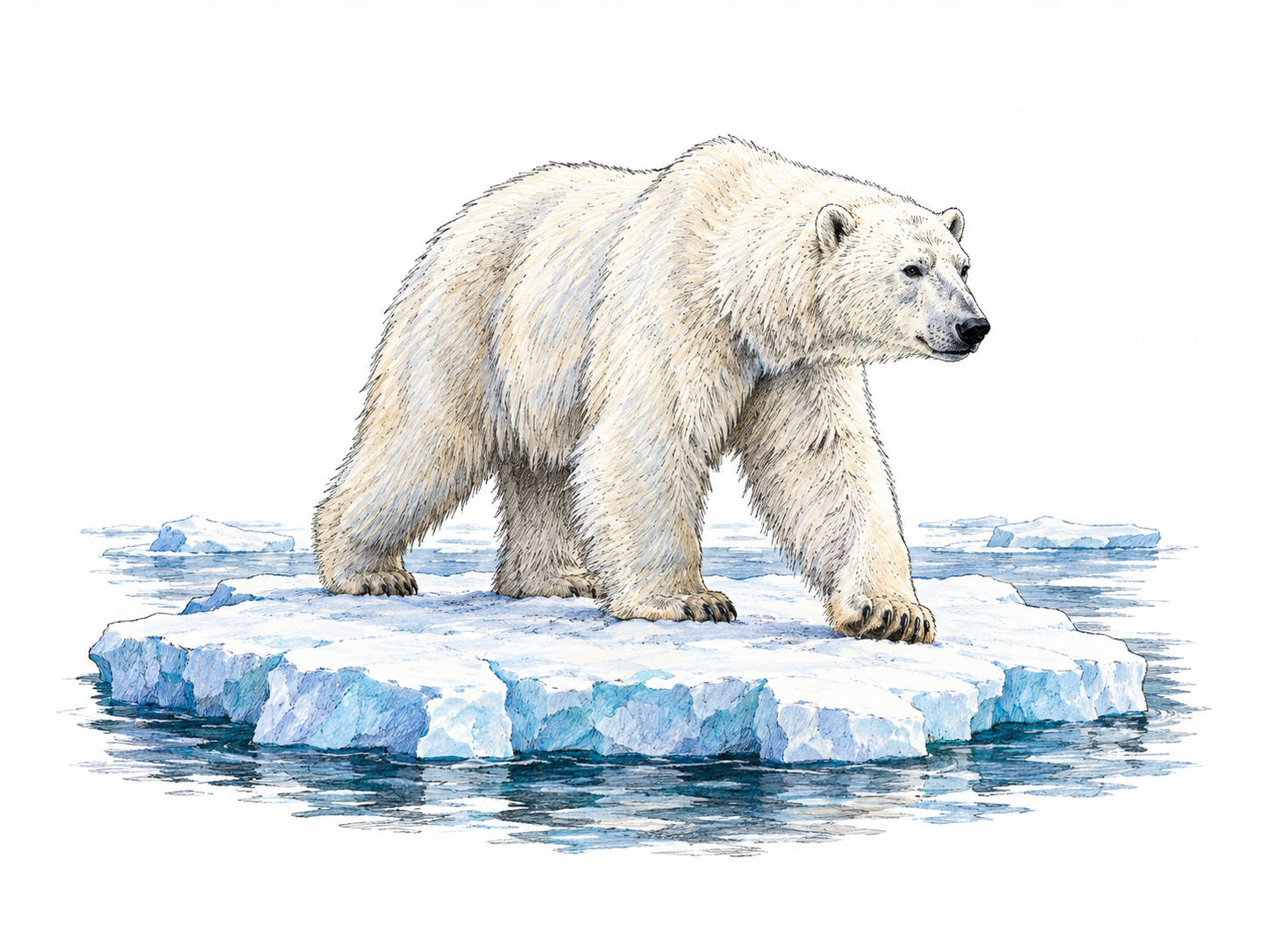
A polar bear walks across a small floe of sea ice.
Etymology
Latin polus names the end of an axis. The Earth's poles mark its axis of rotation, so polar describes those points and the regions around them.
In context
Polar ice cap or polar cap is a high latitude region of the planet that is covered in ice.
More examples
- The two candidates hold polar opposite views on taxes.
- A magnet's field is strongest near its polar ends.
- Water molecules are polar because their electric charge is unevenly distributed.
Forms
polarity noun — The state of having two opposite poles.
polarize verb — To separate into opposite poles or groups.