noun
positron
POZ-ih-tron/ˈpɑːzɪtrɑːn/
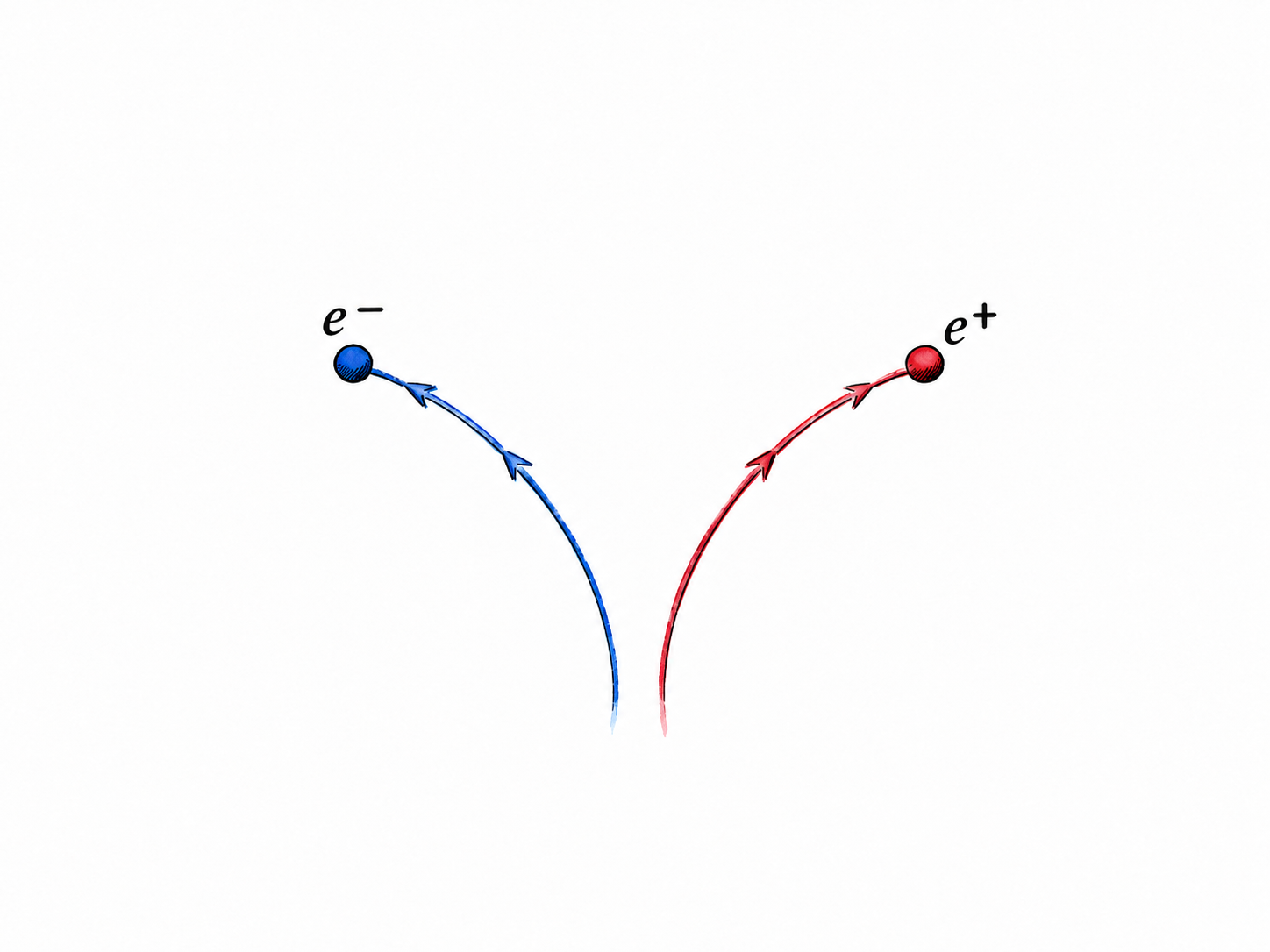
The positively charged antimatter counterpart of the electron.
A positron has the same mass as an electron.
Etymology
Positive and electron are compressed into a name for the electron’s antiparticle. Here positive refers specifically to electrical charge, not to confidence or a favorable quality.
In context
an electron and positron are attracted annihilate and they create two photons
More examples
- When a positron meets an electron, they can annihilate.
- PET scanners detect radiation produced when positrons encounter electrons.
- Some radioactive atoms release a positron as they decay.
Forms
positron · positrons
Similar words
- antielectron
- Names the same particle but is less commonly used.
- antiparticle
- Broader term for any particle's corresponding antimatter partner.