verb
prejudge
pree-JUJ/ˌpriːˈdʒʌdʒ/
To form an opinion before having enough evidence or experience.
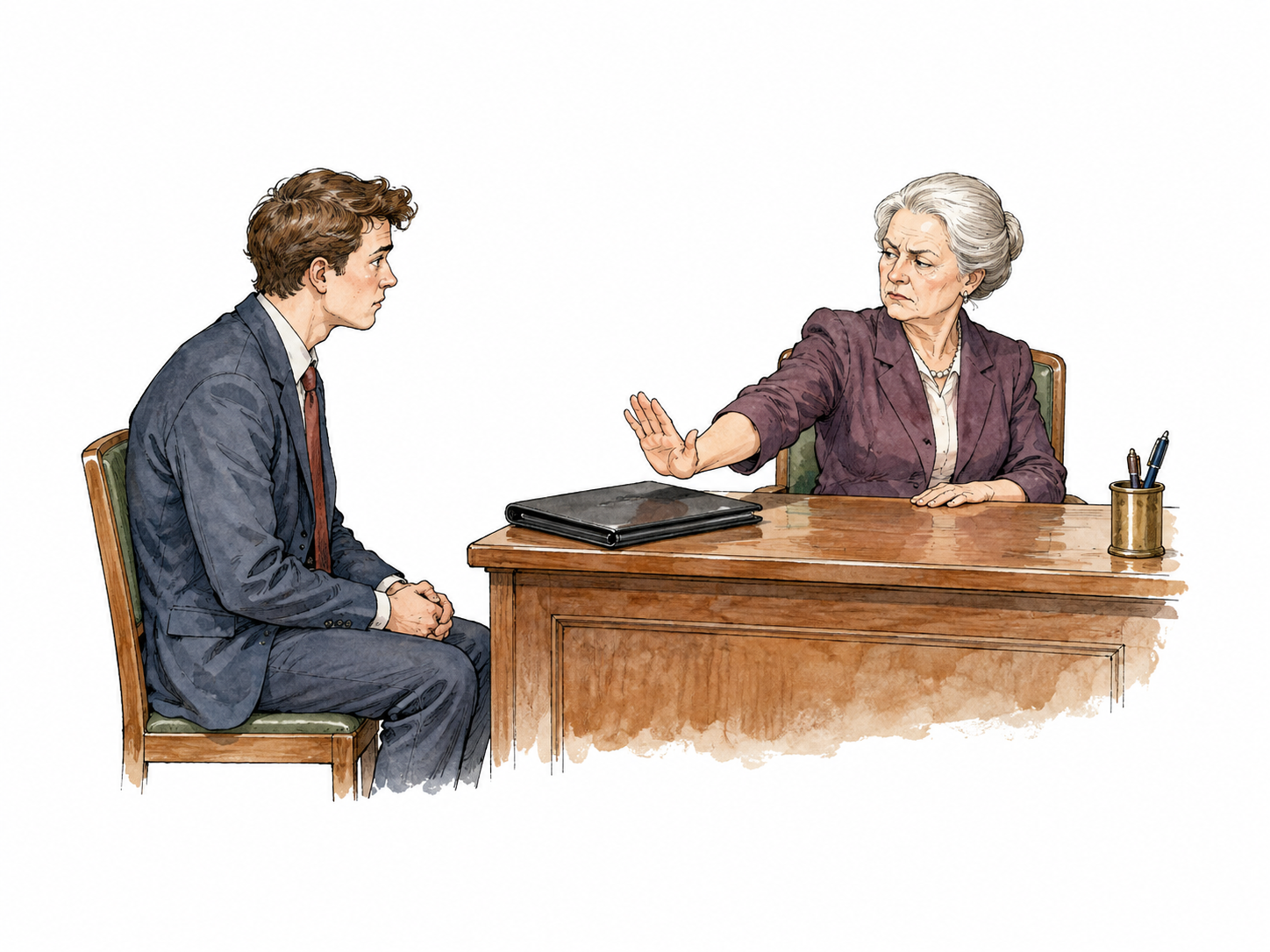
The reviewer prejudges the applicant's work, rejecting the portfolio without opening it.
Etymology
The pieces mean “judge beforehand.” In this sense, the judgment comes before the facts are fully known, making an opinion premature rather than the result of informed consideration.
In context
there are rightly robust statutory processes in place for any applications that come to ministers. It is very important that ministers do not prejudge cases.
More examples
- Don't prejudge the movie before you've seen it.
- The panel prejudged his application without reading his proposal.
- We avoid prejudging a plan while important details remain unclear.
Forms
prejudge · prejudges · prejudged · prejudging
prejudgment noun — An opinion formed before sufficient evidence.
Similar words
- presume
- Emphasizes accepting something as true rather than evaluating it prematurely.
- stereotype
- Specifically judges people using fixed beliefs about their group.