noun
proton
PROH-tahn/ˈprəʊtɑːn/
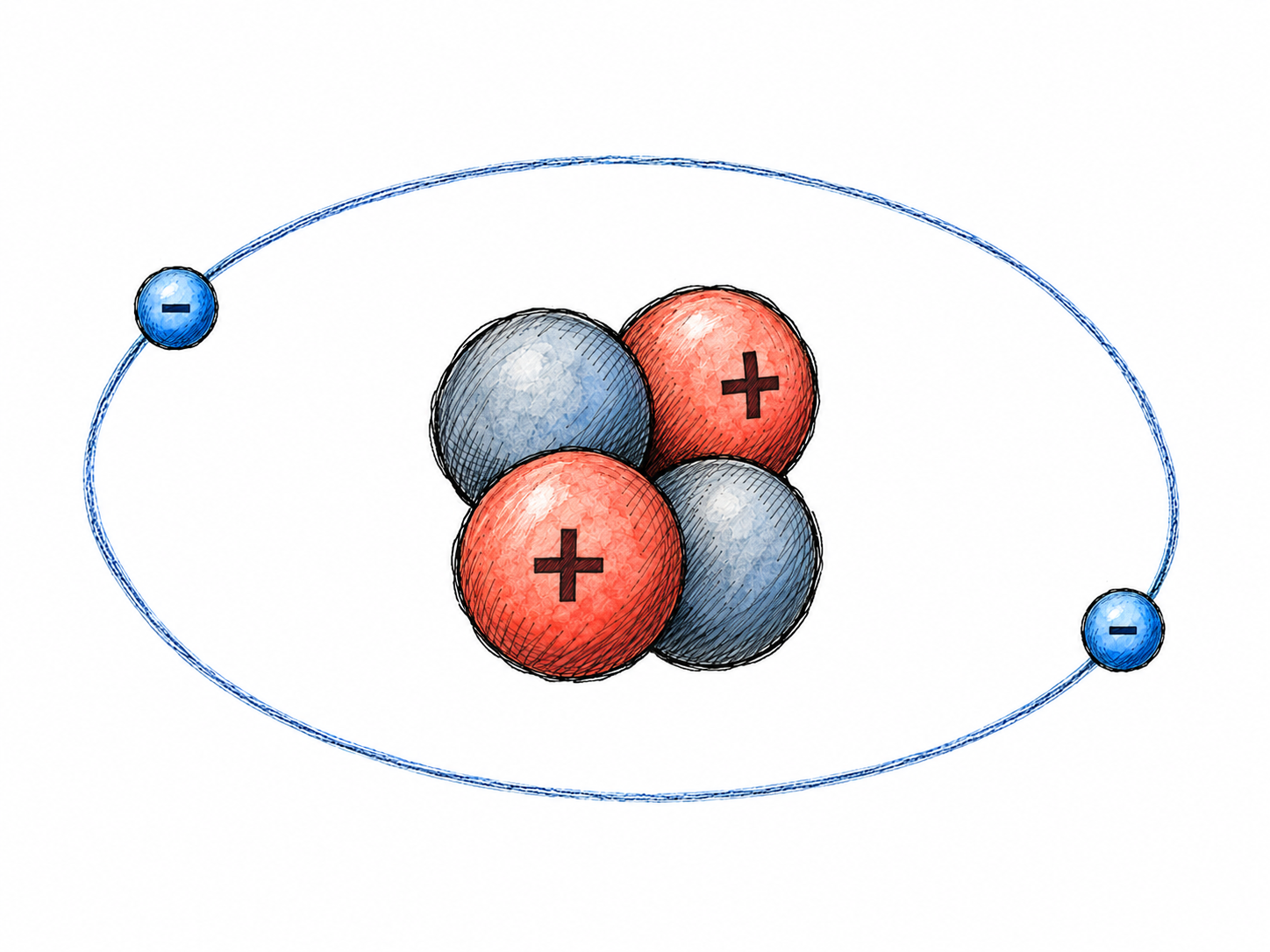
A positively charged particle found in an atom's nucleus.
Each proton in the atom carries a positive charge.
Etymology
The name draws on Greek “first,” supposedly because hydrogen, whose commonest nucleus is a single proton, was thought to be a constituent of all elements.
In context
now in the case of the aluminum ion it's going to be the atomic number 13 minus the positive 3 charge so there's 10 electrons and it makes sense each proton has a charge of 1
More examples
- The nucleus of ordinary hydrogen contains one proton.
- Different elements have different numbers of protons.
- The model colors each proton red and each neutron gray.
Forms
proton · protons