noun / verb
rebound
rih-BOWND/rɪˈbaʊnd/
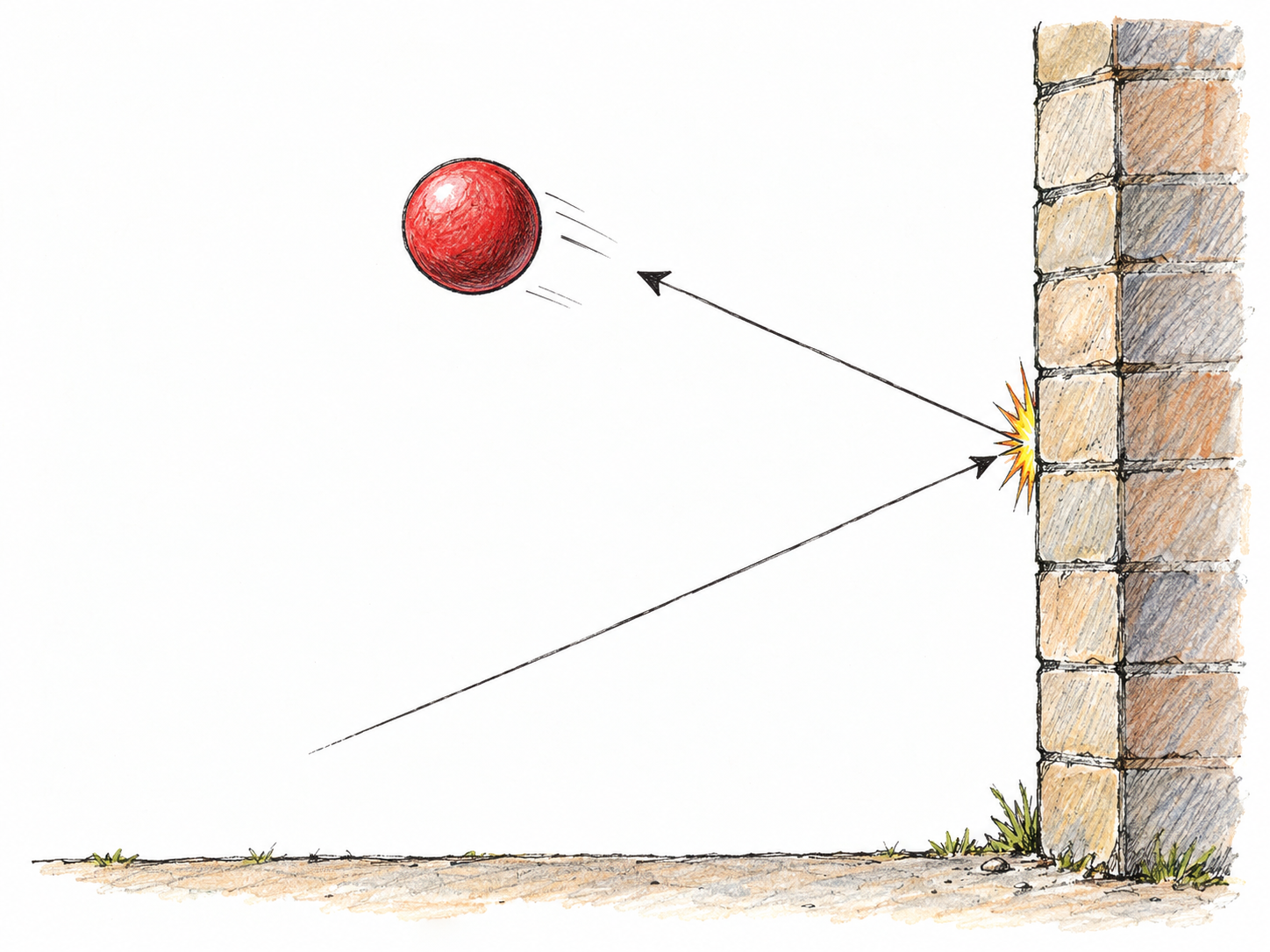
A return movement after striking an obstacle.
The rubber ball rebounds from the wall after striking it.
Etymology
To 'leap back' describes the motion after an impact. That physical return also supplies the figurative sense: after a setback, someone rebounds toward a former state or renewed activity.
In context
This causes the implosion to rebound and bounce outward. You end up with a dense core left behind and these wild outer shells of star exploding outward
More examples
- She catches the ball on the rebound.
- The tennis ball rebounded off the fence.
- A soft surface weakens the ball's rebound.
Forms
rebound · rebounds · rebounded · rebounding