adjective / noun
recalcitrant
rih-KAL-sih-trunt/rɪˈkælsɪtrənt/
Stubbornly resisting authority, control, or guidance, or a person who does so.
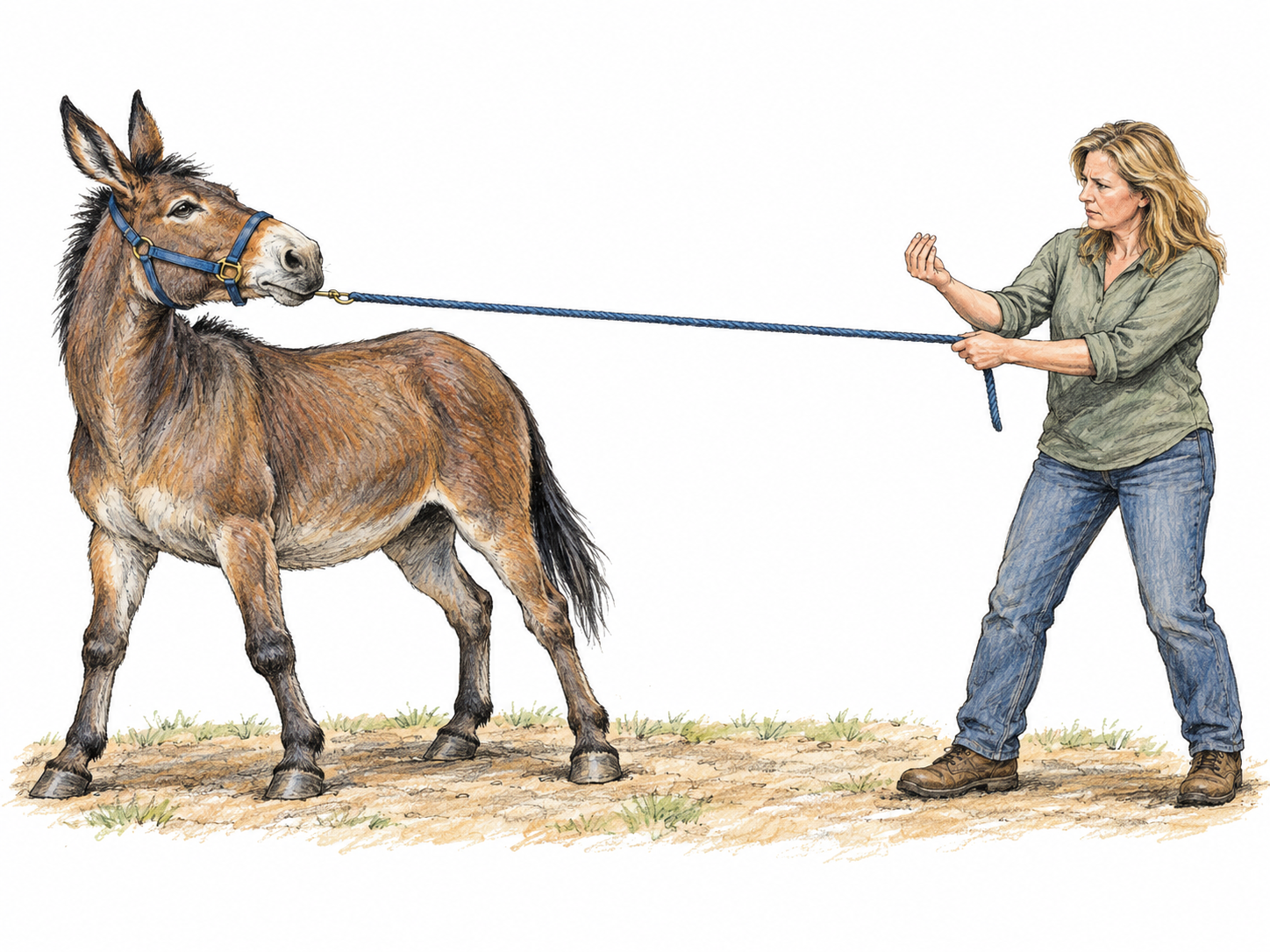
The recalcitrant mule plants its feet and refuses to follow the handler.
Etymology
The pieces describe kicking back, originally said of horses. That physical resistance became an image for disobedience: a recalcitrant person stubbornly resists authority or control.
In context
the Khmer Rouge refused to disarm its troops in western Cambodia, in response Sen and Sihanouk proved similarly recalcitrant, as a result sporadic fighting continued throughout the early 1990s
More examples
- A recalcitrant employee ignores repeated requests to submit his reports.
- She remains recalcitrant despite the coach's advice to change her technique.
- The remaining recalcitrants refuse to comply with the court's order.
Forms
recalcitrant · recalcitrants
recalcitrance noun — Stubborn resistance to authority, control, or guidance.