verb / noun
regress
ri-GRESS/rɪˈɡres/
A return to an earlier or less developed state.
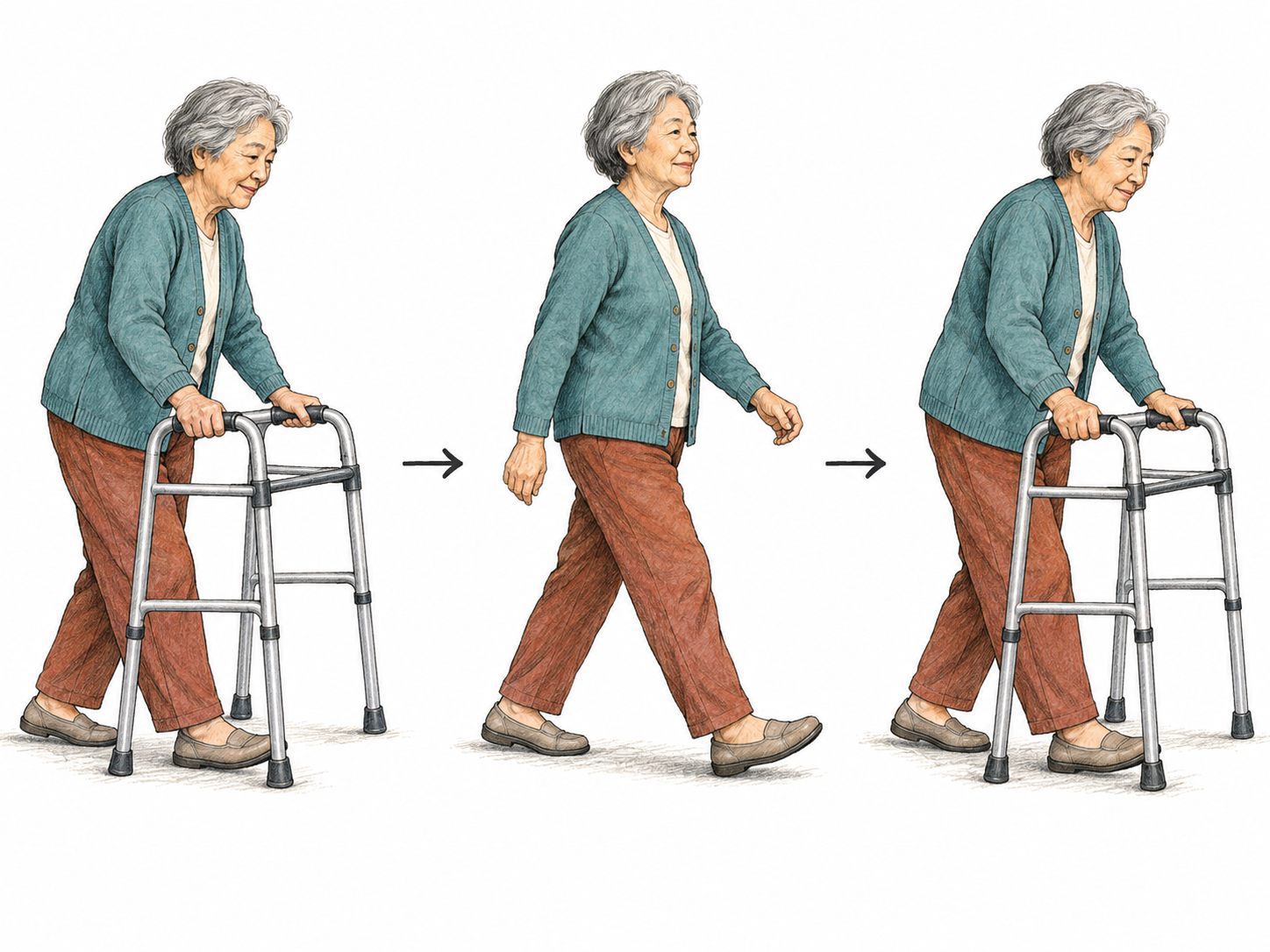
After walking independently, the woman regresses to needing the walker.
Etymology
The pieces express 'stepping back.' That image of backward movement also describes returning to a former condition, including an earlier stage of development rather than an earlier physical location.
In context
we are incentivized as individuals to regress to childhood because children are much more creative and imagine and imaginative than adults.
More examples
- The patient’s progress regressed during the difficult period.
- The discussion regressed into personal accusations.
- The report described a regress to earlier habits.
Forms
regress · regresses · regressed · regressing
regression noun — a return to an earlier or less developed state
Similar words
- revert
- Revert means return to an earlier condition; regress often implies losing progress or development.
- deteriorate
- Deteriorate means become worse; regress specifically moves toward a former or less developed state.