verb / noun
repulse
rih-PULS/rɪˈpʌls/
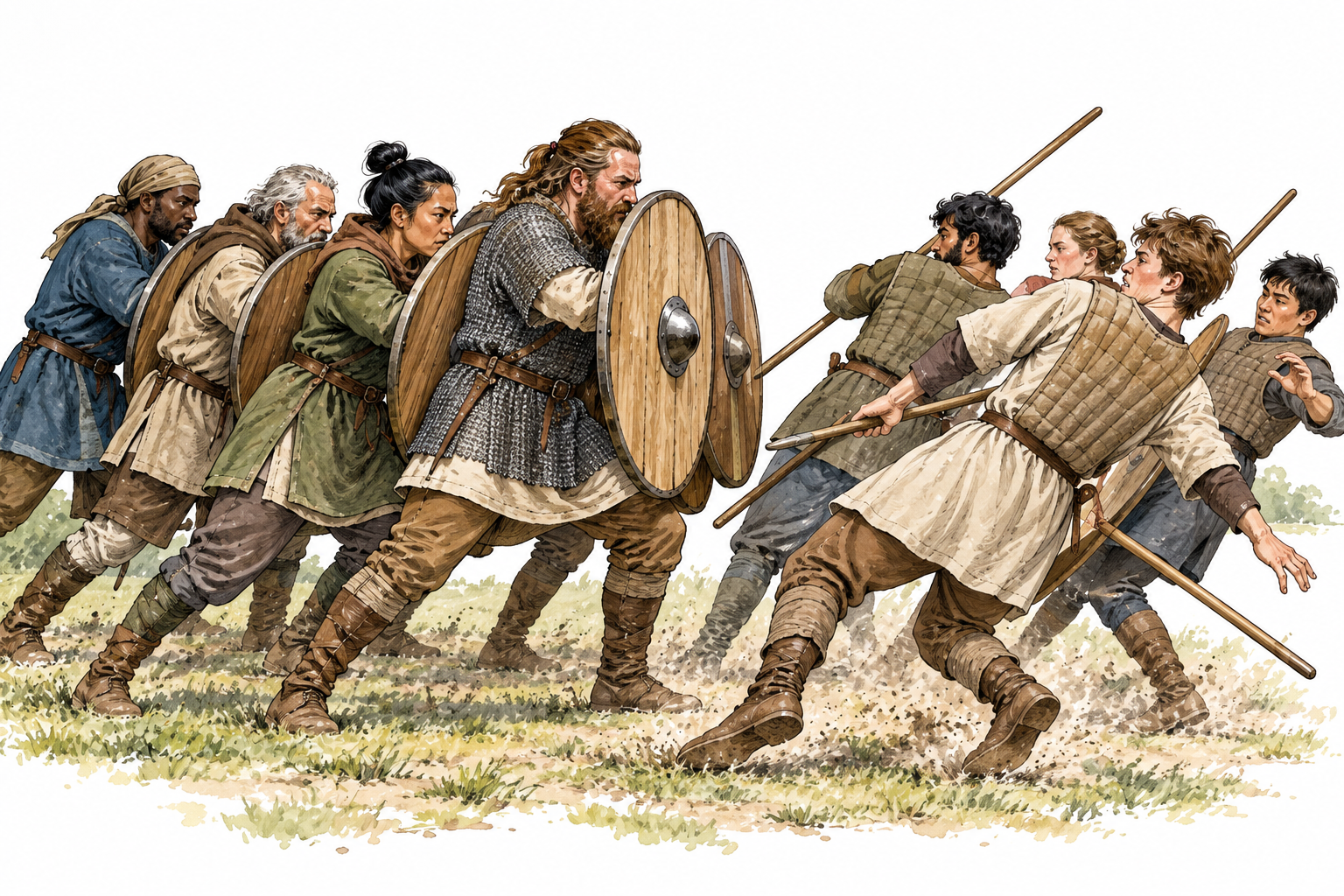
To drive something back or away.
The defenders use plain shields to repulse the attacking formation.
Etymology
“Drive back” directly describes repulsing an attack. In the disgust sense, the same movement becomes emotional: something offensive repulses people by provoking aversion rather than physically forcing them away.
In context
From their elevated and dug-in positions, they were able to repulse the enemy's charges up the steep ridge.
More examples
- The guards repulsed every attempt to breach the gate.
- After the repulse, the attackers retreat to the hills.
- She repulses his unwanted advances with a firm refusal.
Forms
repulse · repulses · repulsed · repulsing
repulsion noun — The act of driving something away.