noun
rhetoric
RET-uh-rik/ˈretərɪk/
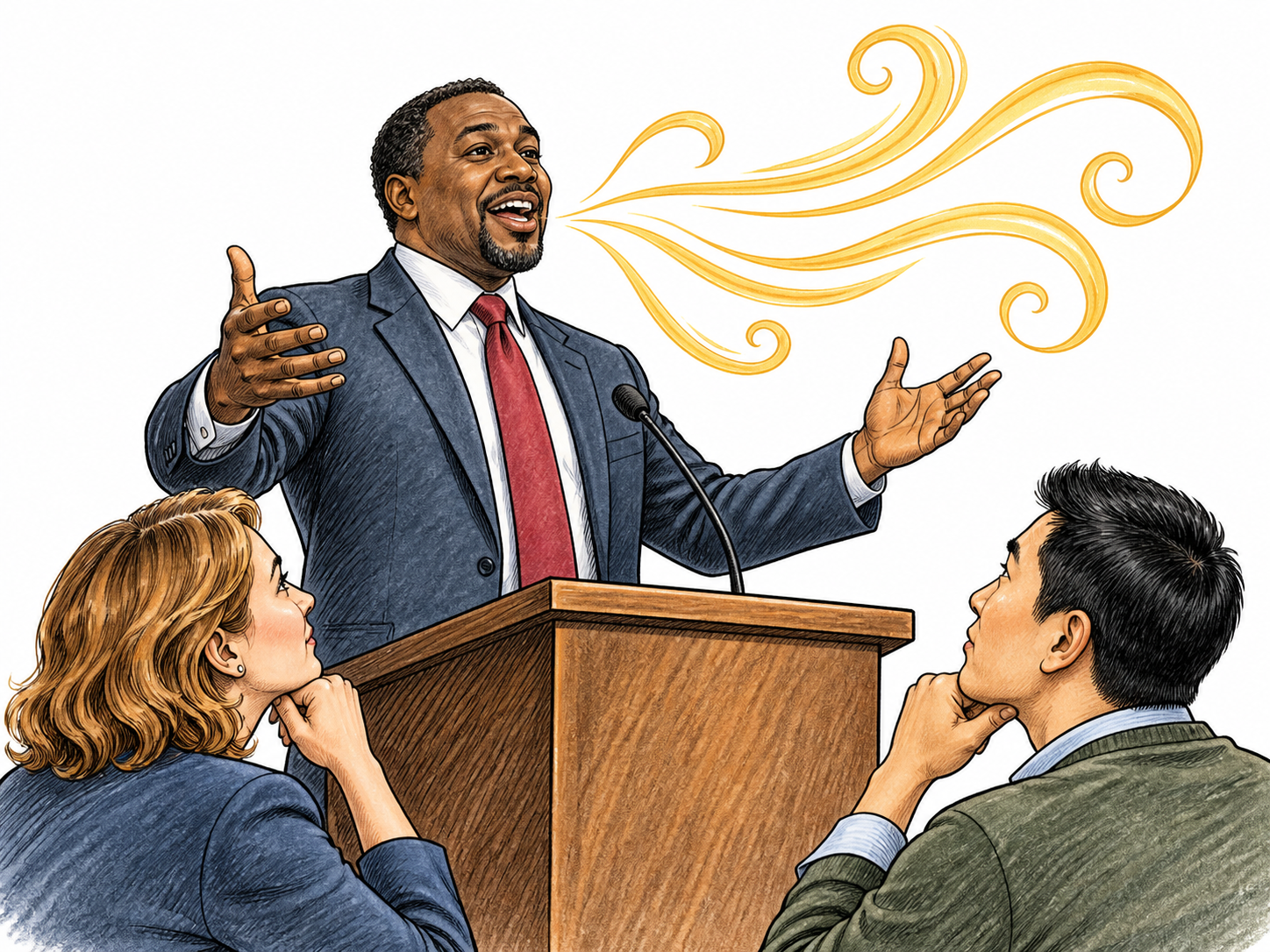
Language crafted for persuasive effect.
The speaker uses passionate rhetoric to win over the audience.
Etymology
The art of oratory uses language to persuade. Its disparaging sense reflects the longstanding contrast between showy, artificial speech and natural, unaffected expression.
In context
When you say immigration is not about integration into the German cultural community. It's about its destruction. That is very inflammatory rhetoric.
More examples
- The mayor's hopeful rhetoric makes the plan sound achievable.
- Behind the company's environmental rhetoric, its factories still pollute.
- Her essay's forceful rhetoric encourages readers to volunteer.
Forms
rhetorical adjective — Using language for persuasive effect.
rhetorician noun — A person skilled in persuasive language.
Similar words
- eloquence
- Emphasizes fluent, expressive speech rather than its persuasive purpose.
- oratory
- Specifically refers to formal public speaking, often before an audience.
- persuasion
- Names the effort to convince, not specifically the language used.