noun
salamander
SAL-uh-man-der/ˈsæləmændər/
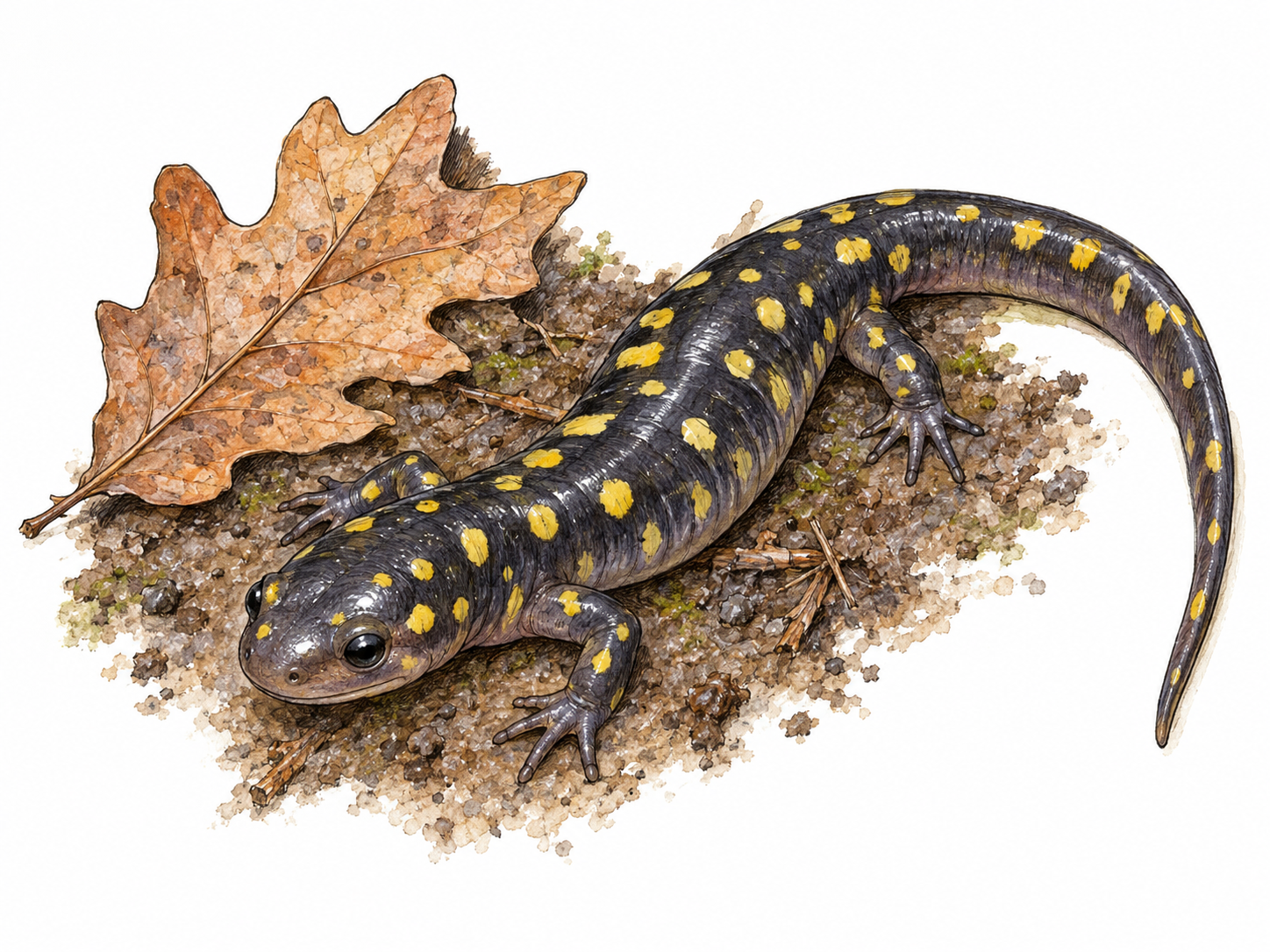
A small tailed amphibian with a lizardlike body.
A spotted salamander has smooth skin, short legs, and a long tail.
Etymology
Greek salamandra named a lizard believed to extinguish fire. English first used the name for a legendary fire-dwelling creature, then applied it zoologically to a tailed amphibian.
In context
find a tadpole or young salamander, where they tend to infect the skin near the developing limb buds. Larval amphibians like tadpoles start their lives limbless and grow legs when they metamorphose into adults.
More examples
- We find a salamander under a damp log.
- Unlike lizards, salamanders have no scales.
- Many salamanders lay their eggs in water.
Forms
salamander · salamanders
Similar words
- newt
- A particular type of salamander, often aquatic as an adult.