noun
sclerosis
skluh-ROH-sis/skləˈrəʊsɪs/
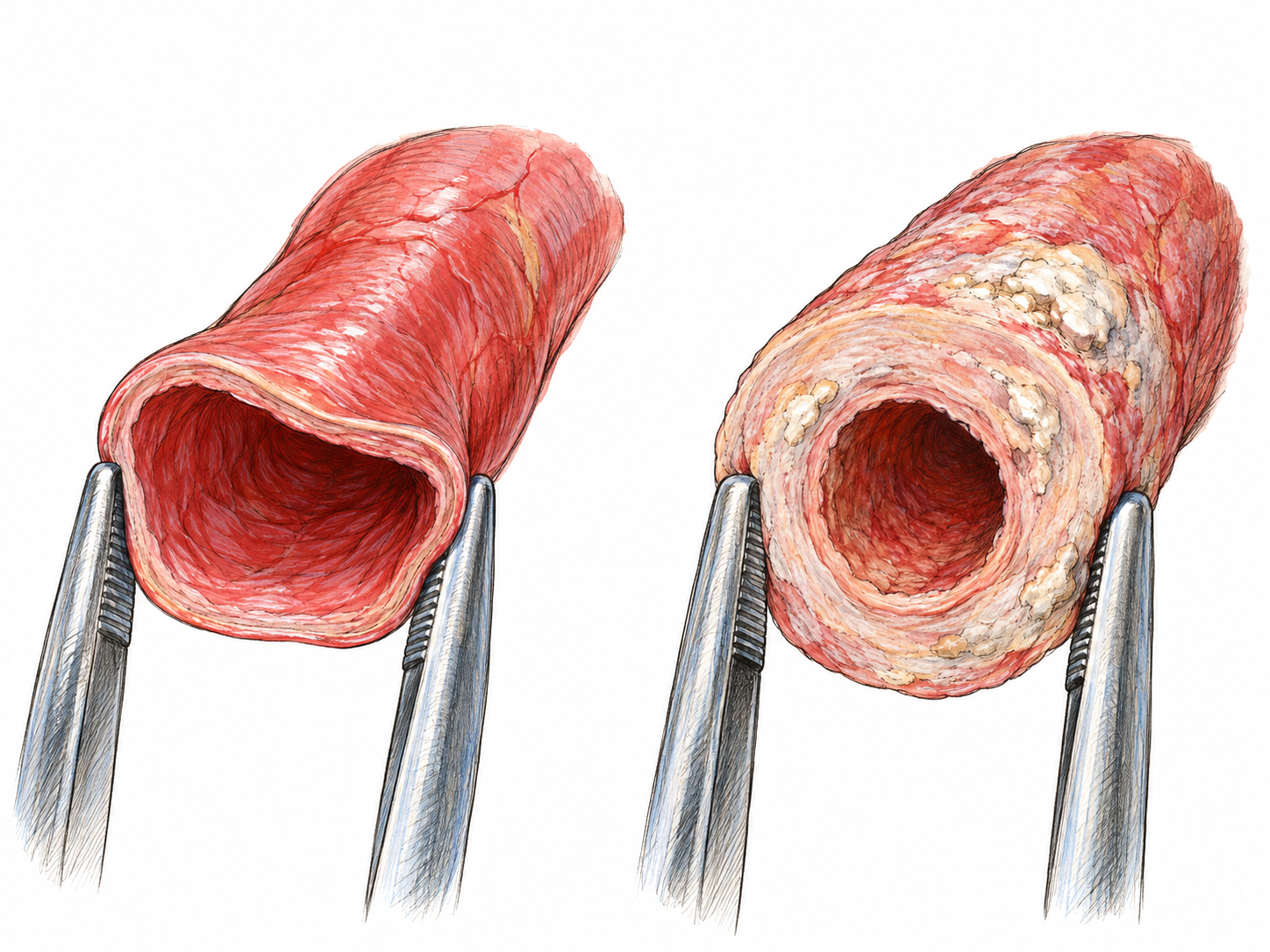
Pathological hardening of living tissue.
The artery wall resists gentle pressure because sclerosis makes it rigid.
Etymology
The pieces express a condition of hardness. In medical use, this means tissue becoming abnormally hard, rather than retaining its normal softness or flexibility.
In context
Multiple sclerosis is characterized by damage to the myelin sheaths surrounding the axons of neurons in the central nervous system.
More examples
- The biopsy reveals sclerosis in the damaged tissue.
- Imaging shows sclerosis in the bone beneath the joint.
- The report describes mild sclerosis of the aortic valve.
Forms
sclerosis · scleroses
sclerotic adjective — Affected by abnormal hardening of tissue.
Similar words
- fibrosis
- Specifically involves excess fibrous tissue, which can cause hardening.
- calcification
- Specifically involves calcium deposits, which can make tissue hard.