adjective / verb
shrill
SHRIL/ʃrɪl/
Having or producing a piercing, high-pitched sound.
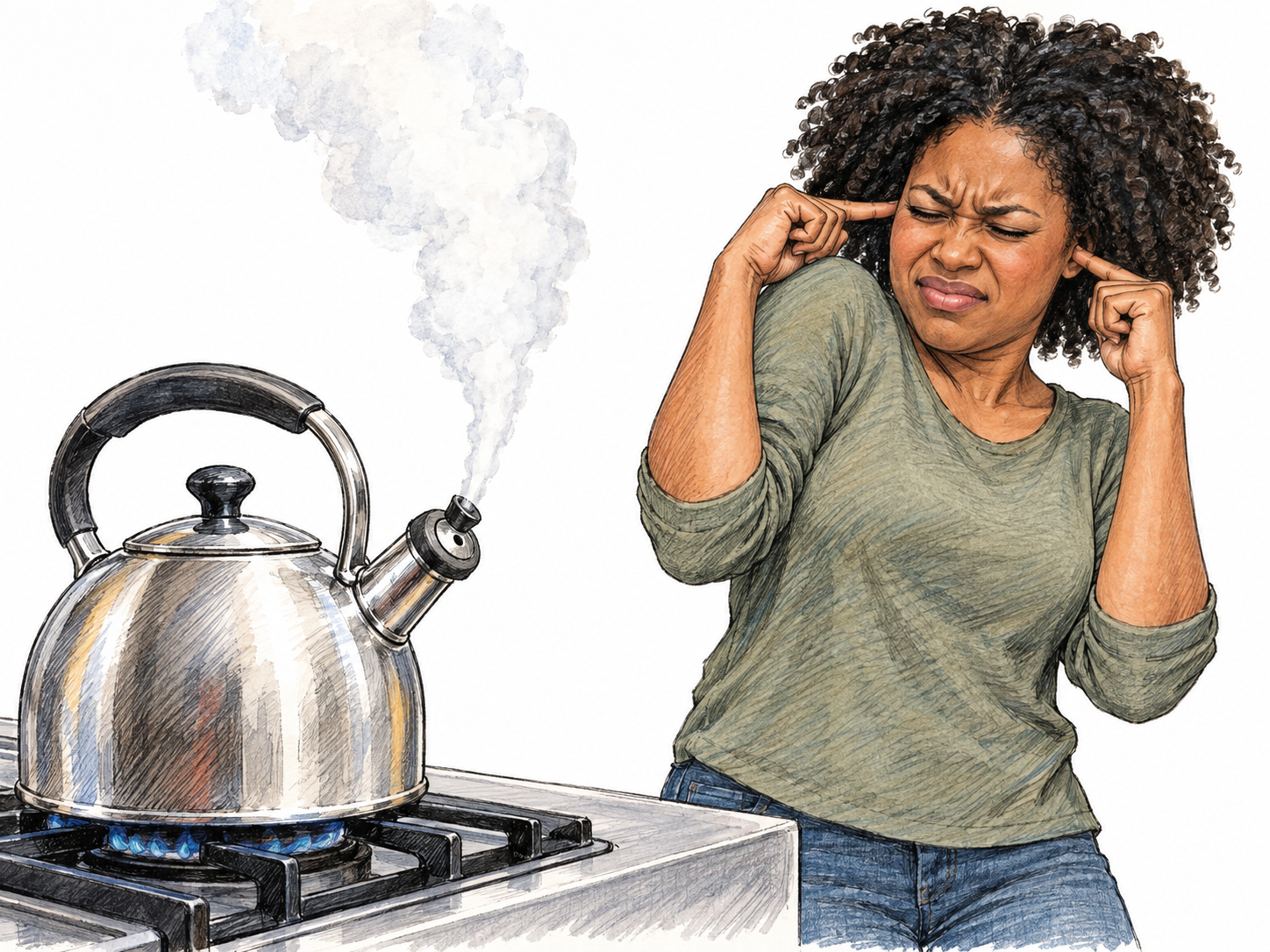
The kettle's shrill whistle makes the woman plug her ears.
Etymology
Middle English schrylle already described a sharp, piercing sound. Its imitative origin and probable connection with Old English scralletan, “to sound loudly,” tie the word to the noise it describes.
In context
The high pitch of Mrs. Pendleton's voice shattered the quietude like the startling clang of an unexpected bell. "Knock again, Thalassa, more loudly, very loudly," she cried, in the shrill accents of tightened nerves.
More examples
- The smoke alarm shrills whenever I burn the toast.
- Her shrill laugh makes everyone turn around.
- The brakes let out a shrill squeal.
Forms
shrill · shriller · shrillest · shrills · shrilled · shrilling
shrilly adverb — In a piercing, high-pitched voice or tone.
shrillness noun — The quality of being piercing and high-pitched.
Similar words
- piercing
- Emphasizes sharp intensity, not necessarily a high pitch.
- squeaky
- Suggests a thin, high sound, often brief or repeated.
- high-pitched
- Describes a high tone without necessarily suggesting harshness.