noun
timbre
TAM-ber/ˈtæmbər/
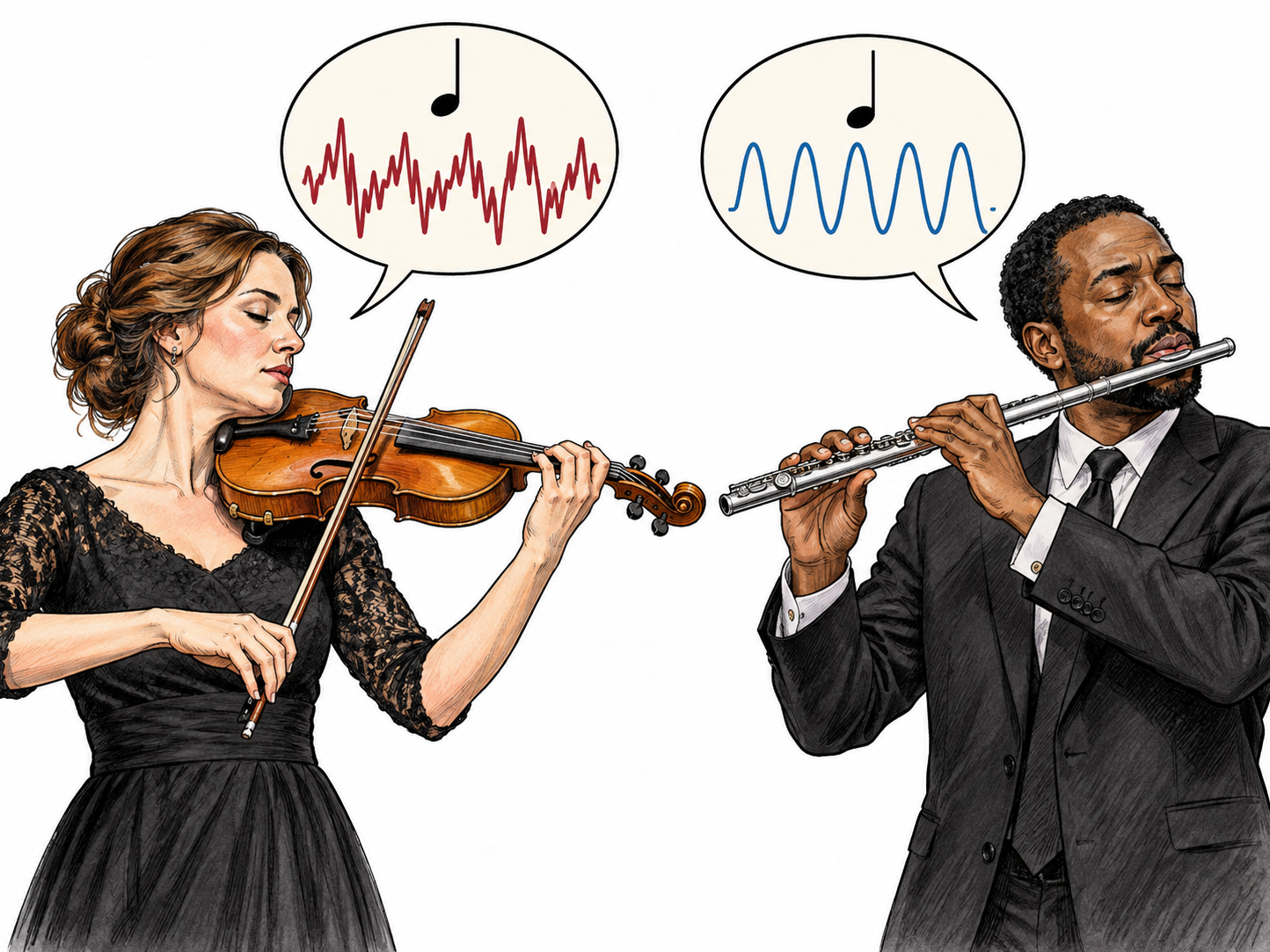
The characteristic quality that distinguishes one voice or instrument's sound from another.
The violin and flute differ in timbre despite playing the same note.
Etymology
Old French timbre named a small drum and then a bell without a clapper. The meaning shifted from the instrument to a bell’s sound, then to the distinctive quality of a sound.
In context
the way the the harmonics or the overtones uh sound in a piano is what gives the piano its timbre it gives it its identifiable voice
More examples
- A flute and a violin have different timbres, even on the same note.
- I recognize his voice by its raspy timbre.
- Using a mute changes the trumpet's timbre.
Forms
timbre · timbres
timbral adjective — Relating to the distinctive quality of sound.
Similar words
- tone
- Can describe pitch or mood, not just distinctive sound quality.
- tone color
- Names an instrument's distinctive sound quality, especially in music.